

President Donald Trump ousted Kristi Noem as head of the Department of Homeland Security, a move announced Thursdaythat will also have major implications for the nation’s top disaster agency.
The Federal Emergency Management Agency, which falls under DHS, has been at the center of numerous controversies under Noem’s leadership. They include delays in disaster response and recovery efforts nationwide, the cutting of popular preparedness programs, and putting whistleblowers on administrative leave. At times, Noem has advocated for abolishing or eliminating the agency in its current form — a position Trump once promoted.
Earlier this week, she faced a bipartisan backlash in Congress for her oversight of FEMA, which has included unprecedented control over agency spending and repeated rounds of staff cuts that eroded the agency’s expertise.
“You’ve failed at FEMA,” Republican Senator Thom Tillis of North Carolina told her at a Tuesday hearing.
Though the agency’s staffing and capacity are strained, FEMA hasn’t yet been tested by a severe, multi-state catastrophe since Trump returned to the White House last year. The 2025 hurricane season — which passed without a landfall in the US — “was a gift,” says Pete Gaynor, who ran FEMA during Trump’s first term in office and briefly served as acting DHS secretary in 2021.
“It’s just a matter of time before FEMA is put to the test against something that stresses the nation,” Gaynor says, pointing to year-round wildfire risks and the upcoming hurricane season.
Trump announced Thursday that he intends to replace Noem with Senator Markwayne Mullin, an Oklahoma Republican who will need to be confirmed by the Senate. It comes as DHS is in the midst of a three-week partial shutdown that has led FEMA to pull back on some disaster response and freeze emergency management training. With the change in leadership at DHS, Gaynor and other experts say FEMA is facing big questions that will help determine how it responds to the next big disaster.
What happens to Trump’s push to reform FEMA?
Trump has been an outspoken critic of FEMA, even calling to abolish the agency at times. Instead of acting unilaterally, he established the FEMA Review Council last year to come up with recommended reforms. The council — made up of emergency managers and political leaders from disaster-prone states — was co-led by Noem. It was supposed to deliver a final report last year, but Trump extended the deadline to March 25.
The council’s work has been fraught at times. Noem was accused of trying to co-opt the process to push her personal recommendations, an accusation DHS denied. With Noem set to formally depart her role by the month’s end, experts aren’t sure if she’ll help get the report over the finish line before she leaves or pass it off to her successor.
Who will lead FEMA?
Trump has installed three different political acting leaders since the start of his second term. Many of the interim chiefs have lacked hands-on emergency management experience, a statutory requirement for anyone who leads the agency permanently.
Cybersecurity expert Karen Evans, the current stand-in FEMA administrator who took over the role in December, did not respond to questions about whether she plans to stay at the agency. FEMA also did not immediately respond.
Given the upcoming hurricane season — which starts June 1 — and the year-round threat of devastating wildfires, putting an experienced emergency manager in the top seat at FEMA should be a priority for Mullin, says Gaynor.
“It should be a five-alarm fire right now — that kind of urgency,” Gaynor says, adding that would ideally lead Trump to announce a permanent nominee for the job.
Mullin may also want to bring in a FEMA leadership team that’s more loyal to him, says Michael Coen, who served as the agency’s chief of staff under former President Joe Biden. That may even include hiring permanently. “I wouldn’t be surprised if we see someone being nominated for FEMA,” Coen adds.
Will Noem’s replacement keep such a tight grip on FEMA’s finances?
Since June, FEMA hasn’t been allowed to approve expenses exceeding $100,000 without getting Noem’s office to sign off. After devastating floods swept through Texas last July, Congress pressed FEMA on whether it failed to keep up with emergency calls because of a lapsed call-center contract.
The policy “has completely hamstrung the business of FEMA, whether it’s paying for disasters or preparedness grants,” says Gaynor, who now leads a private disaster concierge firm called Bright Harbor and does advocacy work for businesses and nonprofits in the disaster recovery sector.
State and local governments often hire private businesses that do disaster cleanup or repair work, he says, relying on FEMA reimbursement to help cover the bills. “When you hobble FEMA, you hobble the private sector,” he adds.
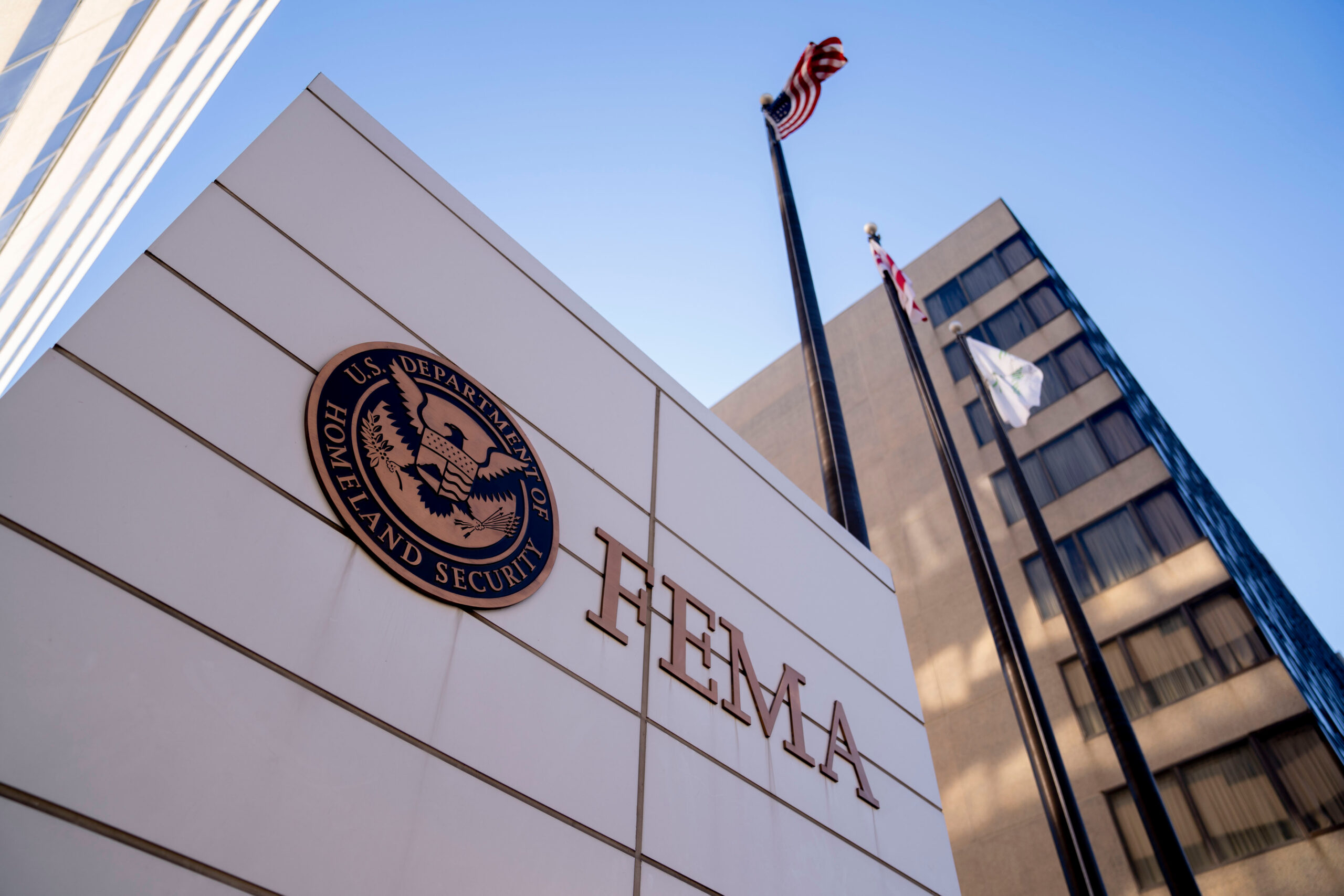
Photo: The Federal Emergency Management Agency (FEMA) headquarters in Washington, DC. Photographer: Stefani Reynolds/Bloomberg
Copyright 2026 Bloomberg.
Topics
FEMA
The most important insurance news,in your inbox every business day.
Get the insurance industry’s trusted newsletter
