


A bill moving steadily through the Florida Legislature has suddenly ignited a storm of controversy, with some insurance agents and brokers worried it could benefit one large brokerage while costing others fees and flexibility on takeouts of Citizens Property Insurance commercial policies.
“The main question I have is, ‘What is the problem that this is trying to solve?’” said Chris Siegel, Florida vice president at Burns & Wilcox, a surplus lines brokerage. “We’re already doing all this without a surplus lines clearinghouse.”
Siegel was talking about Florida Senate Bill 1028, sponsored by state Sen. Joe Gruters, the chairman of the Senate Banking and Insurance Committee. The bill would require Citizens to set up a clearinghouse for brokers and agents to use to place commercial property coverage with lightly regulated excess and surplus lines carriers.
Gruters’ committee approved the bill 10-0 in January, followed by the Appropriations Committee on Agriculture, Environment, and General Government on Feb. 6. The measure has one more committee stop in the Senate, as does a companion bill in the House.
“It’s moving,” one Florida lobbyist said.
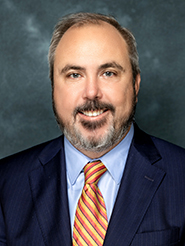
It may sound innocuous on the surface: A framework for a mechanism much like the clearinghouse used to help move personal lines policies out of Citizens, Florida’s once-bloated insurer of last resort. But Florida Insurance Commissioner Michael Yaworsky voiced deep concerns about the bill at the committee hearing last week. He said a commercial clearinghouse could cost as much as $40 million to set up—a sporty price tag for relatively few commercial policies.
“Why spend that much money for just 3,000 policies—at the most?” said Dulce Suarez-Resnick, a commercial agent and vice president at Acentria Insurance in Miami.
And industry insiders familiar with Gruters’ bill have argued that it appears to be written to favor one company: Ryan Turner Specialty, also known as RT, part of one of the largest wholesale brokerages in the country. An explanatory sheet circulated in Tallahassee, apparently produced by Ryan and marked “confidential,” shows the firm already has taken steps to build what would be known as “The Florida Risk Exchange—An AI-Enabled Ryan Specialty Enterprise.”
The exchange would facilitate “a depopulation of the Citizens program and restoration of the Citizens program to its intended position of a market of last resort while enabling insureds, risk managers and brokers to shift their focus to strategic risk management,” the 15-page document reads.
The bill does not mention RT by name. But it would stipulate that such a clearinghouse must be established by Jan. 1, 2027—a tight deadline that could potentially give Ryan’s exchange a leg up on competing firms.
The Ryan summary sheet notes that the clearinghouse administrator also would be the “final decision-maker” on when agents can proceed with Citizens quotes or must first seek market alternatives. That could put a Ryan enterprise in the position of controlling at least some of the business of other brokers, according to brokers, agents and Yaworsky’s comments.
The bill also seems to raise the possibility that the clearinghouse would be able to charge new fees to brokers. Coverage terms submitted to the clearinghouse administrator must include all fees and surcharges, SB 1028 reads. And commissions paid to agents would not cover surcharges. The fees and commissions arrangement is a concern, Yaworsky testified. The full bill can be read here. A legislative analysis is here.
The measure had texts and emails crackling around the state last week after the Tampa Bay Times reported that the chief supporters of the bill include Patrick Ryan, co-founder and chairman of Chicago-based Ryan Specialty and a major contributor to Republican candidates and causes. Ryan company representatives have lobbied regulators and lawmakers in recent weeks, the newspaper noted.
Gruters, chair of the Republican National Committee, told the Times that he had pushed for the exchange well before the Ryan family’s political contributions, and that other companies have pitched the idea to Citizens.

Ryan Specialty’s top leadership could not be reached for comment or an interview with Insurance Journal late last week. But in an emailed statement, Ryan’s chief communications officer said that Citizens has historically competed with the private market for commercial policies, concentrating a disproportionate amount of exposure in the state-created insurer.
“Ryan Specialty supports the development of responsible and innovative surplus lines solutions that help address these challenges,” said the statement. “Expanding access to a broader range of insurance markets for Florida commercial businesses, while reducing the state’s exposure to volatility during future storm seasons, is a constructive outcome for all stakeholders.”
Suarez-Resnick argued that Citizens’ depopulation effort doesn’t need more help: It has worked well in recent years, with the corporation’s overall policy count now a third of what it was three years ago, thanks in part to 2022 litigation reforms and dramatic recent improvements in the Florida insurance market. Many agents now are adept at finding other insurers, including surplus lines carriers, to take on Citizens’ commercial policies.
Citizens reported 6,180 commercial and commercial residential policies in force at the end of January this year, a 43% drop from a year ago.
“This clearinghouse might have been a good idea four years ago, but not now,” Suarez-Resnick said.
While far fewer than the personal lines policies, commercial policies can still be worth millions of dollars—and policies can be coveted by brokers and carriers alike. Citizens noted almost $200 million in premium for commercial policies last month.
Not all Florida agents and brokers are up in arms about the bill. If the wording can be tweaked to require that only the largest and healthiest surplus carriers be allowed to participate, it could help solve some problems for properties that struggle to find coverage, said Matt Mercier, national practice leader for CBIZ Insurance Services, a brokerage specializing in commercial and condominium coverage.

As drafted, the bill would require surplus insurers in the commercial clearinghouse to carry a financial strength rating of “A-” or better and a financial size category of A-VII, as determined by the AM Best financial rating firm. Mercier said it needs to be at least an A-VIII, or even an A-XII size rating to help safeguard policyholders from surplus carriers that may falter and would not be covered by the Florida Insurance Guaranty Association.
“The distinction between an A-VII and an A-XII insurer is not merely technical; it reflects a substantial difference in policyholders’ surplus and capital strength,” Mercier noted in an email. “An A-XII insurer typically maintains approximately 10 to 20 times the surplus of an A-VII insurer.”
Still, concerns about Gruters’ exchange bill appear to be gaining steam, after the bill sparked little debate during the first month of the 2026 legislative session. One agent noted that many Florida insurance agents have been frustrated for months with Citizens’ personal lines clearinghouse technical problems, and the last thing they want is another balky clearinghouse platform.
Yaworsky’s comments at the Senate committee, seen on the Florida Channel, came as something of a surprise but seem to have bolstered opposition to the bill. He said continued depopulation of Citizens is a noble goal, but SB 1028 could affect brokers, agents and insureds in negative ways.
If a policyholder has a relationship with a broker, that relationship could be severed under the clearinghouse proposal, Yaworsky said.
“The broker-administrator-vendor that is ultimately hired by Citizens for this service essentially becomes the broker on both ends of the transaction,” he noted. “That is a concerning provision for any insurance regulator from the consumer perspective.”
Topics
Trends
Agencies
Florida
Commercial Lines
