

The Iran conflict has thrust container shipping from an industry bracing for a capacity glut to another potential “black swan” supply crunch.
That paradigm shift dawned on the more than 3,500 importers, freight forwarders and ocean carriers gathered this week in Long Beach, California. S&P Global’s TPM conference is normally a forum where contracts are hammered out, innovations are unveiled, and the competition is fierce to lure attendees for drinks and hors d’oeuvres at sponsored happy hours.
Through COVID, Russia’s war in Ukraine and US tariffs, the event also provided informal crisis counseling and camaraderie for those running the world’s strained supply chains.
This year’s agenda turned dour almost overnight. The US-Israel alliance’s strikes on Iran and the retaliation that followed since Saturday injected fresh chaos into the Mideast as a trade hub. Within days, the booming crossroads for goods between Asia, Europe, North America and Africa was looking more like a logistics manager’s nightmare: a chokepoint.
“This is a market that, yes, is going through a multi-year period of overcapacity, but is defined more than ever by sudden, unexpected disruption,” said Peter Tirschwell, vice president for maritime and trade at S&P Global Market Intelligence. “That has the effect of abruptly pulling capacity out of the market. And we’re seeing this play out in real time, right in front of our eyes.”
The opening discussions Monday about Persian Gulf shipping strains evoked memories from the pandemic: piles of containers on docks as drayage trucks sat in gridlock, anchored vessels waiting weeks to unload, soaring freight rates and delayed shipments — all helping fuel the worst bout of US inflation in decades.
Red Sea Worries
Just a week or two ago, a full return to the Suez Canal and Red Sea rather than the longer route south of Africa seemed likely this year. That would’ve ended the diversions of the past two years, adding back capacity and — if not managed carefully by the carriers — weighing on spot container rates. Compounding the oversupply concerns was the arrival of a fleet of new vessels bought with ocean liners’ pandemic-era profits.
Clouding the demand picture were President Donald Trump’s trade wars and the impact on global goods trade.
On Monday, the TPM discussions turned to managing an unexpected cargo pileup in a war zone.
Jeremy Nixon, the CEO of Ocean Network Express, said Monday there were about 750 ships caught up in what was effectively the closure of the Strait of Hormuz, with about half of them inside of the Gulf and half on the way there. About 100 of those are container ships, he said.
Nixon said the immediate impact is pretty clear: Insurance companies have refused to cover vessels in the area and fuel costs are spiking higher. Most carriers, including ONE, have had to stop taking bookings on cargo bound for the Middle East.
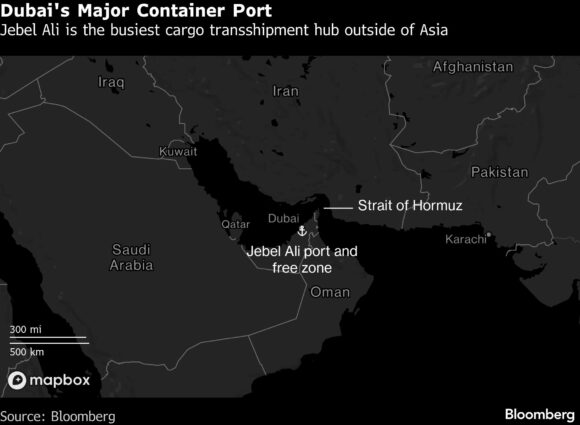
“All of that cargo is going to start backing up into the hubs and into the key locations in Europe and in Asia,” he said. Many of the vessels already caught up in the conflict area will have to turn around and attempt to offload in alternate ports.
It will inevitably have an impact on freight rates, fuel costs and equipment imbalances, Nixon said. “It’s another black swan event,” he said, adding that capacity at several major ports in Europe, Latin America and Asia is already an issue.
It’s not just maritime freight facing problems. Key hubs for air cargo are also closed or operating scaled-back schedules.
Air Cargo Congestion
“Airlines including Emirates, Qatar Airways, and Lufthansa have suspended or reduced flights, rerouting traffic around the conflict zone and limiting use of key transload hubs in Dubai, Abu Dhabi, and Qatar due to retaliatory missile activity,” Laufer Group International, a logistics services provider, wrote Monday in a note to clients. “More schedule changes are expected in the coming days.”
Longer routings require more fuel, which in turn reduce payloads so flights comply with weight limits and potentially add delays because of refueling stops, Laufer explained. “Capacity tightening and fuel-driven surcharges are likely to push rates higher,” it said.
Read More: Iran War Poses New Risk to US Economic Resilience
Kathy Liu, vice president of global sales and marketing at Taiwan-based Dimerco Express Group, said about 13% of global air freight capacity was knocked out as of Monday. She’s been fielding calls from customers concerned about delays and additional costs related to their shipments.
“We’re trying to move the shipments to avoid to transiting the Middle East by using other Asia-based carriers,” Liu said. “But because the supply is getting less all of sudden, we expect that the market rates will go up a lot.”
Even though it may be centered in the Middle East, eventually disruptions could spread to the busiest global trade lanes.
Ripple Effects
Depending on the scope and duration of the conflict, “we will continue to see the ripple effects for a period of time,” said Trine Nielsen, vice president of global ocean at digital freight forwarder Flexport.
“Carriers will typically want to have the equipment on the trades that are most profitable,” Nielsen said. “Even if this is maybe a Middle East situation, the ripple effects could translate into also the transpacific trade.”
The fighting has already spurred a rally in oil prices. Former Federal Reserve Chair Janet Yellen warned the TPM26 gathering that spike could mean both a hit to US economic growth and added inflationary pressures, complicating the job of balancing low inflation with a hearty labor market.
As for those contract negotiations between carriers and cargo shippers, it’s too soon to say because so much hinges on the ability of goods to flow smoothly through the Mideast again.
“What we’re seeing now, depending on how long it goes for, is going to define the market in 2026,” Tirschwell said. “Two weeks ago, we barely even saw this coming.”
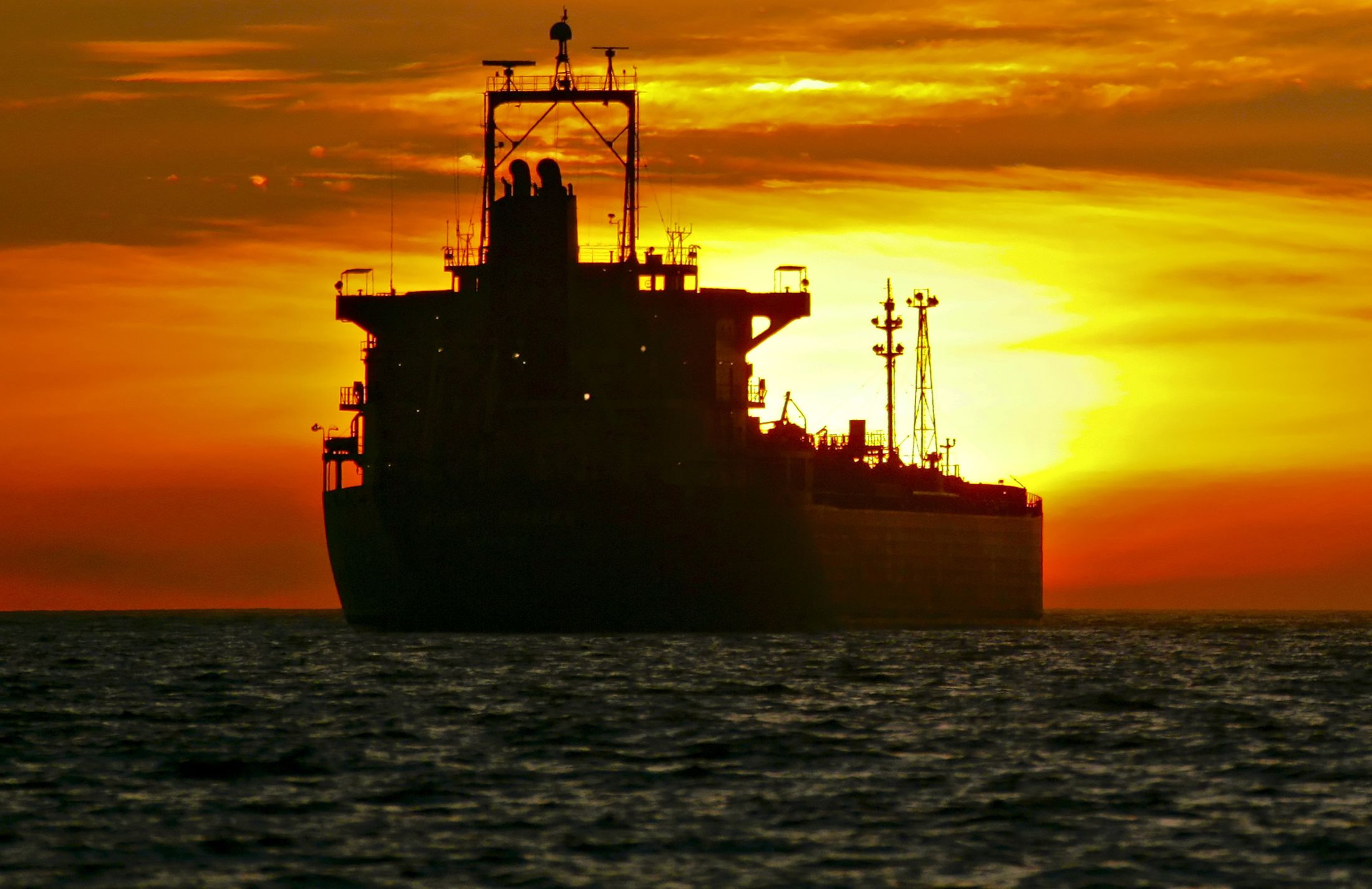
Photograph: An oil tanker is anchored near the Port of Long Beach, California, U.S., on Thursday, Dec. 31, 2009. Photo credit: Tim Rue/Bloomberg
Copyright 2026 Bloomberg.
Topics
Carriers
