

The Trump administration’s $20 billion maritime reinsurance program, which aims to cover hull & machinery, as well as cargo, is designed to get ships moving through the Strait of Hormuz. But, according to Moody’s Ratings, without coverage of liability risk, the plan isn’t likely to work.
On March 6, the U.S. International Development Finance Corporation (DFC) announced a plan to provide reinsurance for vessels sailing through the Strait, aiming to “restore confidence in maritime trade, help stabilize international commerce, and support American and allied businesses operating in the Middle East during the conflict with Iran.” On March 11, the DFC announced that Chubb will be the lead partner for the program.
“I think it’s useful, but it’s probably not enough currently to solve the situation,” because that’s a risk that a lot of shipowners are unlikely to take at this stage, said Benjamin Serra, senior vice president, Financial Institutions for Moody’s Ratings, in a webinar last week, titled “Insurance Unlocked: Stability, risks, and what comes next.”
Even if a shipowner has insurance and ships are escorted by the U.S. miliary, “it’s probably not a great incentive to try to cross the strait, at least today, as long as the situation is not safe,” he emphasized.
Serra explained that there’s still a risk that an oil tanker could be hit, leading to massive pollution for the beaches of Dubai, for example, which is a big tourist area. Such an event, he warned, would be very costly for the industry.
He described the proposed DFC reinsurance program – even without liability cover – as a useful initial step on the part of the U.S. government – a signal that the U.S. wants to act and reduces the risk that the conflict will continue for 12 months and beyond.
The DFC did not respond to several queries about a possible expansion of the program to include liability risk.
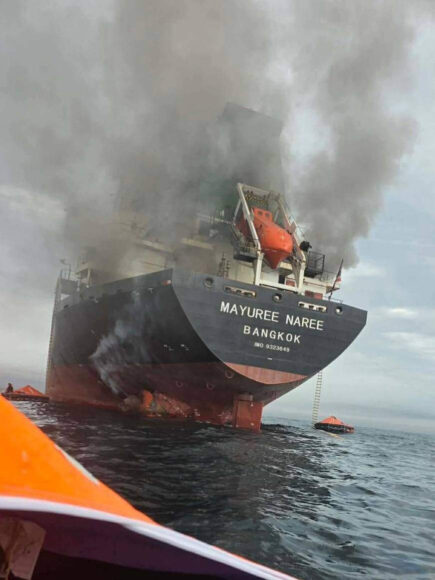
Almost 20 vessels have been attacked thus far during the war, which is a limited number of incidents, Serra said, noting, however, that the loss potential is high, given estimates from the Lloyd’s Market Association that the value of ships currently trapped in the Persian Gulf is at least $25 billion. (News reports indicate that 16 vessels had been attacked as of March 15, killing at least eight crew members, while an estimated 20,000 seafarers are stranded on their vessels.)
Serra acknowledged that it’s challenging to get reliable data about what is happening in the region. “But from what we have managed to gather from various press reports, from maritime organizations, from public statements, or even from private discussions that we’ve had with insurance companies that we rate, we understand that there are around 1,000 boats, which are currently trapped in the [Persian] Gulf.”
Read more: Seafarers Can Refuse to Sail Through Mideast Gulf Region, Main Union Says
In fact, some insurers have estimated that the (worst-case) exposure for these trapped vessels could hit $40 billion or even higher, which Serra said is still a manageable amount for the global insurance and reinsurance industry. He pointed to the example of losses of an estimated $50 billion in 2024 from Hurricane Milton and Helen, which were handily absorbed by the industry.
However, there is a difference between hurricanes and the potential risks to shipping insurers, he cautioned.
“When you have a hurricane, the risk is split between a lot of primary insurance companies and also a lot of global reinsurance companies,” he said, noting, however, that marine insurance is actually a much more concentrated market.
Nevertheless, Moody’s doesn’t expect that necessarily to be a threat because the losses can be absorbed by large global insurance companies and reinsurance companies, which are very diversified and have strict limits, Serra said.
But for more specialized players in the marine sector, the impact could be higher and could result in sizable losses, he said.
Further, even if ships are not attacked, marine insurance policies generally include clauses that cover shipowners for a total loss if vessels are trapped for a lengthy period – typically 12 months – which could result in substantial losses for the insurance industry, he said.
Serra detailed how insurance companies moved to reduce their exposures by immediately sending notices of cancellation to their policyholders when military strikes started on February 28 – which is allowed in marine insurance especially for coverage of war risks.
While insurers acted to reduce the risk, this doesn’t necessarily mean they have avoided exposure, he explained. “For example, if a boat has started its voyage between two harbors, the coverage cannot be cancelled by the insurance company.”
Furthermore, when insurance companies send notices of cancellation, they try to provide some adjusted coverages, with higher prices and reduced guarantees, Serra said.
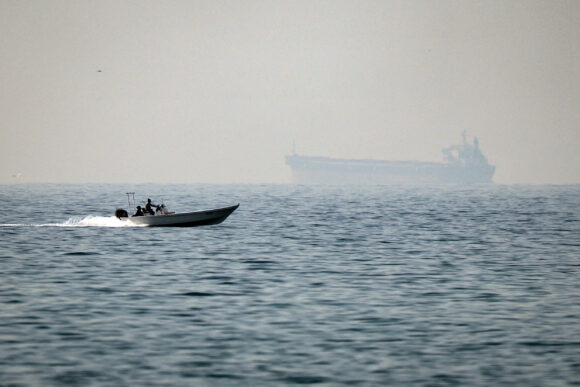
Top photograph: A tanker in the Strait of Hormuz on Feb. 25, 2026. Photo credit: Fadel Senna/AFP/Getty Images
Related:
Topics
USA
Reinsurance
Liability
