
Close Menu
  • Home
  • Life Insurance
  • Auto Insurance
  • Home Insurance
  • Health Insurance
  • Business Insurance
  • Travel Insurance
  • Specialized Insurance
  • Insurance Tips & Guides
Facebook X (Twitter) Instagram
Insure GenZInsure GenZ Saturday, May 23
  • About Us
  • Contact Us
  • Disclaimer
  • Terms & Conditions
  • Privacy Policy
Facebook X (Twitter) Instagram
Subscribe
  • Home
  • Life Insurance
  • Auto Insurance
  • Home Insurance
  • Health Insurance
  • Business Insurance
  • Travel Insurance
  • Specialized Insurance
  • Insurance Tips & Guides
Insure GenZInsure GenZ
Home»Health Insurance»What to Know About Medicare Coverage of Telehealth
Health Insurance

What to Know About Medicare Coverage of Telehealth

AwaisBy AwaisMarch 19, 2026No Comments3 Mins Read13 Views
Facebook Twitter Pinterest Telegram LinkedIn Tumblr Copy Link Email
Follow Us
Google News Flipboard
What to Know About Medicare Coverage of Telehealth
Share
Facebook Twitter LinkedIn Pinterest Email Copy Link

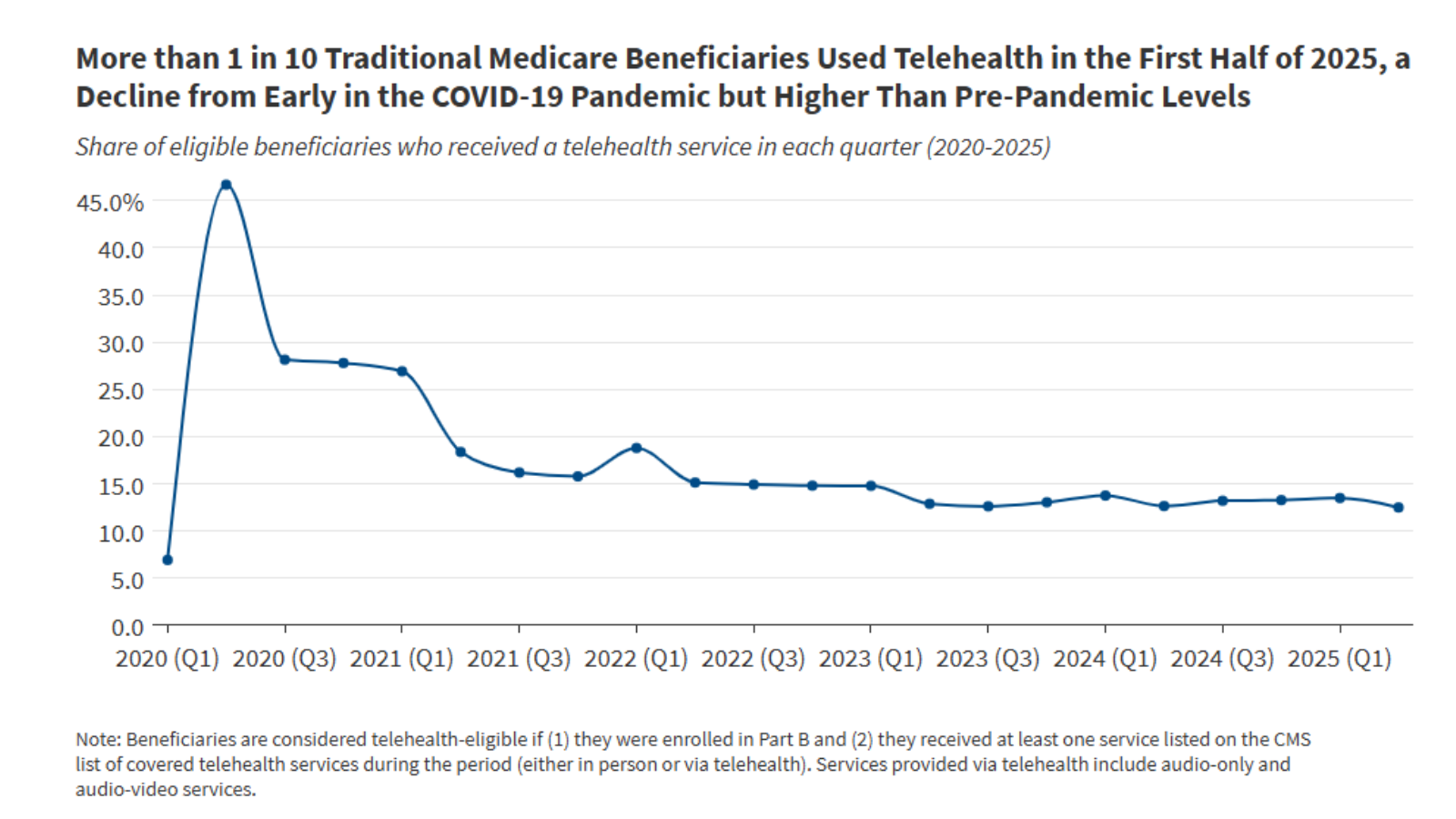
Telehealth use in traditional Medicare increased dramatically at the start of the COVID-19 public health emergency, with nearly half (46.7%) of all eligible beneficiaries receiving at least one telehealth service in the second quarter of 2020, compared to just 6.9% in the first quarter (Figure 2). While use has declined since that time, it remains nearly two times higher than pre-pandemic levels, with more than one in ten (12.5%) eligible beneficiaries receiving a telehealth service in the second quarter of 2025 (the most recent period for which data is available).
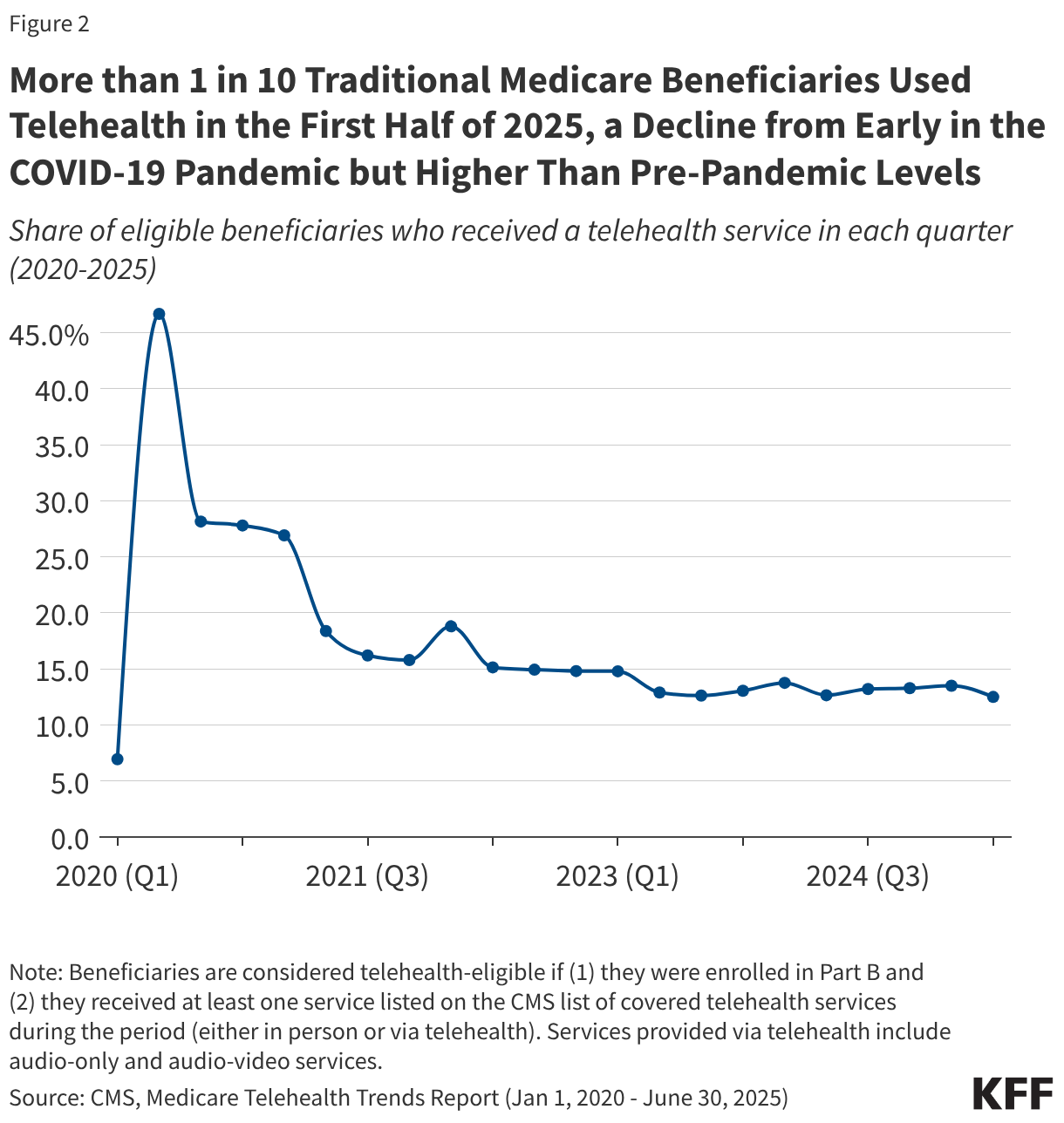
More than 1 in 10 Traditional Medicare Beneficiaries Used Telehealth in the First Half of 2025, a Decline from Early in the COVID-19 Pandemic but Higher Than Pre-Pandemic Levels (Line chart)

Use of telehealth services varies by geography, race and ethnicity, reason for Medicare eligibility, and dual enrollment in Medicare and Medicaid (Figure 3).
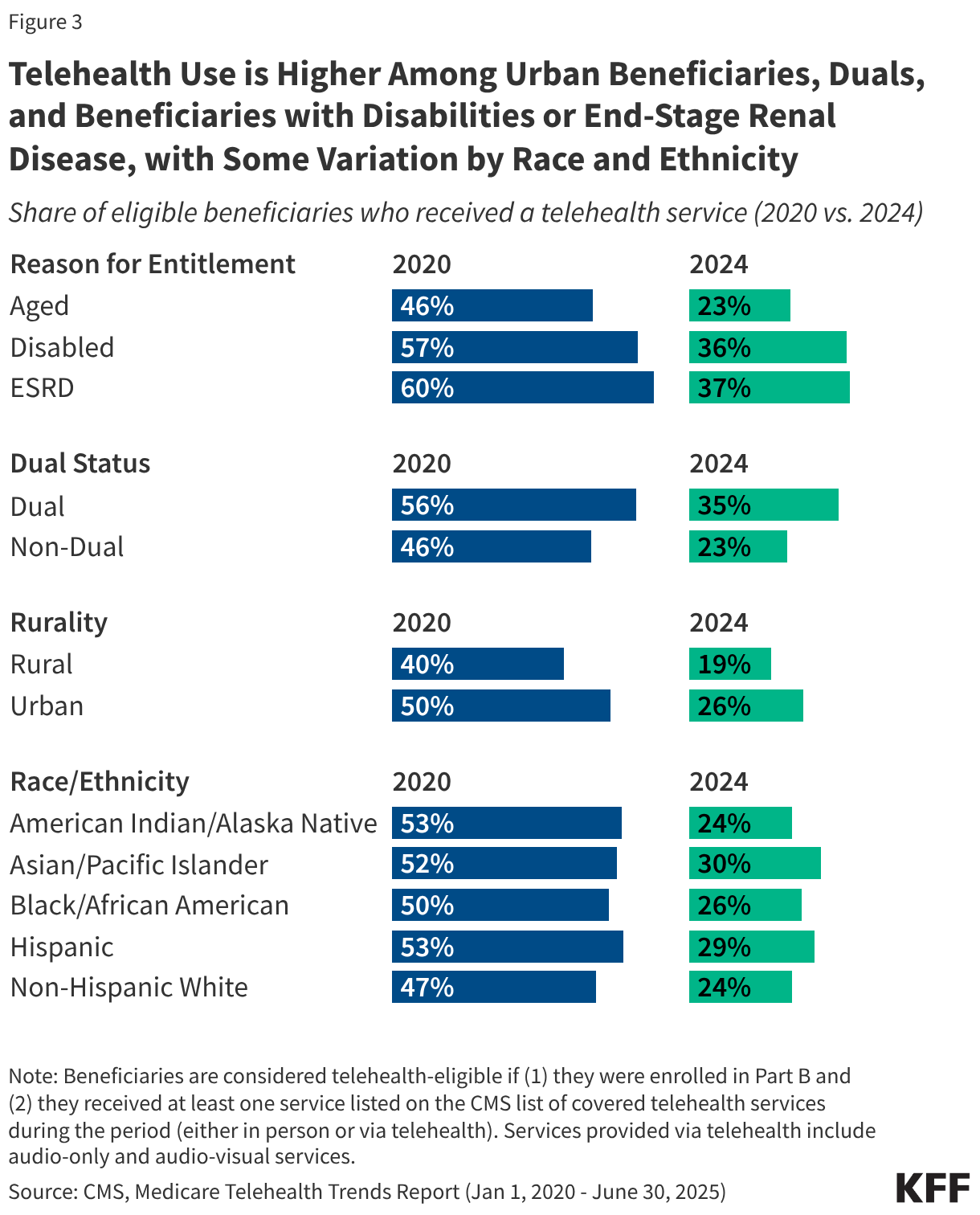
Telehealth Use is Higher Among Urban Beneficiaries, Duals, and Beneficiaries with Disabilities or End-Stage Renal Disease, with Some Variation by Race and Ethnicity (Split Bars)

Reason for Medicare eligibility: Rates of telehealth use in 2024 were higher among beneficiaries who qualify for Medicare based on having end-stage renal disease (ESRD) (37%) or a long-term disability (36%), relative to those who qualify based on age (23%). This may be due in part to higher overall rates of service use among people with ESRD and disabilities (whether in-person or via telehealth) but may also reflect a preference for telehealth among these populations, or a greater ease of accessing care via telehealth relative to in-person care. Beneficiaries under age 65 who qualify for Medicare based on having long-term disabilities are more likely than older beneficiaries to report having three or more limitations in activities of daily living, and may be more likely to benefit from the increased flexibility of receiving health care services from their home via telehealth.

Dual-eligible individuals: Rates of telehealth use in 2024 were higher among beneficiaries dually eligible for both Medicare and Medicaid compared to Medicare beneficiaries who were not Medicaid eligible (35% vs. 23%). Dual-eligible individuals are four times more likely than other Medicare beneficiaries to live on incomes of less than $20,000. Prior studies have found that having lower income or living in a socioeconomically deprived neighborhood is associated with higher rates of telehealth use, suggesting that telehealth may have the potential to improve health care access for beneficiaries with limited access to in-person services.

Geography: Rates of telehealth use in 2024 were higher among beneficiaries living in urban areas than those in rural areas (26% vs. 19%), which may be due in part to disparities in access to broadband and other communication technologies. Beneficiaries in rural or underserved areas may lack the infrastructure to support reliable video telehealth visits or the means to afford internet access, which may further impede access to telehealth if coverage of audio-only services is reduced or eliminated.

Race and ethnicity: Rates of telehealth use in 2024 were highest among Asian and Pacific Islander (30%) and Hispanic (29%) beneficiaries, and somewhat lower among Black (26%), American Indian or Alaska Native (24%), and non-Hispanic White beneficiaries (24%). Given that beneficiaries of color are more likely than non-Hispanic White beneficiaries to report difficulty accessing needed health services, telehealth use may help to improve access to care for certain groups.

Coverage Medicare Telehealth
Follow on Google News Follow on Flipboard
Share. Facebook Twitter Pinterest LinkedIn Telegram Email Copy Link
Awais
  • Website

Related Posts

Hospitals sue CVS for allegedly siphoning $250M in 340B funds

May 23, 2026

Trump Bought Stock in Eli Lilly as His Policies Gave the Drugmaker a Big Boost, Documents Show

May 22, 2026

HHS launches AI-backed health fraud crackdown

May 22, 2026
Leave A Reply Cancel Reply

Our Latest Blogs

Massachusetts MPIUA returns for $150m Mayflower Re 2026 catastrophe bond

May 23, 2026

Hospitals sue CVS for allegedly siphoning $250M in 340B funds

May 23, 2026

Trump Bought Stock in Eli Lilly as His Policies Gave the Drugmaker a Big Boost, Documents Show

May 22, 2026

Allstate starts 2026 annual aggregate risk period with $870m of April catastrophe losses

May 22, 2026
Recent Posts
  • Massachusetts MPIUA returns for $150m Mayflower Re 2026 catastrophe bond
  • Hospitals sue CVS for allegedly siphoning $250M in 340B funds
  • Trump Bought Stock in Eli Lilly as His Policies Gave the Drugmaker a Big Boost, Documents Show
  • Allstate starts 2026 annual aggregate risk period with $870m of April catastrophe losses
  • HHS launches AI-backed health fraud crackdown

Subscribe to Updates

Insure Genz is a modern insurance blog built for the next generation. Subscribe it for more updates.

Insure Genz is a modern insurance blog built for the next generation. We break down complex topics across categories like Auto, Health, Business, Life, and Travel Insurance — making them simple, useful, and easy to understand. Whether you're just getting started or looking for expert tips and guides, we've got you covered with clear, reliable content.

Our Picks

Massachusetts MPIUA returns for $150m Mayflower Re 2026 catastrophe bond

May 23, 2026

Hospitals sue CVS for allegedly siphoning $250M in 340B funds

May 23, 2026

Trump Bought Stock in Eli Lilly as His Policies Gave the Drugmaker a Big Boost, Documents Show

May 22, 2026

Allstate starts 2026 annual aggregate risk period with $870m of April catastrophe losses

May 22, 2026
Most Popular

Massachusetts MPIUA returns for $150m Mayflower Re 2026 catastrophe bond

May 23, 2026

Hospitals sue CVS for allegedly siphoning $250M in 340B funds

May 23, 2026

Trump Bought Stock in Eli Lilly as His Policies Gave the Drugmaker a Big Boost, Documents Show

May 22, 2026

Allstate starts 2026 annual aggregate risk period with $870m of April catastrophe losses

May 22, 2026
  • About Us
  • Contact Us
  • Disclaimer
  • Terms & Conditions
  • Privacy Policy
© 2026 Insure GenZ. Designed by Insure GenZ.

Type above and press Enter to search. Press Esc to cancel.