

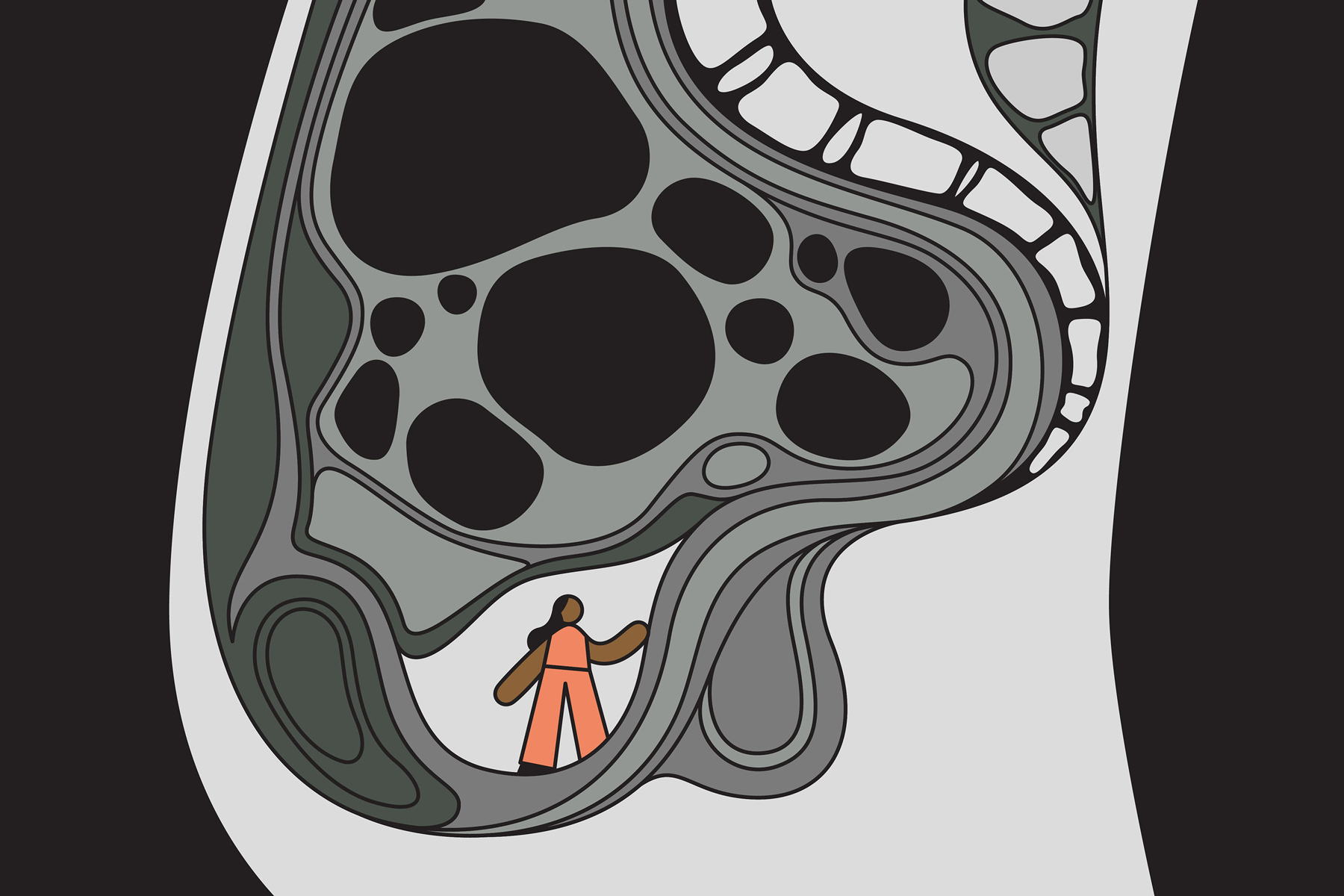
JOEL BERVELL: My guest on this episode of The Dose is someone whose work has captivated audiences around the world, and who is now using her voice to bring attention to a condition that affects millions of women but is still far too rarely talked about: Lupita Nyong’o. You may know her from films like 12 Years A Slave, Black Panther, Star Wars, and so many others, performances that have earned her an Academy Award, an Emmy, and global recognition. But today we’re talking about something much more personal. Lupita has been living with uterine fibroids for years. In fact, she’s had 77 fibroids, with 25 surgically removed, and many still growing.
Uterine fibroids are noncancerous tumors that can grow in or on the walls of the uterus. An estimated 70 to 80 percent of women may develop fibroids in their lifetime. That’s 26 million women in the United States alone. While some people may never know that they have them, for many others fibroids cause severe symptoms, heavy bleeding, chronic pain, bloating, back pain, and fertility changes.
And despite how common they are, fibroids have historically been under-researched, underfunded, and often misunderstood. So in early March 2026, Lupita celebrated her birthday by launching the Make Fibroids Count campaign with the Foundation for Women’s Health, using her platform to push for greater awareness, research, and better care for women living with this condition. This conversation is about changing that.
Lupita, thank you so much for joining me on The Dose.
LUPITA NYONG’O: Thank you so much for having me, Joel.
JOEL BERVELL: When we met briefly at the Milken conference last year, I remember telling you how powerful it was for me to see someone with your platform speaking openly about fibroids. As a doctor, and also as a brother to a sister who has struggled with fibroids herself, I’ve seen how many women struggle with this condition. So seeing you bring it into the public conversation has been truly inspirational. But when you launched the Make Fibroids Count campaign, you shared a stunning portrait of yourself holding a basket of 77 fruits of all shapes and sizes, representing the 77 fibroids you’ve had. What made you decide to tell your story in such a visual and symbolic way?
LUPITA NYONG’O: Well, I’m an artist first and foremost, and I respond to the beautiful. I think beauty has a way of resonating and penetrating us in a way, and it can shift things in a way that feels less violent. So for me, I wanted to find a beautiful way to speak about fibroids, to reveal what is so invisible to the eye. And doctors, when I would be in these consultations, would compare my fibroids to fruit. They would say, oh, your biggest fibroid is the size of an orange, your smallest ones, you know, they’re like little blueberries. And that was so helpful to me. I’m also a very visual learner. Those metaphors stuck with me. Those images stuck with me. And so when we were developing this campaign, it just dawned on me that this might be a beautiful way to convey the message of fibroids that is pleasing to the eye, but still arresting in some way when you really consider why someone would be bearing a basket of fruit in the manner that I was. And, uh, yeah, that’s how the campaign found its aesthetic.
JOEL BERVELL: And you also shared something very personal too. It was an MRI image showing the fibroids inside your body too, and that’s something I feel like many people don’t often see publicly. What made you go to that level of vulnerability as well?
LUPITA NYONG’O: Oh boy. I wrestled with that, Joel. I did. Again, this voice in my head — this, I don’t know whether my conscience or my higher self or God or what — but this voice said, you know, you need to release that MRI with this image. And I was like, goodness gracious, that’s so vulnerable. That’s literally bearing my insides to the world. And I was really nervous about doing it and I resisted it. I debated with my mom and my sisters, should I do this?
And the reason why I think the idea came to me to release the image was because I knew that the fruits were easier to see. And I also knew that there were enough people in the world that don’t know what fibroids are or look like. And I wanted, I felt that it would be a powerful juxtaposition and give a grounding context to the artistic expression. And my goal in sharing my story is always to, it’s been to bring some gravity to this issue that has just been taken so lightly for so long. And so that’s why I thought it might be a powerful thing to do. And I also felt that the MRI would be a comfort to women who may have received even scarier MRIs. So I wanted to create that community in that sense and encourage women to speak up because for me, speaking up has been extremely healing and helpful.
JOEL BERVELL: Yeah, and I think that juxtaposition, the contrast between the two images, the MRI, very clinical medical image, versus the fruit, which is very striking and immediately takes this alternative meaning to a very medical idea that many people haven’t been able to visualize in that way.
I’m hoping you can take us back to the beginning for a moment. When did you first realize that something wasn’t right with your body? How did you eventually learn that fibroids are the cause? I know you mentioned a little bit of working with your doctor, but what were those early days, before even knowing what was going on, like?
LUPITA NYONG’O: Well, you know, unfortunately I was not taught how to read my body.
When I went to Christian schools in Kenya where we learned about, we learned science through the story of Adam and Eve. And so very early teaching was that Eve was the cause of all our problems. One of the punishments for her leading Adam astray was menstrual pain. This is literally what I was taught.
And so when it came time, when I was in my teen years learning sex ed, I was taught to expect periods to be painful and uncomfortable. I was taught that every woman experienced periods differently, that there was no standard to a menstrual cycle. And, indeed, I had friends who would miss school for a week, and so I felt I was doing great because I never missed school because of my period.
And so when the symptoms that I have come to learn are associated with fibroids started, I paid them no mind. My period grew longer and it didn’t faze me at all. And then I started clotting, and that did not sound the alarm for me. I started experiencing more cramps and I thought, well, this is my lot in life, right?
And so those signs, I can’t even tell you when they started because I was not paying attention to them. I was not taught to pay attention to them. What I was taught was to endure. Those days were days you didn’t talk about, you didn’t let anyone know what you were going through, and you certainly didn’t inspect your period.
And so I’ve always seen [an] ob/gyn, so it’s not like I went through a period of not having that kind of medical attention. But nobody ever said anything. And so the first time I learned I had fibroids was in 2014, and that was the year that I won the Academy Award. So I was experiencing such an incredible high in my life.
Shortly after that, I got the diagnosis that I had fibroids, and of course that was a very low low, and at the time I felt shame and confusion as to why I was going through this, what I’d done to make it happen. And when I asked what caused fibroids, my doctor didn’t have really much of an explanation. I lost so much weight and I was experiencing longer periods than usual. It was becoming harder to ignore what I had been conditioned to ignore. And so when I started to say, Hey, something is wrong. I feel like something is wrong. I felt like there was like a firmness in my pelvic area that I just, I couldn’t ignore it anymore, and my doctor first said, oh, you know, uh, it’s probably this, it’s probably that.
And then eventually I doubled down and I said, no, no, no, something is wrong. And finally she ordered an ultrasound first and that confirmed that I had fibroids. And then after that an MRI where they could tell me a little bit more about how many fibroids I have. I was given two options, get surgery or live with them, and I decided to get the surgery at the time.
And then at that time, the largest fibroid was the size of a peach. And in my mind I’m just like, how did we get this far? You know, why is it that fibroids are ignored for so long until they’re actually decreasing your quality of life? And that’s when now it becomes, oh, we need to get the knives out. I really didn’t appreciate that trajectory.
JOEL BERVELL: Mm-hmm. So you made that hard decision to have the surgery. How did it go from there?
LUPITA NYONG’O: After, when I asked, okay, what can I do to make sure that they don’t come back? My doctor said, you know, it’s only a matter of time until they grow back. And I was perplexed by how little the medical industry knew about this issue, especially since the statistics was so high and I was being reassured so many women go through this, don’t worry, so many women go through this. And I was like, okay, if so many women go through this, why don’t we know more? And why don’t we have more options?
But I got back to my life and then 10 years later — and I was getting checks every year — 10 years later, I go in and they’re like, oh, you have fibroids again. They’re twice the number, and we still have the same options for you. And that’s when my confusion and the perplexity I was feeling turned into rage, really. Why have we made no advancements in these 10 years, you know? And so I really sat with myself and I was like, okay, I don’t understand why this is so prevalent and I don’t hear enough about it.
There’s not enough being done to find better solutions for women. And so that was when I started to talk about it among my family and my friends. And what I found among my family was that so many of my family members had had fibroids and had surgery. I had aunties who had had surgeries and then were rendered infertile. I had cousins who had had surgeries and then gone on to have children. I mean, it ran the gamut in my family. And then my friends, I started talking and they were like, oh, please, I have fibroids too. I have fibroids, I have fibroids.
And there was a casualness with which people talked about it that didn’t match the severity of the experience that I was having or the severity of the interventions that were available. And that’s when I thought, okay, I really feel like something’s got to shift because there is a trivial way in which we are talking about this that is also not helping the situation. And, and so a little quiet voice in my head said, listen, if you want to see change, you have to be a part of it. And that’s when I had to put on my big girl panties and decided to speak up publicly about it and find people who were fighting to see a change.
JOEL BERVELL: Thank you for sharing that so openly. As a doctor, I feel like I hear stories like that from patients so often about how long they lived with symptoms before realizing something wasn’t right.
And I entirely resonate too in the idea of what is thought to be appropriate, and especially my, my parents are also from Ghana, West Africa, and I had this similar conversation with my sister when she was talking about her own feeling comfortable to tell our family what was going on, or just by the way, in terms of what was appropriate to talk about what wasn’t appropriate to talk about, where the kind of the stigma and the silence that surrounds so much of reproductive health right now as well. And then, just in medical school, we don’t get enough information about reproductive health. And one thing I often hear from women with fibroids is that their symptoms are often dismissed or minimized before they receive a diagnosis.
I’m wondering if you ever felt like you experienced moments like that in your own journey, where you felt like what you were going through wasn’t fully understood, either by the health care system or even by those around you?
LUPITA NYONG’O: Well, yeah, like I said, the fact that I had been examined before, nobody had said you have fibroids, or you may have fibroids. And here’s a pamphlet to learn about what they are. And first of all, are you experiencing symptoms? Because if we are miseducating young adults, then they cannot advocate for themselves because, like me, I didn’t know what symptoms to flag. So there needs to be a reeducation of the miseducated.
So I felt like, yeah, like I didn’t get the kind of attention to help me advocate for myself in a timely fashion. But then again, also, as I have come to understand the medical industry, like you said, you guys are not equipped for the information because a lot of the information still is unknown.
So it all boils down to when now I started to speak up and talk to people and find about the statistics and what the doctors know and what they don’t. I think I realized without research we can’t get any further. We need to understand more in order to be able to equip the doctors who can then equip the patients.
Like we know what the symptoms are, so why aren’t we, you know, in our annual checkups, why isn’t fibroids a priority to detect? It’s just a matter of equipping the medical representatives with the information that they need to impart on their patients. I think that’s an easy thing to do immediately, and I would love to see them become standard practice.
And then in terms of like my community and stuff, for me what was just really shocking was the casualness. I think there has been misunderstanding that just because something is common doesn’t make it normal, and a lot of people have just flipped it to being normal, just because lots of us experience it.
So for me, that was the thing with my friends and my family, that oh, please, girl, I have them too. Well, that’s not a consolation, you know? And I also think that that is the case. It’s kind of like if the medical system treats something casually, then we are more likely to treat it casually as well.
So it’s just a vicious circle of none of us taking it seriously, and that’s what we need to break. It’s not okay just because lots of people are experiencing it, and it’s, again, we need to take women’s health matters seriously, and it starts with those of us who have it not accepting it as normal.
JOEL BERVELL: Absolutely, and thank you for not accepting as normal because, just through your example, so many other individuals are going to feel more empowered to speak up, to share their own stories. I’m curious, as you began speaking publicly about fibroids, what surprised you the most about the response from individuals who maybe have reached out to you?
LUPITA NYONG’O: That is an easy answer. I was surprised by how many women had been offered hysterectomies as a first course of action. That for me was stunning. I could not believe it — that women were partially or wholly losing their reproductive organs because of this noncancerous tumor situation. I just could not believe it.
And for me that is unacceptable. I can imagine that there are times when a hysterectomy is necessary, but surely we should not have it as a first line of action. And I’ve spoken to women who were offered hysterectomies and then refused to accept that as their only solution. Found second opinions, found other options. Myomectomies, right? Hysteroscopies. And so that has been the most shocking thing that fibroids, first of all, that 30 percent of hysterectomies are thanks to fibroids, you know, and that there are 600,000 hysterectomies annually. That is a lot of hysterectomies.
For the man, everything is done to keep their reproductive organs, and I don’t know why women are not being afforded the same preservation. It’s unacceptable.
JOEL BERVELL: I one thousand percent agree. We also know that Black women in particular tend to develop fibroids earlier, experience more severe symptoms, and are then more likely to be offered, like you said, a hysterectomy first before surgery. What — I know this is speculation — but why do you think, just in your conversations with others, this hasn’t received as much attention as it should have?
LUPITA NYONG’O: We know that generally women’s health has received the raw end of the stick, right? Like, we know that we are still far behind because medical studies have been historically performed on men, specifically the white male, and so the diversification of how studies happen has a long way to go. With the fact that Black women are more likely to have fibroids earlier, have more severe symptoms, and more likely to be offered a hysterectomy, we don’t know why that is yet, right, why Black women are more affected? But I think that Black women are the ones that suffer the most in the medical system anyway, right? And so why would it be any different when it comes to fibroids? And perhaps that has played a role in the lack of urgency in dealing with it, but I reject that. I simply reject it.
When I learned that it’s more prevalent in us, it broke my heart. But I don’t accept it. I don’t accept that limitation, and I don’t know how to change the racial bias. But what I do want to do is anything and everything in my power to contribute to the change for us as Black women and for all women. That is a limiting paradigm and I don’t want to participate in it. What I want to participate in is the solutions to the problem.
JOEL BERVELL: Absolutely. I often say that doctors are to Black women what police are to Black men, in the sense that so many health problems, reproductive health problems in particular, get ignored. That there’s a history stretching all the way back to J. Marion Sims, and even the way that the ob/gyn field was created, that has been harmful to Black women. And so I think having those conversations is so necessary.
And as you hinted at, and actually and just directly said, women’s research has not been done enough. It actually wasn’t until 1993 that women’s health was legally mandated to have inclusion of women and minority populations in NIH-funded clinical research. So you think about how many drugs, procedures, conversations that have left out women in particular, specifically Black women as well. And so once again, I truly appreciate what you’re doing right now with the campaign.
And, connecting back to that, the Make Fibroids Count campaign is about pushing for awareness, research, and better care. If we were having this conversation again five years from now, what would success look like to you?
LUPITA NYONG’O: Well, hopefully this research moves us forward in finding noninvasive and less invasive ways to deal with fibroids so women have more options in five years. And why I partnered with the Foundation for Women’s Health in particular is because their mandate is to fill the gaps, you know, the gaps in research in the woman’s life cycle, and also to share the findings of the research. It’s one thing to do the research, it’s another thing to have access to it, right?
And so in an ideal world, this research done from the money raised for this grant leads us to a place with more options for women dealing with fibroids, so that we don’t all have to be cut open so much, you know? It is very invasive surgery.
And also make where a world where, in five years, fibroids are not a foreign word to anybody. Anybody. Like, you have to be living in a cave to not know about fibroids. Please. You know, I don’t want to see eyes glaze over when you say fibroids anymore. I would really like it to be a medical word that is accessible and understood, and also that we are in a better place to equip young women to understand their bodies and look out for the signs. Because again, 80 percent of women having fibroids by age 50 means majority of women could have fibroids, and so majority of women should be on the lookout for them.
JOEL BERVELL: I have chills right now. And as I close out this conversation, I just want to ask, for women listening right now who may be experiencing symptoms, the ones that you’ve described, or that may feel dismissed or unsure about seeking care, or maybe they’re being offered first a hysterectomy, what would you want to say to them directly?
LUPITA NYONG’O: One of the things that I struggled with when I was going through my first diagnosis is feeling alone. I wish I had a community that I could go to, even if it was anonymously, to find information. And it took me a long time to find that community, and now I hope I’m building it. So what I want to say to those women is, you’re not alone.
I hope that, uh, this campaign, yes, we are raising money. We’re also at the same time building community, I hope. So I hope you can join the community of Make Fibroids Count. I have also joined community. I’ve joined community with The White Dress Project. I’ve joined community with The Fibroid Foundation. These are organizations that have existed way longer than I have in this space. And they have community. So I would encourage women to seek those organizations out.
And there’s going to be the right time for you to speak up, but I want you to know that speaking up has really, really been beneficial to me, and know that there is this larger community online with these organizations where you can commiserate and hopefully not go through the steps by yourself. Because it’s very hard to do this by yourself, especially with so little information, you know? It’s very, very helpful to have the experiential data that we are sharing in these communities. So please plug into one of them.
JOEL BERVELL: Thank you for sharing those communities, and I’m glad you mentioned The White Dress Project. And I want to say thank you, Lupita, for sharing your story so openly today. For continuing and always using your voice to shine a light on something that affects millions of people every single day, but isn’t talked about.
And when we did our collaborative post on Instagram about fibroids, I think what we saw in the comments was so many people sharing their own experiences in comments and messages and forming community right there. And it was a powerful reminder of just how many people are living with this and how important it’s to bring these conversations into the open. And you can learn more, find more resources by visiting makefibroidscount.org.
And once again, Lupita, thank you for the work you’re doing on the Make Fibroids Count campaign. Let’s meet that goal, and thank you for joining us on The Dose.
LUPITA NYONG’O: Thank you, Joel. Thank you so much for the work you are doing and thank you for supporting Make Fibroids Count in such a colossal way.
JOEL BERVELL: This episode of The Dose was produced by Jody Becker, Jesús Alvarado, and Naomi Leibowitz. Special thanks to Barry Scholl for editorial support, Matthew Simonson for recording assistance, Jen Wilson and Rose Wong for art and design, and Paul Frame for web support. Our theme music is “Arizona Moon” by Blue Dot Sessions. If you want to check us out online, visit thedose.show. There, you’ll be able to learn more about today’s episode and explore other resources. That’s it for The Dose. I’m Dr. Joel Bervell, and thank you for listening.
