

A new report from Cotality warns that hailstorms can now produce insured losses comparable to a category 4 hurricane, with the firm highlighting that hail is beginning to shift from a secondary peril to a major driver of catastrophe losses, with implications for homeowners, carriers and reinsurers across the property market.
Jon Schneyer, Cotality’s Director of Research and Content, commented: “Hail doesn’t command the same headlines as hurricanes, floods or wildfires, but the data shows it has become one of the most financially destructive natural hazards facing the property market.
“Once considered ‘secondary’ with relatively modest losses, this ‘death-by-a-thousand-papercuts’ peril is now one of the biggest drivers of property insurance claims. That shift is placing growing pressure on insurers and recovery teams in what has become a high-stakes relay to restore damaged communities.”
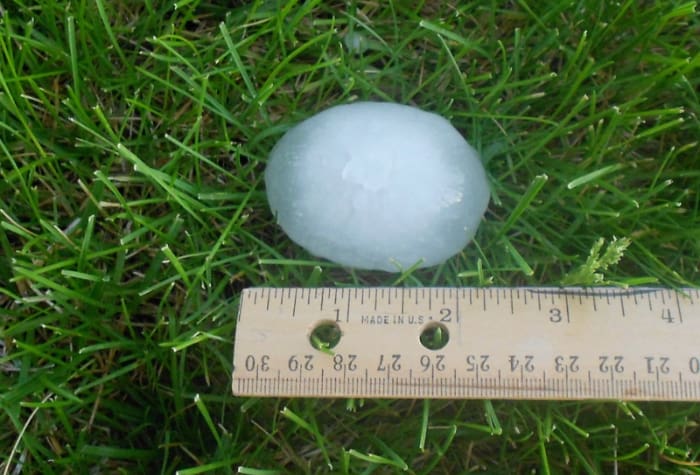
According to Cotality, in 2025, the U.S. recorded 142 days with damaging hail, seven more than what was recorded in 2024 and well above the 20-year average of 122 days. During those events, hailstones two inches or larger struck more than 600,000 homes, representing roughly $177 billion in RCV.
Cotality’s report shows that hail is becoming both more frequent and more financially destructive as housing growth and rising property values concentrate more assets in storm-prone regions.
Additionally, Cotality’s modeling indicates that across the spectrum of severe convective storm scenarios, from the rarer 1-in-500 year events to the more frequent 1-in-50 year events, hail is the primary driver of loss.
While at the more extreme 1-in-500 year loss, Cotality notes that hail alone could generate roughly 80%, or $58 billion, of an estimated $71 billion in insured losses from all SCS perils (including tornadoes, straight-line winds, and hail).
The report also states that even less extreme events can produce significant losses. A severe hailstorm expected to occur once every few decades could produce nearly $30 billion in insured losses, which puts it on par with a major landfalling hurricane.
Across 2025, more than 235,000 Texan homes experienced damaging hail, far exceeding any other state.
Cotality noted that risk remains specifically concentrated in the Texas Triangle: Dallas-Fort Worth, Houston, Austin, and San Antonio, which together account for more than $2.2 trillion in exposed RCV with moderate or greater hail damage risk.
Wyoming also ranked highly with more than 41,000 impacted homes, followed by Oklahoma, Wisconsin, and Kansas.
Beyond hail, Cotality also estimates that tornadoes and straight-line winds represent another major layer of risk across the U.S., with more than 76 million homes face moderate or greater tornado risk, which represents more than $27 trillion in reconstruction cost value.
As well as this, another 64 million homes are exposed to damaging winds of 65 mph or stronger, representing more than $23 trillion in RCV.
Cotality’s report also examined storm risk trends across Europe, where changing weather patterns and expanding urban exposure are similarly increasing the financial impact of localised storm events.
In the EU, severe convective storms have caused up to €50 billion in economic losses since 2000, with Germany accounting for nearly one-third of these losses at €12.3 billion, followed by France at €7.8 billion, while Ireland sustained the highest losses per capita at €5.9 billion.
Furthermore, Schneyer explained that storm losses continues to grow in both scale and complexity as expanded urbanisation development puts larger and costlier to repair property in harm’s way.
“For insurers and reinsurers, accurately capturing not just the volatility but also the aggregated magnitude of these events is critical. When underwriters are able to accurately price knowing the unique vulnerabilities of each individual property and modelers can map extreme risks with confidence, capital and resources are secured before a storm strikes. After an event, precise weather verification can confirm whether the damage being claimed was from the most recent storm,” Schneyer noted.
“The industry needs coordinated, data-driven insights across the entire recovery ecosystem to ensure communities can rebuild quickly and resiliently.”
In order to effectively manage the escalating threat of severe convective storms, Cotality stresses that the re/insurance industry must rely on a synchronised response across the entire recovery ecosystem.
“When underwriters accurately price property-level vulnerabilities and catastrophe modelers effectively map extreme tail risks, the necessary capital is secured before a storm strikes. Following an event, precise weather verification allows claims teams to immediately deploy resources, enabling restoration professionals to execute complex rebuilds without delay,” the firm explained.
“Integrating data-driven insights at every phase of this unified defense ensures the industry can efficiently manage catastrophic outbreaks—and communities are built back stronger, as quickly as possible.”

