

LISTEN: AI scribes are changing medical care. Here’s what to know if the technology shows up at your next doctor’s appointment.
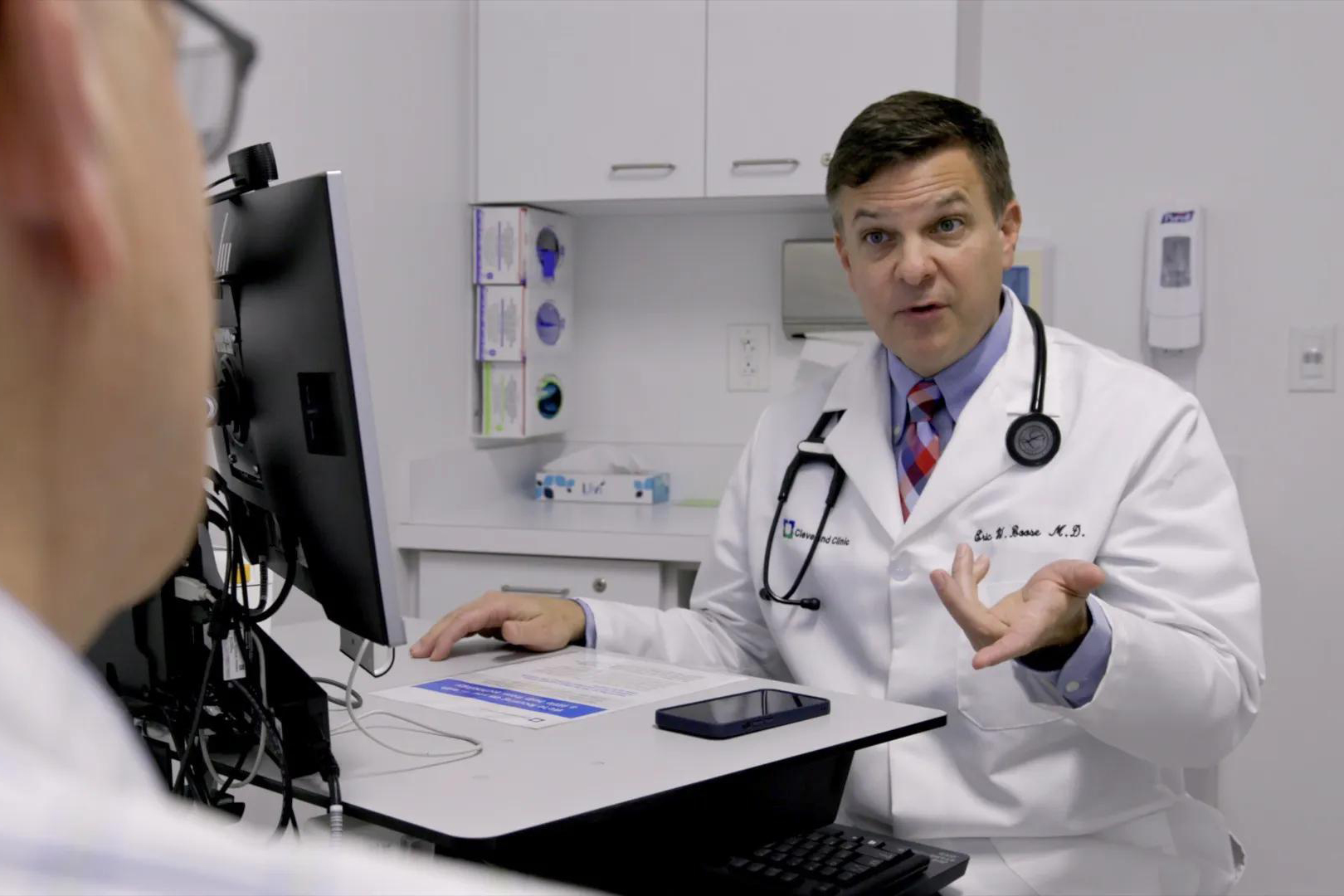
Family physician Eric Boose has been using an artificial intelligence tool to get back to what he calls “old-fashioned medicine” — talking with patients face-to-face, without having to type into a computer at the same time.
“I can really just sit there and engage and just focus on them and listen,” said Boose, who practices at Cleveland Clinic.
Roughly two years ago, he started using an AI notetaker app during patient visits. The tool listens while he talks with patients and then automatically generates a visit summary based on the conversation. The summary is usually ready within seconds after the appointment ends.
“It’s taking care of all that tedious work of charting and taking notes during the visit,” he said. “It’s just freeing up a lot more time to get that done, and I can get home to my family earlier.”
Nearly a third of physician practices are using AI scribes and others are working to add the tool, in an effort to cut down on administrative work.
If your practitioner suggests using an AI scribe at your next appointment, here are three things to keep in mind:
1. Clinicians should ask for your permission.
At the start of an appointment, your doctor might ask something like, “Are you OK if I use an AI scribe to help me take notes during this appointment?” A common practice is to accept verbal, not written, consent from patients before turning the tool on. However, the legal requirements for getting permission to record a patient conversation vary by state.
Boose said you can ask to pause the AI scribe at any point, especially to discuss something sensitive. And if you decline altogether, your practitioner will likely return to taking manual notes on a computer.
2. AI scribes make mistakes too, so check their work.
Like other AI tools, medical scribes can “hallucinate,” or spontaneously add errors into a record. AI scribes can also omit important information or miss context clues within a conversation.
Clinicians are supposed to review and edit the AI-generated visit summaries before adding them to a patient’s record. As a patient, it’s a good practice to carefully review your visit summary and contact your health provider if you notice errors.
3. Yes, the AI company could use your data, with limitations.
Companies and health systems that offer AI scribe tools have access to medical data and are subject to federal standards about how they use and store patient data, under the Health Insurance Portability and Accountability Act, more commonly known as HIPAA.
They may use data from your appointment to help improve their software without informing you, said Darius Tahir, who reports on health technology for KFF Health News. “ If information is ‘de-identified,’ which can mean stripping it of identifiers [and] making sure it’s not personally traceable back to people, then it is more free to be used in more ways,” he said. “There are way fewer regulatory requirements.”
If you want to know how your data is being used, ask either your practitioner or medical system for more information. But you might not get a clear answer, Tahir said.
People and Policy
The U.S. health care system will likely continue to integrate AI technology into patient care. The Trump administration strongly supports the development and use of AI, especially in health care. In early 2025, President Donald Trump issued an executive order reducing existing regulations on AI to help the U.S. “retain global leadership of artificial intelligence.” In December, the U.S. Department of Health and Human Services released an AI strategy stating that the department supports “integrating AI to modernize care and public health infrastructure to improve health at the individual and population levels.”
Emily Siner at Nashville Public Radio contributed to this report.
HealthQ is a health series from reporters Cara Anthony and Blake Farmer, approachable guides to an unapproachable health care system. It’s a collaboration between Nashville Public Radio and KFF Health News.
