


Several oil and gas producing giants in the Middle East declared force majeure since the war began, a legal clause allowing them to not honor contractual commitments. Hundreds of millions of barrels of cargoes have gone undelivered, refineries have been forced to scale back output, and there’s been chaos across shipping markets.
“We expect a lot of financial disputes and a lot of force majeure,” Mercuria Energy Group Ltd. CFO Guillaume Vermersch said at the Financial Times Global Commodities Summit, adding that how the situation plays out out could shape some of the firm’s profit this year.
In normal times, Hormuz handles about a fifth of the world’s oil and liquefied natural gas but it was effectively closed to non-Iranian shipping soon after the war started. The International Energy Agency has called the disruption the largest supply hit ever.
Vitol Group CFO Jay Ng said legal, market and operational risks are among the key things the firm is watching. The industry has issued “multiple” force majeures since the conflict began, he said.
His counterpart at Trafigura Group, Stephan Jansma, said that there were potentially “a lot” of claims.
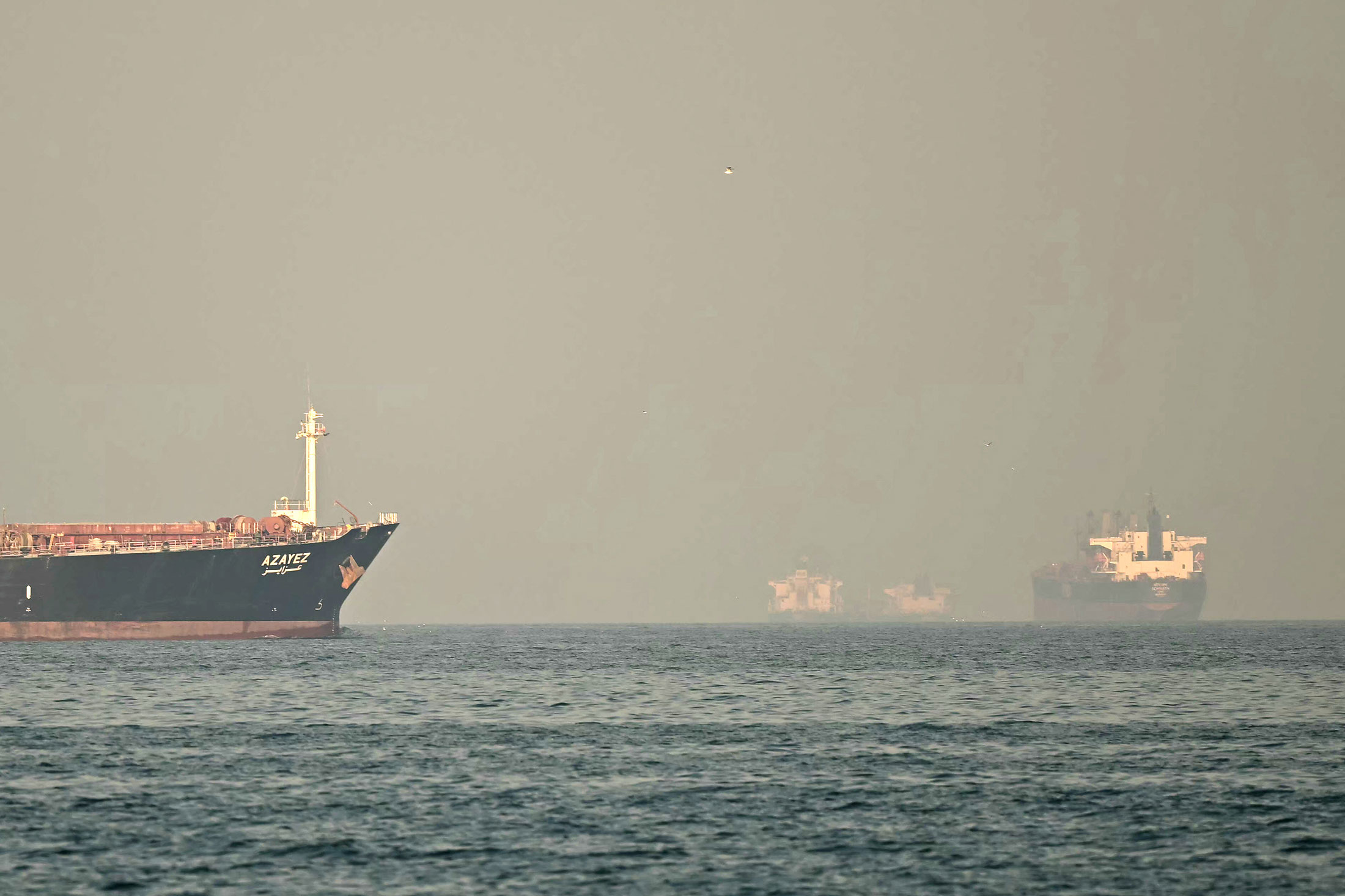
Photograph: Cargo ships in the Strait of Hormuz in February 2026; photo credit: Giuseppe Cacace/AFP/Getty Images
Copyright 2026 Bloomberg.
