


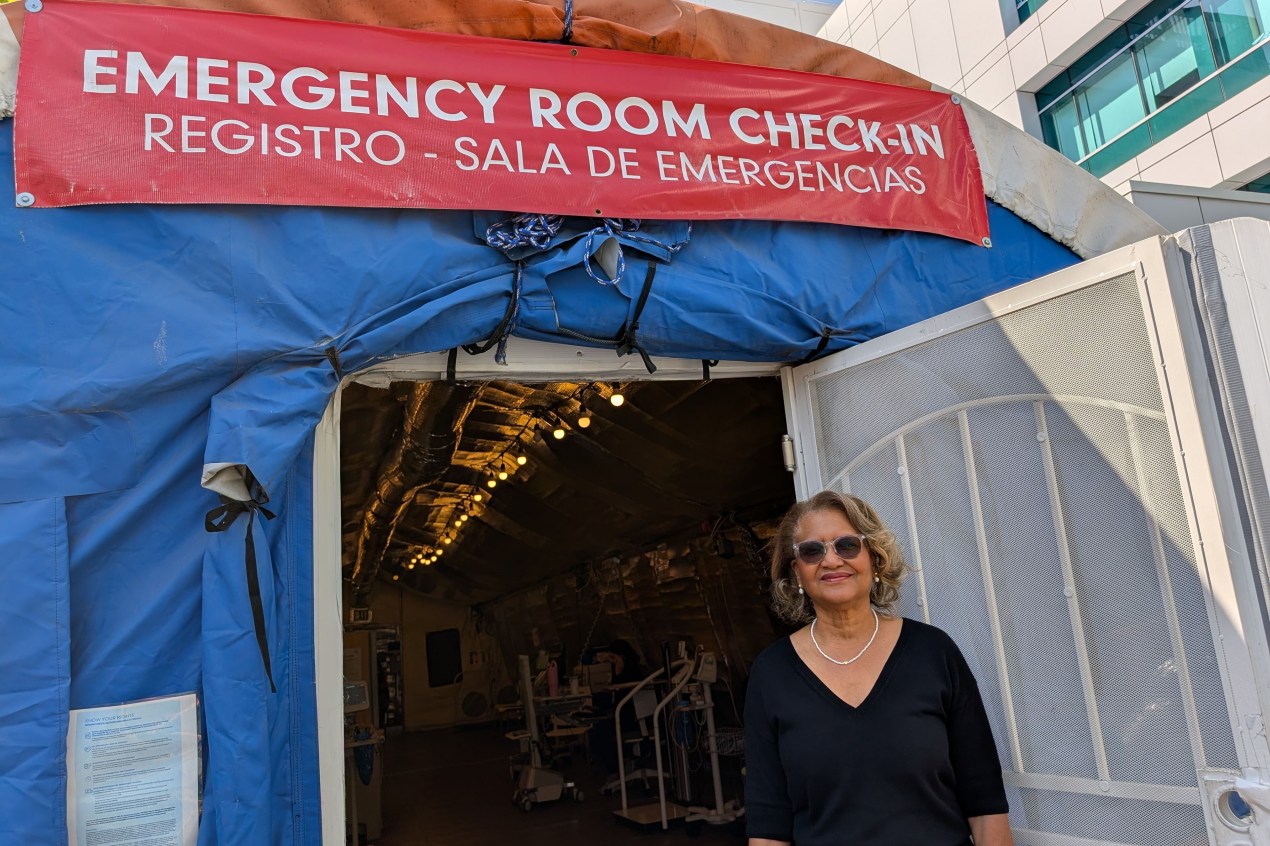
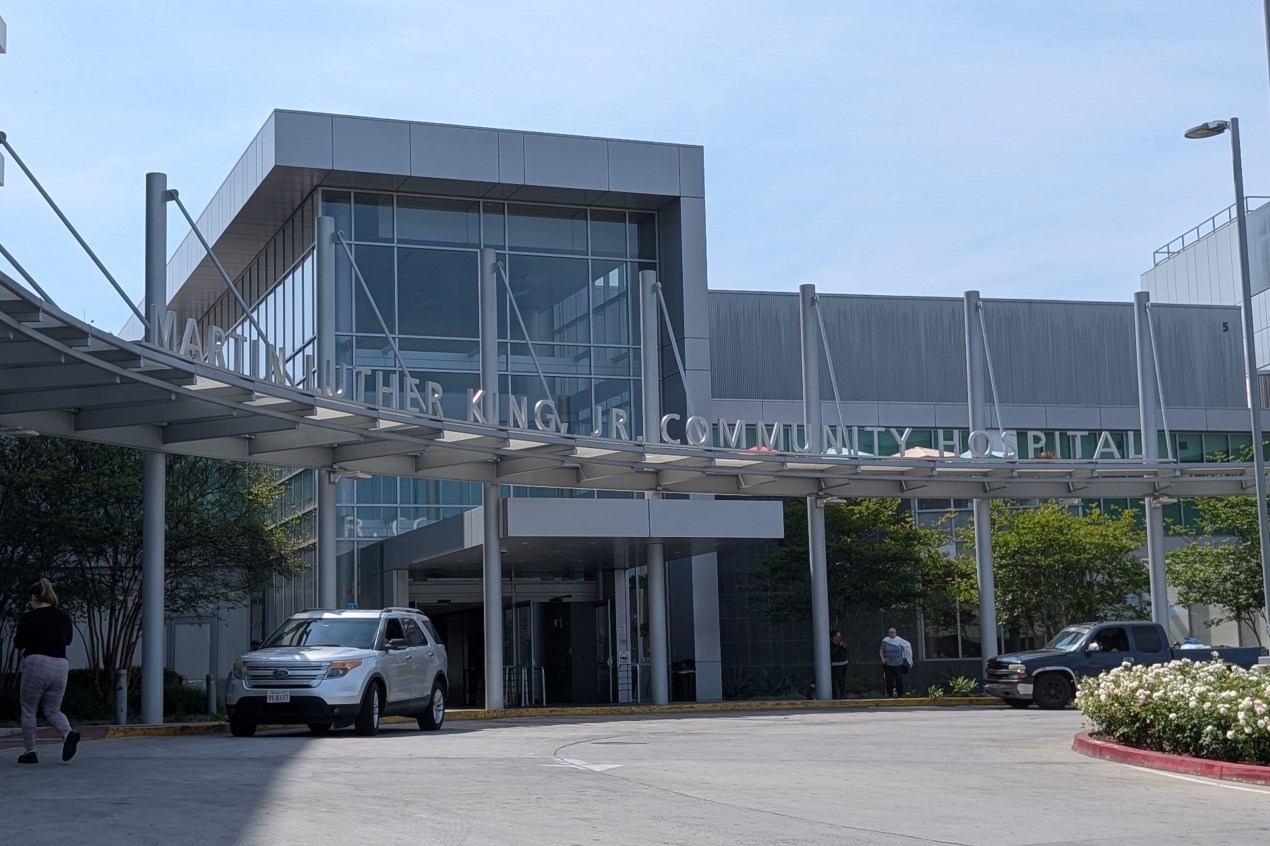
LOS ANGELES — At Martin Luther King, Jr. Community Hospital, patients on gurneys line the hallways of the emergency department waiting for care, and overflow mental health patients are consigned to outdoor tents.
The 152-bed hospital, which sits on a sprawling medical campus close to the predominantly Latino and Black neighborhood of Watts, is struggling for financial stability. Its patients are poorer and sicker than average, many of them are uninsured, and three-quarters of MLK’s patient care revenue comes from Medi-Cal, the state’s version of the Medicaid program, which pays low rates. For hospitals statewide, by comparison, less than one-third of patient revenue comes from Medi-Cal.
And MLK Community Healthcare, which comprises the hospital and two nearby clinics, is independent, so it cannot fall back on a larger chain to absorb some of the financial pressure.
Similar problems plague hundreds of financially vulnerable hospitals around the country, in rural and urban areas. And their financial woes are about to get worse.
The Republican budget measure known as the One Big Beautiful Bill Act, signed into law by President Donald Trump last July, is expected to cut federal Medicaid spending by $911 billion over 10 years. And it could contribute to an increase of more than 14 million in the number of uninsured people, many of whom will go to already crowded emergency rooms to get care they can’t pay for.
The law does include a special fund to boost rural healthcare, totaling $50 billion over five years. But that’s far less than the $137 billion it is expected to cut from rural health spending over the next decade. And the rural health fund does little or nothing to help the numerous urban hospitals, such as MLK, that also face serious financial troubles.
MLK, like many other hospitals, is scrambling to secure outside financing to avert serious disruptions of medical services when the brunt of the policies contained in the federal law begins to hit early next year. The hospital’s leadership team projects a revenue hole of $80 million to $100 million annually for the foreseeable future. It would be MLK’s largest budget gap since it opened in 2015.
“Even if we cut services that our community needs — maternity care, behavioral healthcare, diabetes management — it wouldn’t make a significant dent in the gap we’re facing,” said Elaine Batchlor, the CEO of MLK Community Healthcare. ”Many of those same people would still come to us through our emergency department, only they’d be in worse shape and might need more expensive care.”

Across the U.S., hospitals and patient advocates are looking to state lawmakers and local officials to help shore up shaky finances. In California, Assembly member Esmeralda Soria, a Democrat representing Fresno, is pushing legislation to expand a 2023 “distressed hospital loan fund” that allocated nearly $300 million in zero-interest loans to 16 hospitals in the state, including $14 million to MLK. The state would pony up another $300 million under Soria’s bill.
At least two other states are weighing similar programs. A bill in Pennsylvania would create a $100 million “distressed hospital grant” program. And a funding bill for the Illinois Department of Healthcare and Family Services contains a provision to create an $85 million loan program for troubled hospitals.
Carmela Coyle, the CEO of the California Hospital Association, said the original $300 million disbursed by the state legislature helped but was not enough.
“This program is focused on those who are standing on the edge of that financial cliff, and it’s intended to give them a little space, brush them a little bit back from the edge,” Coyle said. “But we’ve got many more hospitals that are taking giant leaps toward the edge of that cliff every day.”
Despite the association’s influence, an expansion of the loan program is far from certain, given fiscal constraints that have already induced state leaders to roll back California’s ambitious healthcare agenda, with restrictions on coverage for immigrants and funding cuts for community clinics. Democratic Gov. Gavin Newsom recently warned lawmakers to expect more cuts in his revised May budget — and that’s before the main federal spending reductions kick in.
“This is a very difficult budget environment,” said Kristof Stremikis, director of market analysis and insight at the California Health Care Foundation, a nonprofit that advocates for healthcare improvement. “It is hard to come up with funding for new programs and even existing programs right now.”
Some lawmakers noted skeptically that the initial loans are now on their way to at least partial debt cancellation, which is allowed under existing law. Soria’s bill spells out a clearer path to loan forgiveness.
“Are these loans or are these grants? Because they seem to be turning, really, into grants,” Assembly member Pilar Schiavo, a Democrat in Santa Clarita, said during an April 21 hearing on the bill.
Ultimately, it might not be desirable to save struggling institutions by pouring dollars into them, because care is increasingly offered outside of hospitals, Stremikis said.
In the short term, though, the financial health of hospitals that received loans appears to have improved, according to a KFF Health News analysis of state data. The average operating margin of the 15 loan recipients for which comparable data is available shifted from a loss of 15.4% the year before the program to a gain of 2.3% after the money was disbursed.
It is unclear how much of the improvement can be attributed to the loans. Hospitals also secured other sources of funding, and they adopted efficiencies as a condition for the interest-free money.
MLK reduced the use of high-cost temporary labor by hiring more permanent staff, cut the average length of patient hospital stays to decrease staffing hours, streamlined billing, and negotiated more-favorable contracts with insurers, said Atul Nakhasi, a practicing physician who is also MLK’s vice president of government affairs and community relations. Batchlor said that the loan helped MLK get through a cash flow crunch and that a second loan, if it became available, would be used for the same purpose.
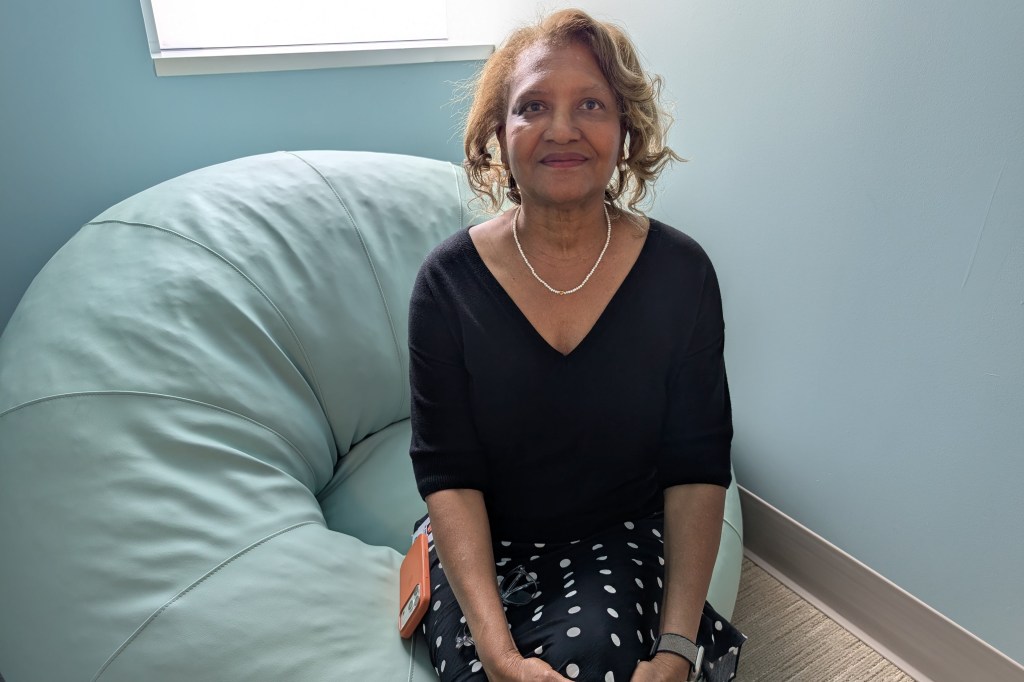
This summer, MLK expects to open a psychiatric assessment unit, where patients in mental distress can be stabilized in an environment replete with plush reclining chairs and “calming” rooms. Hospital executives hope the new unit will provide a significant new source of revenue, while taking pressure off the emergency department.

Kaweah Health in Visalia, California, suspended some services, temporarily stopped contributing to employees’ retirement, and briefly froze wages in exchange for a loan of just under $21 million, said the organization’s CEO, Marc Mertz.
Madera Community Hospital got a $57 million loan — the largest disbursement from the state fund — to reopen after being shuttered for more than two years. The hospital reopened early last year, but it has not yet stabilized financially, said Matthew Beehler, the chief strategy officer at American Advanced Management, a privately held company that bought Madera out of bankruptcy.
“You can definitely say the hospital would not have been opened without the distressed hospital loan,” though the company has also invested more than $50 million, Beehler said. He said Madera would hope for another loan if the program were extended.
