


In Granbury, Texas, city council meetings begin with a prayer.
But at a session back in January, one local invoked the Almighty in a way that would have been unimaginable just a decade ago.
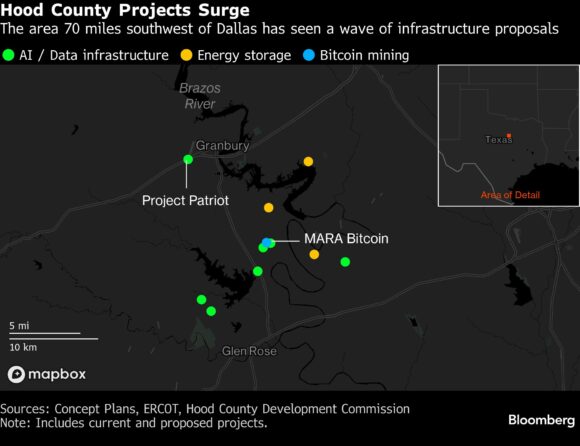
“I want to pray in Jesus’ name that the land annexed will not become a data center,” said Matt Long, a member of the development commission in surrounding Hood County. Despite his plea, and a chorus of complaints from his neighbors, the council voted just four months later to rezone 2,100 acres of land for a potential data center known as Project Patriot.
The rebellion stands out in Texas, which has a longstanding pro-business reputation and a governor, Greg Abbott, who last year called his state the”epicenter of AI development.” Already, the Stargate Project in Abilene, Texas, a collaboration between OpenAI, SoftBank Group Corp., and Oracle Corp., is one of the most prominent buildouts underway in the US. Texas is forecast to overtake Virginia as the data center capital of the world by 2030, according to brokerage JLL.

What’s happening in Granbury, about 70 miles outside of Dallas, is just one example of a fight occurring across America, where everyday people are pushing back against data centers from Pennsylvania to Palm Beach County. In every locale, their complaints are similar: they worry about noise, air quality and how the power-hungry facilities could drive up the cost of their electricity bills. Given the amount of AI infrastructure being built in Texas, the state grid operator projects that power demand could quadruple by 2032.
Seven in 10 Americans are against the construction of an AI data center in their area, with 48% strongly opposed, according to a recent Galluppoll based on a survey done in March. While most proposals get approved, grassroots resistance has, at times, yielded results: last year, at least 48 projects valued at a combined $156 billion were blocked or stalled amid coordinated local opposition, according to a report from Data Center Watch, a research firm.
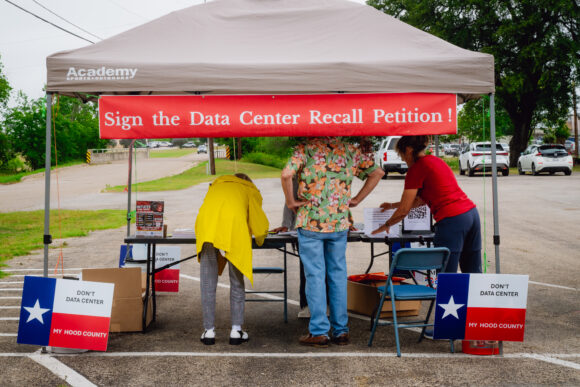
This year, Hood County residents have tried and failed (twice) to impose a moratorium on data center development, and locals have even taken legal action, including against Project Patriot. In nearby Hill County, lawmakers just approved a one-year freeze on such projects.
“I’m glad they have commissioners willing to stand up and go out on a limb,” Long said in an interview, referring to Hill County’s moratorium. “For Hood County, I’m still optimistic — if we’re going to do something I think the time is now.”
Whether a temporary ban is even legal is up for debate. Locals have asked Texas Attorney General Ken Paxton — the Trump-endorsed candidate in next week’s high-profile Republican Senate primary — to weigh in.
Hood County Attorney Matthew Mills wrote a letter in February asking Paxton for clarity, but hasn’t heard back. Mills said he expects counties that attempt to impose moratoriums on projects to face legal challenges because Texas law gives local governments limited authority over development.
“They’re going to get sued and they’re going to lose,” Mills said in an interview.
Despite some local objections, the state is making a major bet on data centers. Texas has offered generous incentives to attract investment, and will forgo about $3 billion in sales taxes over the next two years due to exemptions for these facilities, according to the comptroller’s office.
Cosimo Zavaglia, a tax attorney at Morgan, Lewis & Bockius LLP, said the risk of offering big tax breaks is “getting ahead of your skis,” giving up “too much in sales and use tax and not receiving enough benefits.”
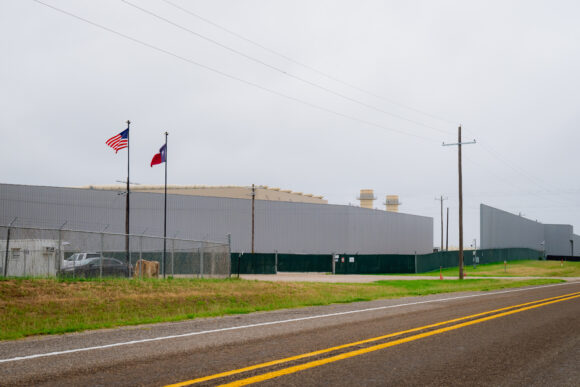
Regardless of the financial opportunities, many locals see data centers as a nuisance. Earlier this month, a group of Hood County residents sued MARA Holdings Inc., which has operated a Bitcoin mining facility in the area since 2024, over noise pollution that they allege has led to headaches, tinnitus and lack of sleep.
A MARA spokesperson said in an emailed statement that it is “committed to being a responsible, long-term neighbor” and that its site has “quiet and efficient immersion cooling technology.”
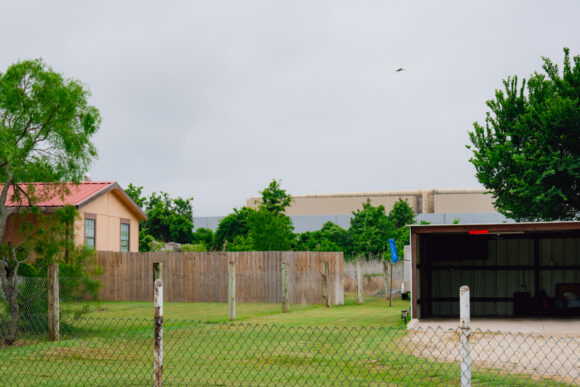
Daniel Piatt, a filmmaker and short-term rental owner in Granbury, also took his fight against data centers to court, teaming up with three other residents to sue the city for its annexation and zoning of the Project Patriot land. The suit alleges city officials quietly courted the developer and misled residents about the project’s true purpose.
A representative for the city of Granbury declined to comment on the pending litigation.
As a “pragmatist,” Piatt said he isn’t against AI, but was shocked to see that the annexed land borders a hospital and school. He moved to Granbury — deemed America’s “best historic small town” several times — to build a life for his young family. The wave of data‑center proposals in the area, he says, are completely antithetical to the town’s character.
In a “very conservative” part of the state, it’s “shocking how many people now sound like they’re from the other side of the political spectrum, talking about ‘we’ve got to protect our water, we’ve got to protect our air,’” Piatt said in a phone interview. “When it affects people, it changes their tune.”
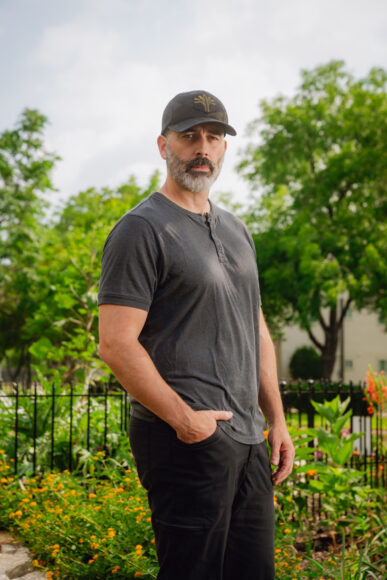
Local governments around the country are dealing with most of the pushback, while also facing pressure from state officials to allow development. This tension could affect the credit outlook for AI-related projects, which US tech giants are expected to spend hundreds of billions of dollars on this year.
“We’re talking to a lot of issuers about data centers in the first stages of build out and Texas is hot right now,” said Sarah Sullivant, a managing director at S&P Global Ratings. “If all these efforts come to naught and there’s no transparency, then that credit risk is going to continue.”
In February, state Senator Paul Bettencourt sent Paxton a letter asking him to investigate counties that implement development moratoriums. So far, Paxton hasn’t responded publicly.
“There is a strategic silence from the state,” Long said. “They’re trying to get as many of these projects in as possible before having to make a ruling on this issue” when the state legislature convenes next year.
Representatives for Paxton didn’t respond to a request for comment.
‘Sold Out’
Throughout the country, big-money data center developers are meeting fierce resistance from locals.
Earlier this month, a company backed by investment giant Brookfield Asset Management dropped its plans to build a more than 800-acre campus in Virginia after spending tens of millions of dollars on planning costs.
“The cancellation of this project and the strong level of opposition combined sends a signal that Virginia has become less friendly to data centers, and that’s something developers are thinking about,” said Miquel Vila, lead analyst at Data Center Watch.
Community pressure has local governments reaching for ways to control development through zoning and height restrictions. In Pennsylvania, townships are getting the brunt of the outrage.

“You don’t see hundreds of people going to the Capitol or going to a congressman’s office,” said Stephen Miskin, director of communications at the Pennsylvania State Association of Township Supervisors. “But when it comes to a data center,” he said, as many as “1,000 people have been showing up” to community meetings.
And in Florida, concerned citizens are challenging Project Tango, a proposed data center on a 200-acre site about 30 minutes from President Donald Trump’s Mar-a-Lago residence.
Rachel Smith, a Palm Beach resident and member of the nonprofit Western Palm Beach Community Alliance, said the group isn’t against data centers, but it wants to see responsible development. For her, Project Tango doesn’t fit the bill, and she feels like her community has “been sold out to the highest bidder.”
Copyright 2026 Bloomberg.
