

Carlyle Group Inc. is unveiling a new framework for portfolio risk so that asset values reflect the insurance implications associated with severe weather shocks.
The $475 billion Washington-based firm says the current standard — whereby money managers are reactive rather than proactive — needs to be overhauled.
“We want to flip the paradigm and de-risk it so that insurance continues to be available” to assets that are in the crosshairs, Steve Hatfield, co-head of global sustainability at Carlyle, said in an interview. But so far, there’s been “no consistent mechanism that allows insurers to recognize how asset hardening reduces risk.”
Asset hardening in this context refers to the process of making a portfolio’s contents more resistant to the fallout from rising temperatures. The finance industry’s previous efforts to build a return thesis around climate resilience have so far tended to fall short.
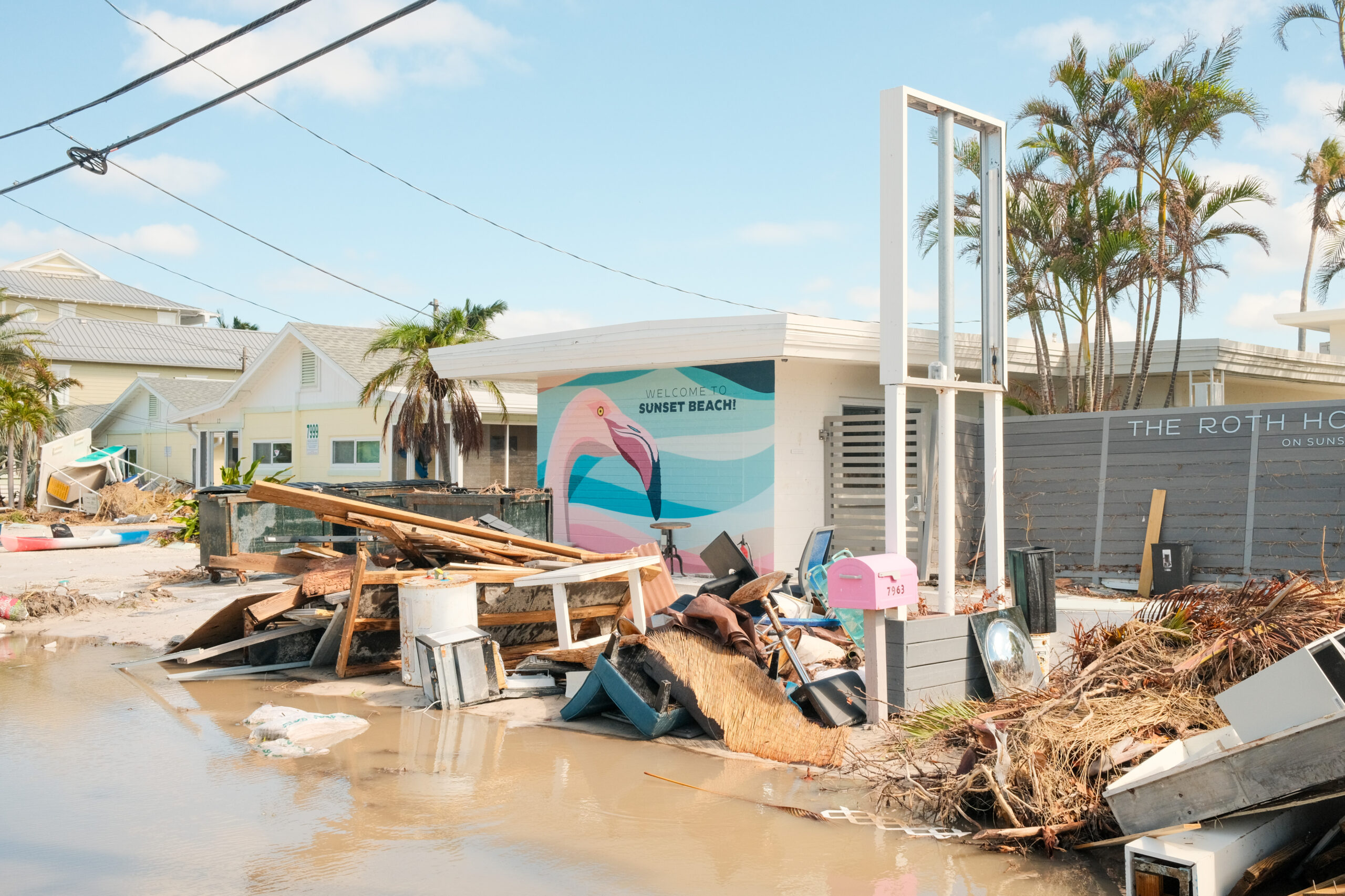
As a result, such risks generally aren’t reflected in valuations until it’s too late — in other words, once a building has had its roof torn off in a storm, for example. In such events, insurance coverage can suddenly become much more expensive or be withdrawn altogether, resulting in a sharp drop in an asset’s value.
With extreme weather events becoming increasingly frequent, the need to guard against sudden valuation shocks has grown more urgent, raising pressure on investment managers and banks to catch up.
Carlyle, which has been working on the new model with insurance-broker Marsh, says it’s already drawn interest from a number of major institutional investors. Abu Dhabi sovereign wealth fund Mubadala, and Danish pension manager Sampension are among institutional investors backing the new approach, which is also based on contributions from engineers, insurers and climate risk experts.
The collaboration is set to be unveiled on Monday at London Climate Action Week, where attendees from government, finance, central banking and academia will meet to discuss all the ways in which a warming planet is altering the foundations on which economies and societies are built.
Hatfield says the new risk approach requires portfolio managers to go through four steps. First, they need to estimate the probability that an asset will be hit by an extreme weather event (this assessment can also include the gradual erosion of value that rising temperatures or a slow-moving drought, for example, would entail).
The next step is to assess the size of the gap between the asset’s current resilience, and what it realistically would take to make it more resistant to something like a flood, storm or drought.
Then, the portfolio manager needs to estimate how resilience upgrades will reduce expected losses. Finally, insurers use those calculations to offer better underwriting terms, including premium credits, deductible reductions and broader coverage.
“The power of this framework is the signaling effect to the market,” said Hatfield. Done right, investors stand to be rewarded with a “pot of gold” at the end of the process, he said.
The financial gains of adopting the model may be huge. A 2025 study by the World Resources Institute indicated that investments in adaptation could potentially yield a ten-fold return over a decade.
The issue is particularly relevant for the current build-out of data centers. Many of the planned facilities are going up in places heavily exposed to extreme weather such as coastal inundation, high heat and riverine flooding, according to a recent report by XDI.
Amy Barnes, head of Marsh’s climate and sustainability strategy, says “we should not be newly constructing anything without also considering” climate resilience. “It is infinitely cheaper to design in the resilience, than to retrofit it.”
Hatfield says he’s long been worried about the impact that climate change is having on Carlyle’s portfolio holdings across sectors including real estate, chemicals and transportation. But portfolio managers at the firm — and elsewhere — tended to rely on backward-looking models, and were banking on insurance coverage that didn’t necessarily anticipate future risk.
“I was hitting roadblocks in terms of being able to enable my investment teams to suss out what’s the near-term return on investment, from a cash flow savings perspective,” Hatfield said.
His discussions with pension funds, sovereign wealth investors and other money managers indicated that “they were all experiencing the same problem,” he said.
Through the course of his work, it became clear that the insurance industry — which has long been several steps ahead of banks and investors in measuring climate risk — would have to play a pivotal role.
The idea marks a sea change. For many insurers, severe weather risk is a specialty that formally sits within the climate and sustainability functions of management. But expertise about resilience doesn’t necessarily flow through to underwriting decisions, according to Marsh’s Barnes.
“The underwriters were saying: ‘Yes, this is an issue, but I don’t know how to address it’,” she said in an interview.
Hatfield says he has “previewed” the new framework with leading insurance carriers, and expects them to road test it in coming months.
“Today’s infrastructure was really designed for yesterday’s climate, not tomorrow’s,” he said. “That’s why we need to accelerate resilience.”
Photo: Hurricane damage in Florida in 2024. Photographer: Tristan Wheelock/Bloomberg
Copyright 2026 Bloomberg.
