

An attack on a container vessel sailing through the Strait of Hormuz has prompted some shipowners to review exit plans, but traffic continued to flow in both directions through the vital thoroughfare on Friday.
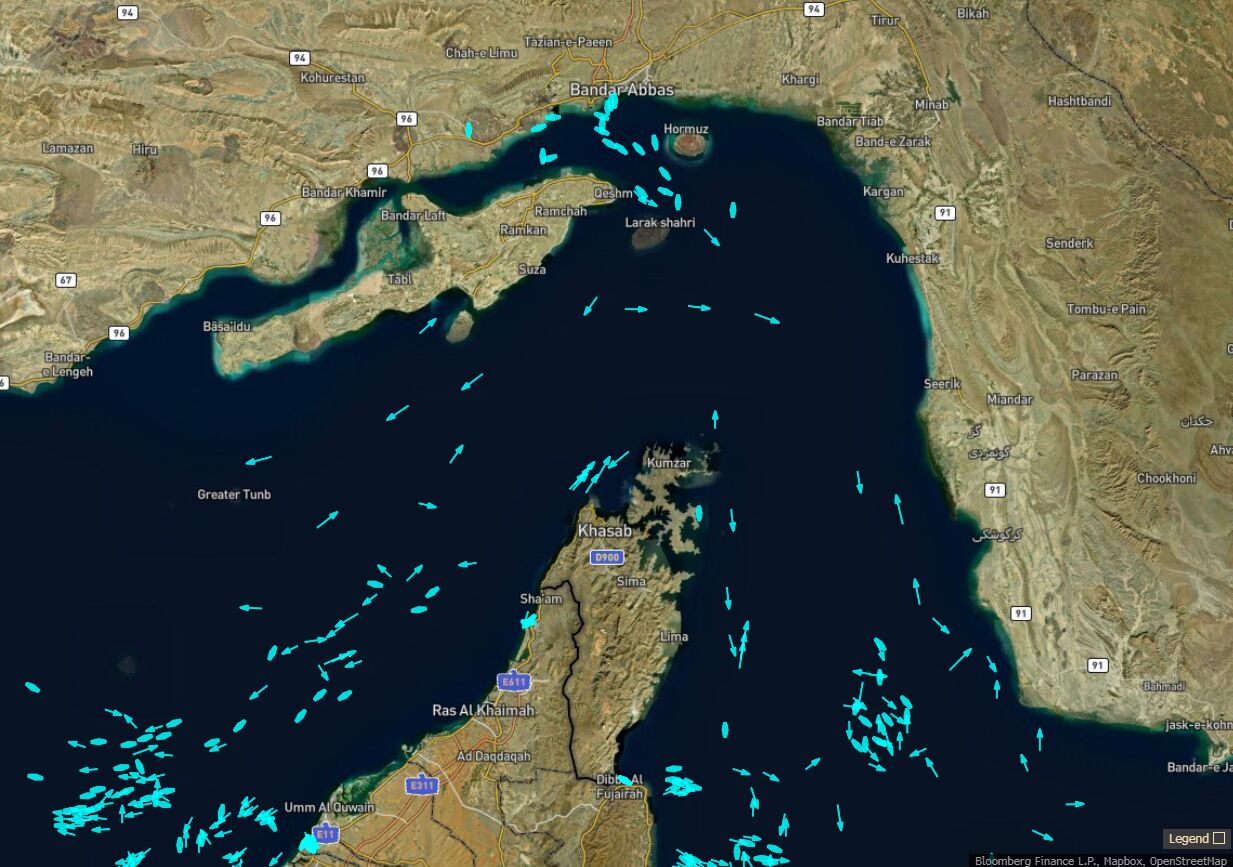
Two fully laden tankers are heading out of the Persian Gulf, while four empty, inbound, very large crude carriers are among the vessels sailing along the Omani coast, ship-tracking data show. This southern route is managed by Oman and coordinated by the US.
The strike on the Ever Lovely on Thursday — the first since an interim US-Iran peace deal was signed — has seen some owners and captains pull back, according to shipowners, who declined to be named given the sensitivity of the issue. At least one company based in Asia revised earlier plans to exit and told staff that vessels in the gulf should stay put as executives reassess transit options, according to a message seen by Bloomberg News.
But the attack does not appear to have completely derailed a slow return to normality. Average daily tanker crossings before the strike had swelled to more than 20 per day in the aftermath of the interim deal, up from just six per day for much of the war, according to data from Vortexa.
Outbound vessels along the Omani route include one India-bound Aframax and one small, US-sanctioned tanker. A fully laden VLCC that’s hauling barrels from the United Arab Emirates has also entered the strait, along with a products tanker with a cargo from the same exporter.
In the opposite direction, an empty VLCC indicating it is headed to Iraq’s Basrah has entered along with three others linked to the UAE, while a liquefied natural gas carrier that’s currently off Khor Fakkan also appears to be making a transit attempt.
Some have chosen to sail along the Iranian route — an option recognized by the International Maritime Organisation — to the north in the strait. A South Korean-flagged products tanker and another one that’s bound for Indonesia, together with a bulk carrier attempted to leave the Persian Gulf by sailing close to Iran.
Hormuz and its management remain a key points of contention between Tehran and Washington. This week, the US said Iran would have to keep the strait toll-free and ensure ships weren’t charged any fees if it wanted a permanent peace deal. Secretary of State Marco Rubio visited Gulf Arab countries and said if Iran were to toll Hormuz, there would be nothing stopping governments doing the same with other maritime chokepoints “and then we’re going to have chaos.”
The US is leaning on Oman, which also borders the strait, not to create a joint tolling system with Iran. The sultanate has sent mixed messages. On Tuesday, it published a statement with Tehran saying the two would discuss administering traffic through the strait and the costs related to that. On Thursday, Rubio said Oman had assured him it didn’t favor tolls.
“They signed on to the statement that said that there aren’t going to be any fees or tolls,” Rubio said, referring to a joint statement between the US and the Gulf Cooperation Council that said the parties “rejected any tolls, fees, or attempts to assert control over the Strait.”
Photograph: Several tankers and bulk carriers were seen transiting the Strait of Hormuz on Friday; source: Bloomberg, Mapbox, and OpenStreetMap
Copyright 2026 Bloomberg.
The most important insurance news,in your inbox every business day.
Get the insurance industry’s trusted newsletter
