
Close Menu
  • Home
  • Life Insurance
  • Auto Insurance
  • Home Insurance
  • Health Insurance
  • Business Insurance
  • Travel Insurance
  • Specialized Insurance
  • Insurance Tips & Guides
Facebook X (Twitter) Instagram
Insure GenZInsure GenZ Friday, February 13
  • About Us
  • Contact Us
  • Disclaimer
  • Terms & Conditions
  • Privacy Policy
Facebook X (Twitter) Instagram
Subscribe
  • Home
  • Life Insurance
  • Auto Insurance
  • Home Insurance
  • Health Insurance
  • Business Insurance
  • Travel Insurance
  • Specialized Insurance
  • Insurance Tips & Guides
Insure GenZInsure GenZ
Home»Health Insurance»A Look at the Medicaid Payment Error Rate Measurement (PERM) Program and Upcoming Changes and Impacts
Health Insurance

A Look at the Medicaid Payment Error Rate Measurement (PERM) Program and Upcoming Changes and Impacts

AwaisBy AwaisFebruary 13, 2026No Comments3 Mins Read0 Views
Facebook Twitter Pinterest Telegram LinkedIn Tumblr Copy Link Email
Follow Us
Google News Flipboard
A Look at the Medicaid Payment Error Rate Measurement (PERM) Program and Upcoming Changes and Impacts
Share
Facebook Twitter LinkedIn Pinterest Email Copy Link

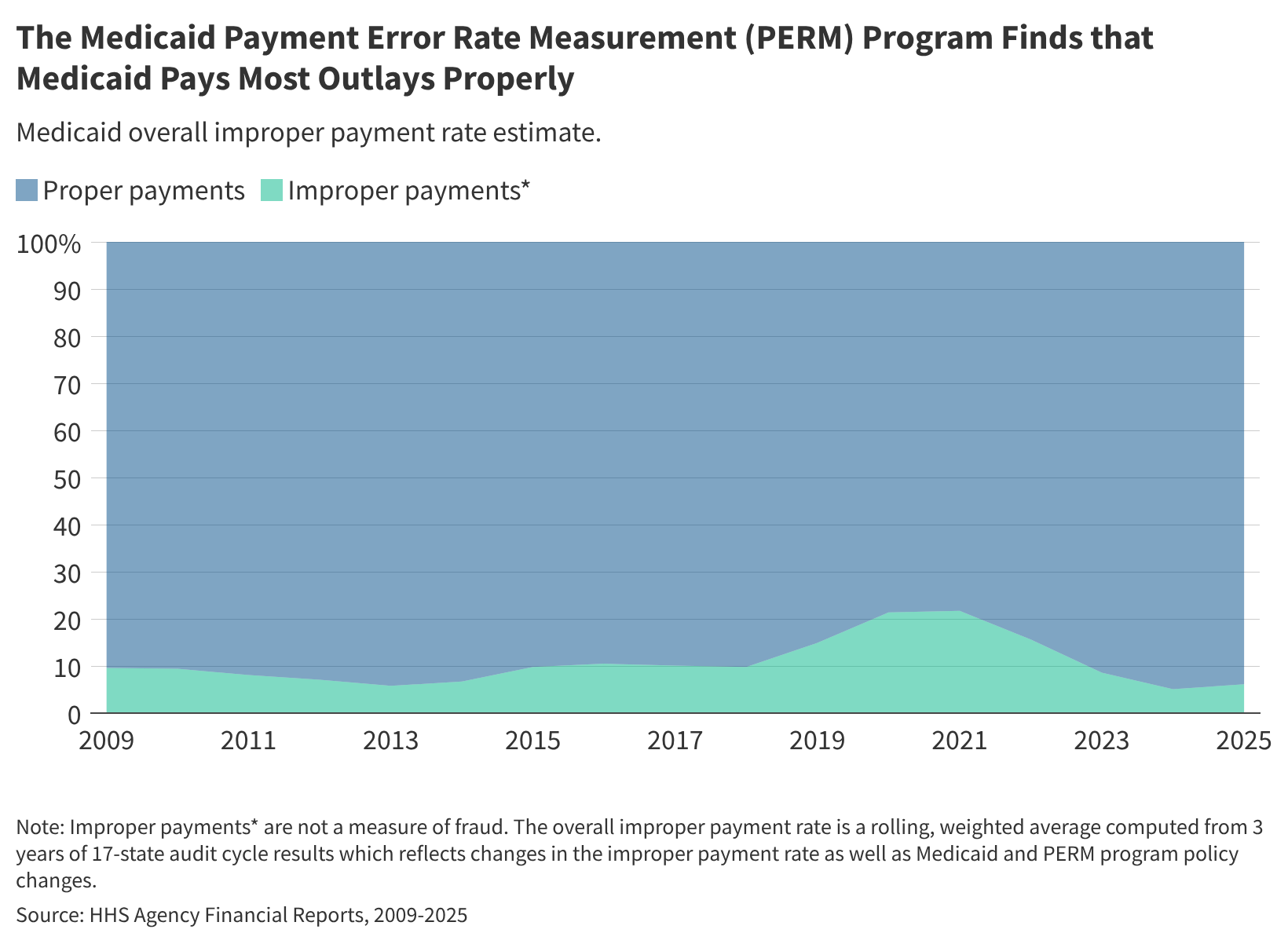
Box 1: The improper payment rate has changed over time, largely due to the ACA implementation and the COVID-19 public health emergency.

Pre-ACA: Between 2009 and 2013, the overall improper payment rate trended downward as information systems improved states’ ability to determine provider and enrollee eligibility . The PERM program’s eligibility component error rate decreased from 2011 to 2014, when it was estimated at 3.11 percent (Figure 3). The Patient Protection and Affordable Care Act (ACA) passed in 2010 and phased in several changes to the Medicaid program, including the 2014 Medicaid expansion.

ACA Implementation: During the 2013-2019 period, the overall improper payment rate trended upward, driven by errors in FFS claims related to state non-compliance with new provider screening, enrollment, and documentation requirements introduced in 2012 under the ACA. From 2015 to 2018, HHS suspended eligibility audits as states began to implement new eligibility standards and determination requirements under the ACA. During this period, the overall PERM rate was calculated using a proxy eligibility estimate of the 2014 eligibility component error rate, 3.11 percent to provide states with time to adjust to eligibility process changes in the Affordable Care Act.

Post ACA: Beginning in 2019, PERM reintroduced the eligibility component under updated rules, for the first time requiring states to work with an independent contractor using nationally standardized eligibility audit procedures2. Between 2019 and 2021 the overall improper payment rate rose again (Figure 3), driven by the new standardized PERM eligibility audits. Most of the eligibility error rate was attributed to errors due to insufficient documentation or administrative mistakes. The 2021 improper payment rate is the first estimate that includes reintegrated eligibility error rates (conducted under updated rules) for all three audit cycles (i.e., all states).

COVID-19 Public Health Emergency (PHE): Beginning in 2021, the overall improper payment rate decreased sharply. In 2024, the improper payment rate (5.1%) was less than one-fifth of the 2021 estimate (21.7%). The 2024 improper payment rate was the lowest rate since the COVID-19 pandemic began, which HHS reported was due in part to the exclusion of certain audit review elements as policies adopted during the PHE that paused eligibility renewals and disenrollments and reduced requirements for provider enrollment and revalidations were taken into consideration and due to improved state compliance with program rules. The COVID-19 PHE and related flexibilities were in place from early 2020 through early 2023.

Post-COVID-19 PHE: In early 2023 states began to phase-out the continuous enrollment provision that suspended Medicaid eligibility renewals and disenrollments during the pandemic and flexibilities that reduced provider enrollment requirements. Most states completed eligibility redeterminations for all Medicaid enrollees and resumed disenrollments by August 2024. Improper payment rates since 2021 include at least some audits conducted while COVID-19 PHE flexibilities were in place. The 2025 improper payment rate incorporated the first full audit conducted following the end of the PHE (July 2023 – June 2024). The 2025 improper payment rate (6.1%) increased relative to 2024 (5.1%). From early 2023 through late 2024, states resumed eligibility renewals and disenrollments and phased out provider screening flexibilities allowed during the PHE.

Error Impacts Measurement Medicaid payment PERM program rate Upcoming
Follow on Google News Follow on Flipboard
Share. Facebook Twitter Pinterest LinkedIn Telegram Email Copy Link
Awais
  • Website

Related Posts

ACA Subsidies Expired. Open Enrollment Ended. But It Will Still Take Awhile To Register the Results.

February 13, 2026

RFK Jr. Made Promises in Order To Become Health Secretary. He’s Broken Many of Them.

February 13, 2026

Trump Team’s Planned ACA Rule Offers Its Answer to Rising Premium Costs: Catastrophic Coverage

February 13, 2026
Leave A Reply Cancel Reply

Our Latest Blogs

Should you use an insurance agent

February 13, 2026

Forest Service Gets Pushback on Plan to Use Controlled Burns in Green Mountains

February 13, 2026

Cyber insurance enters the AI risk era as limits, wording and underwriting models shift

February 13, 2026

Delaware issues data security rules for insurance licensees

February 13, 2026
Recent Posts
  • Should you use an insurance agent
  • Forest Service Gets Pushback on Plan to Use Controlled Burns in Green Mountains
  • Cyber insurance enters the AI risk era as limits, wording and underwriting models shift
  • Delaware issues data security rules for insurance licensees
  • Three People Suffer Burns at Exxonmobil Facility in Texas, Media Report

Subscribe to Updates

Insure Genz is a modern insurance blog built for the next generation. Subscribe it for more updates.

Insure Genz is a modern insurance blog built for the next generation. We break down complex topics across categories like Auto, Health, Business, Life, and Travel Insurance — making them simple, useful, and easy to understand. Whether you're just getting started or looking for expert tips and guides, we've got you covered with clear, reliable content.

Our Picks

Should you use an insurance agent

February 13, 2026

Forest Service Gets Pushback on Plan to Use Controlled Burns in Green Mountains

February 13, 2026

Cyber insurance enters the AI risk era as limits, wording and underwriting models shift

February 13, 2026

Delaware issues data security rules for insurance licensees

February 13, 2026
Most Popular

Should you use an insurance agent

February 13, 2026

Forest Service Gets Pushback on Plan to Use Controlled Burns in Green Mountains

February 13, 2026

Cyber insurance enters the AI risk era as limits, wording and underwriting models shift

February 13, 2026

Delaware issues data security rules for insurance licensees

February 13, 2026
  • About Us
  • Contact Us
  • Disclaimer
  • Terms & Conditions
  • Privacy Policy
© 2026 Insure GenZ. Designed by Insure GenZ.

Type above and press Enter to search. Press Esc to cancel.