

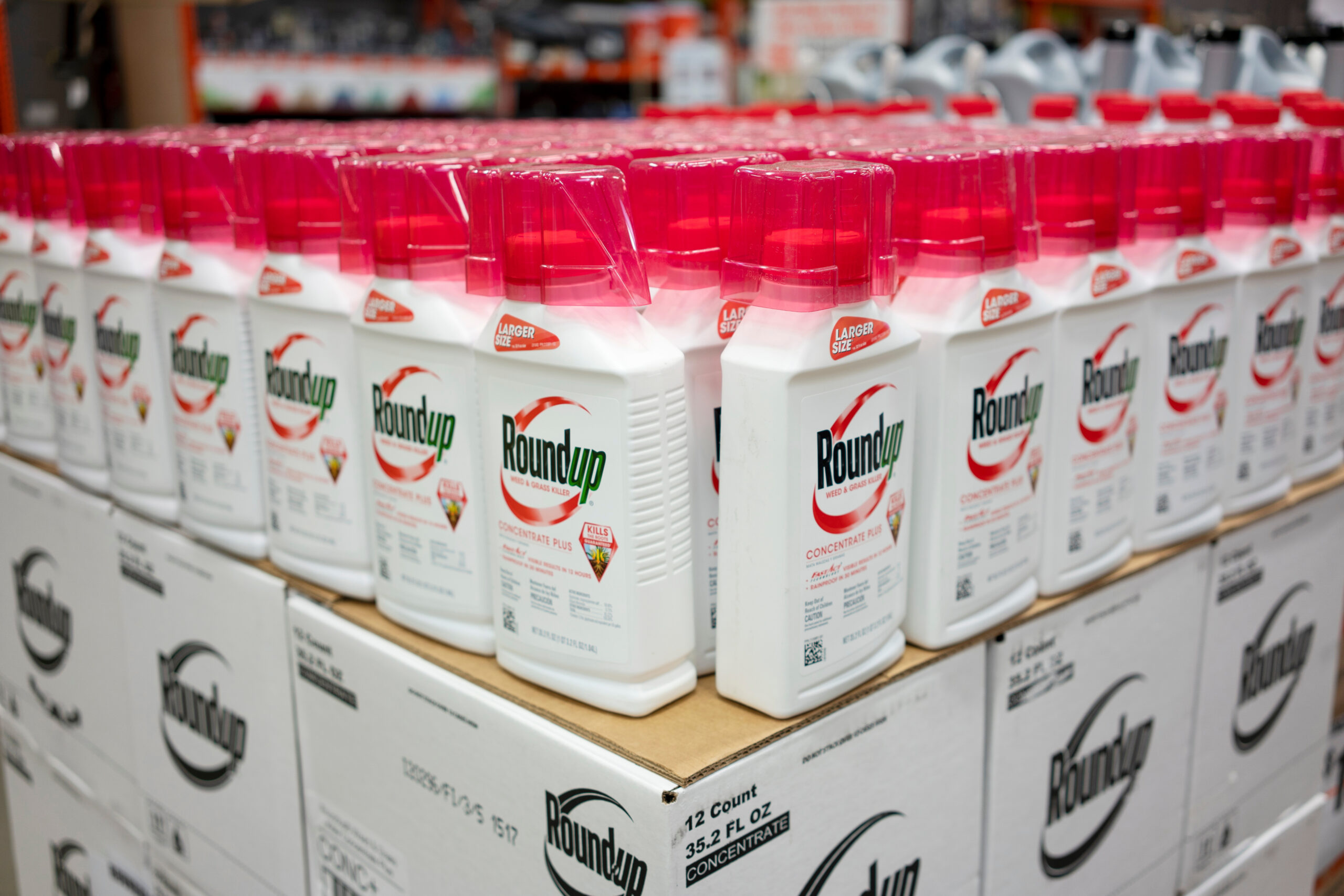
A state court judge in Missouri gave an initial green light on Wednesday to a proposed $7.25 billion settlement to resolve thousands of lawsuits claiming Bayer’s Roundup weedkiller causes cancer.
Judge Timothy Boyer in St. Louis granted preliminary approval to the deal struck between the German company and attorneys seeking to represent a nationwide class of people who say Roundup exposure caused their non-Hodgkin’s lymphoma.
The deal is aimed at resolving most of the roughly 65,000 remaining claims pending in federal and state courts. Boyer rejected a request by other lawyers who asked that he hold off to give them more time to review the deal.
Boyer called the proposed payout “significant” but said he would hear objections from people impacted before deciding at a July hearing whether to grant final approval.
The plaintiffs say that Roundup’s active ingredient, glyphosate, causes cancer, and they developed non-Hodgkin’s lymphoma and other forms of the disease after using the weedkiller at home or on the job.
Bayer, which acquired Roundup as part of its $63 billion purchase of agrochemical company Monsanto in 2018, has said decades of studies have shown Roundup and glyphosate are safe and do not cause cancer. The proposed deal does not require Bayer to admit liability or wrongdoing.
Company Can Back Out
The initial approval triggers a settlement provision requiring Bayer to pay $500 million into a fund within 10 days to cover costs such as notifying class members of the deal, and opens a window for class members to object to the deal or opt out, according to court records.
The company can back out if too many plaintiffs decline to participate. Bayer Chief Executive Bill Anderson said on a call with investors when the deal was announced that the company requires the “vast majority” of the plaintiffs to participate.
Bill Dodero, Bayer’s senior vice president and general counsel, in a statement said the company remains “confident that the long-term and well-financed class settlement plan, which is supported by leading plaintiffs’ law firms, warrants final approval by the court.”
Christopher Seeger, one of the attorneys who negotiated the settlement and seeks to represent the class, said in a statement that Boyer’s ruling is an important step forward for the deal and comes as the U.S. Supreme Court weighs a case that could have a serious impact on the litigation.
The high court will hear arguments in late April in a case that could sharply limit the litigation if it agrees with Bayer that federal law governs what pesticide manufacturers include on their labels. The company argues that state-court claims that it failed to warn about Roundup’s risks are barred because the U.S. Environmental Protection Agency has found no such risk and requires no such warning.
Future Claims Covered
If approved, the settlement would establish a program to pay claimants over 21 years and is intended to resolve claims from both people who have already sued and those who were exposed to the pesticide before the deal was struck and are diagnosed with cancer in the future.
Two groups of law firms representing more than 20,000 Roundup claimants had urged Boyer to delay granting preliminary approval, saying they had concerns about how the deal restricts the ability of people to sue who have been exposed to Roundup but have not yet developed cancer.
On Wednesday, Boyer said if attorneys need more time they can request it during the approval process.
Attorneys who are part of the group requesting more time did not immediately respond to requests for comment.
Topics
Legislation
Oklahoma
Interested in Legislation?
Get automatic alerts for this topic.
