
Close Menu
  • Home
  • Life Insurance
  • Auto Insurance
  • Home Insurance
  • Health Insurance
  • Business Insurance
  • Travel Insurance
  • Specialized Insurance
  • Insurance Tips & Guides
Facebook X (Twitter) Instagram
Insure GenZInsure GenZ Thursday, March 12
  • About Us
  • Contact Us
  • Disclaimer
  • Terms & Conditions
  • Privacy Policy
Facebook X (Twitter) Instagram
Subscribe
  • Home
  • Life Insurance
  • Auto Insurance
  • Home Insurance
  • Health Insurance
  • Business Insurance
  • Travel Insurance
  • Specialized Insurance
  • Insurance Tips & Guides
Insure GenZInsure GenZ
Home»Travel Insurance»Extreme Heat Is Making Life Increasingly Unlivable
Travel Insurance

Extreme Heat Is Making Life Increasingly Unlivable

AwaisBy AwaisMarch 12, 2026No Comments4 Mins Read2 Views
Facebook Twitter Pinterest Telegram LinkedIn Tumblr Copy Link Email
Follow Us
Google News Flipboard
Extreme Heat Is Making Life Increasingly Unlivable
Share
Facebook Twitter LinkedIn Pinterest Email Copy Link

The number of days where extreme heat makes it too dangerously hot to walk the dog, sweep the porch and engage in other ordinary pursuits has doubled around the world over the past 75 years, according to new research.

Scientists determined that on average, those 65 and older experience a month a year when heat prevents them from routine activities. Parts of Asia, Africa, Australia and North America are becoming unlivable for senior citizens, the researchers said. Younger adults also are losing time as climate-driven heat restricts their lives for 50 hours a year.

Overall, more than a third of the global population resides in regions where heat severely affects daily life, according to the peer-reviewed paper published Tuesday in the journal Environmental Research: Health.

While previous research has shown the impact of extreme heat on human health, authors of the new study said it’s the first to document the consequences of rising temperatures on everyday life.

“Extreme heat isn’t just affecting our ability to survive or work physically demanding jobs, but also just to do simple, light, daily tasks,” said Luke Parsons, a climate scientist at nonprofit environmental organization the Nature Conservancy and lead author of the paper.

The researchers analyzed heat and humidity records from 1950 to 2024. They used the United Nations’ Human Development Index, which measures each country’s health and living standards, as a proxy for vulnerability to rising temperatures. The scientists, who developed a physiological model of heat impacts on different age groups, determined when it becomes too hot for people to undertake tasks when exposed to outdoor temperatures in the shade.

In Qatar, for instance, heat now makes it risky for older adults to engage in routine activities for a third of the year. Even 18-to-40-year-olds in that country must curb daily tasks for more than 800 hours a year or 10% of their time.

Senior citizens in the US have 270 fewer hours they can devote to normal activities due to the risks of overheating. In the southern US, “we’re looking at many hundreds of hours of livability limitations for older adults every year,” said Parsons.

Those areas along with Europe, southern South America, southern Australia and parts of Asia and Africa have seen the largest increases in restrictions on daily life since 1995, according to the paper.
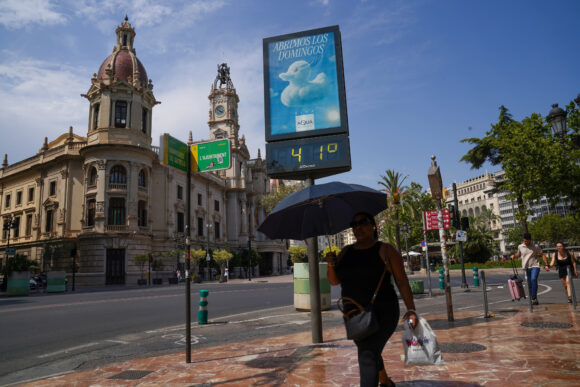
Pedestrian shields from the sun near a sign showing a temperature of 41C (106F) in Valencia, Spain, in August 2025. Photo credit: Michael Robinson Chavez/Bloomberg

Study co-author Jennifer Vanos, an associate professor at Arizona State University who studies urban extreme heat, said the research shows that overheating can pose a threat to people like restaurant workers who do a lot of low-exertion walking on the job. “Even though we don’t see that as high-intensity physical activity, it could turn into a very dangerous situation because of their exposure to heat over time,” she said.

While citizens of wealthy nations like Qatar and the United Arab Emirates can seek refuge in air conditioned homes, Parsons noted those countries depend on large populations of migrant laborers working in construction and other outdoor jobs.

Global temperatures hit a record high in 2024, a year in which warming exceeded 1.5C on an annual basis for the first time. “This study provides us with a really grim, unfortunate glimpse into what potentially a one-and-a-half degree warmer world looks like,” Parsons said.

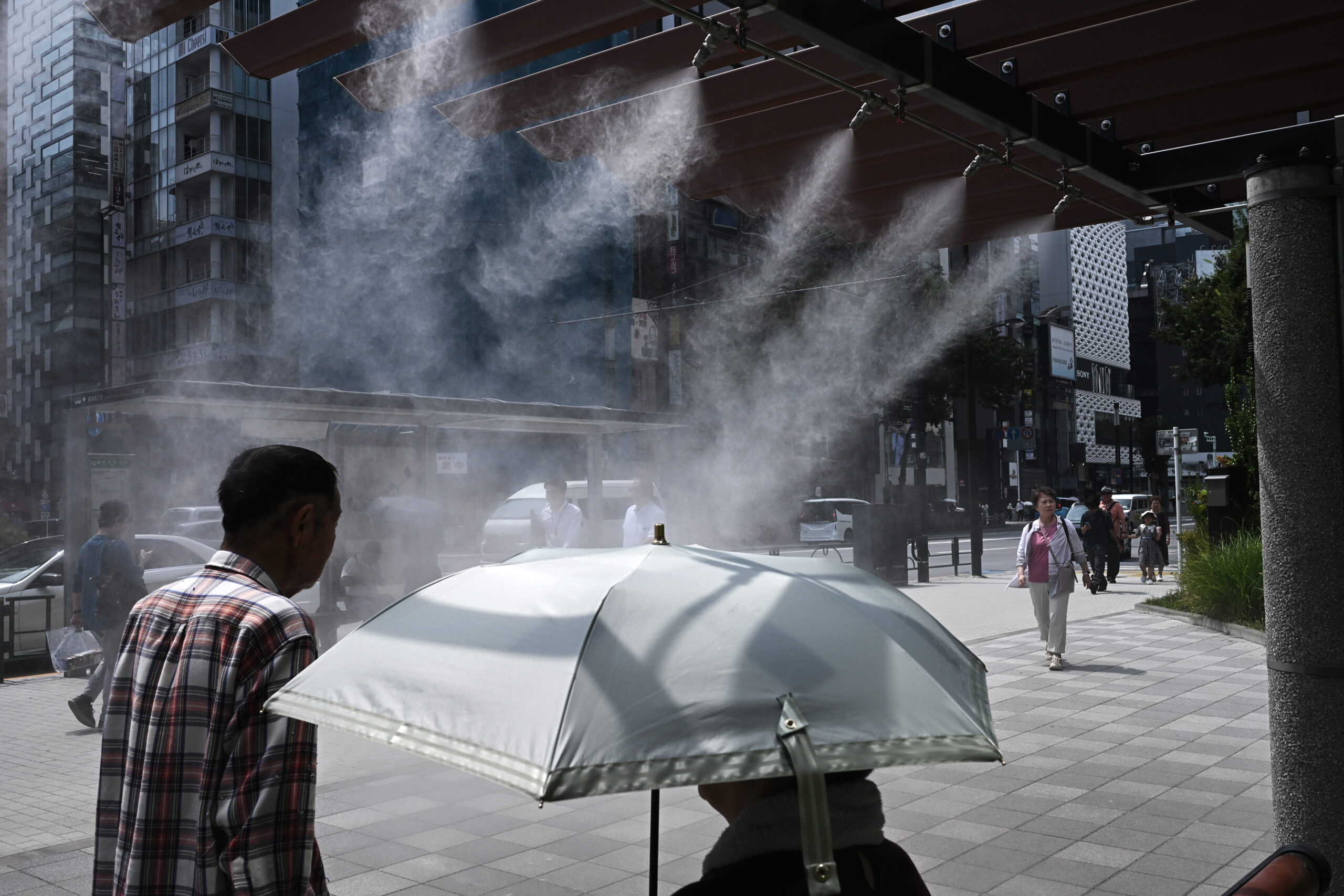
Photograph: Pedestrians cool off under a water mist spray in Ginza district during high temperatures in Tokyo, Japan, on Wednesday, Aug. 6, 2025; photo credit: Soichiro Koriyama/Bloomberg

Related:

Copyright 2026 Bloomberg.

Topics
Trends

Interested in Trends?

Get automatic alerts for this topic.

Extreme Heat Increasingly Life making Unlivable
Follow on Google News Follow on Flipboard
Share. Facebook Twitter Pinterest LinkedIn Telegram Email Copy Link
Awais
  • Website

Related Posts

Coast Guard and First Responders Battle Fire on Scrap Metal Barge in Delaware Bay

March 11, 2026

Record March Heat to Scorch Los Angeles, US Southwest

March 11, 2026

Fund Trying to Turn New Mexico Desert into an Advanced Tech Hub

March 11, 2026
Leave A Reply Cancel Reply

Our Latest Blogs

As Lung Disease Threatens Workers, Lawmakers Seek Protections for Countertop Manufacturers

March 12, 2026

Warburg Pincus Is Said to Explore Options for Asian Insurer Oona

March 12, 2026

Natural Gas Boom Will Spur a Shortage of US Fracking Gear, Shale Boss Says

March 12, 2026

PERILS finalises industry loss estimate for Cyclone Alfred at almost AU $1.88bn

March 12, 2026
Recent Posts
  • As Lung Disease Threatens Workers, Lawmakers Seek Protections for Countertop Manufacturers
  • Warburg Pincus Is Said to Explore Options for Asian Insurer Oona
  • Natural Gas Boom Will Spur a Shortage of US Fracking Gear, Shale Boss Says
  • PERILS finalises industry loss estimate for Cyclone Alfred at almost AU $1.88bn
  • Extreme Heat Is Making Life Increasingly Unlivable

Subscribe to Updates

Insure Genz is a modern insurance blog built for the next generation. Subscribe it for more updates.

Insure Genz is a modern insurance blog built for the next generation. We break down complex topics across categories like Auto, Health, Business, Life, and Travel Insurance — making them simple, useful, and easy to understand. Whether you're just getting started or looking for expert tips and guides, we've got you covered with clear, reliable content.

Our Picks

As Lung Disease Threatens Workers, Lawmakers Seek Protections for Countertop Manufacturers

March 12, 2026

Warburg Pincus Is Said to Explore Options for Asian Insurer Oona

March 12, 2026

Natural Gas Boom Will Spur a Shortage of US Fracking Gear, Shale Boss Says

March 12, 2026

PERILS finalises industry loss estimate for Cyclone Alfred at almost AU $1.88bn

March 12, 2026
Most Popular

As Lung Disease Threatens Workers, Lawmakers Seek Protections for Countertop Manufacturers

March 12, 2026

Warburg Pincus Is Said to Explore Options for Asian Insurer Oona

March 12, 2026

Natural Gas Boom Will Spur a Shortage of US Fracking Gear, Shale Boss Says

March 12, 2026

PERILS finalises industry loss estimate for Cyclone Alfred at almost AU $1.88bn

March 12, 2026
  • About Us
  • Contact Us
  • Disclaimer
  • Terms & Conditions
  • Privacy Policy
© 2026 Insure GenZ. Designed by Insure GenZ.

Type above and press Enter to search. Press Esc to cancel.