
Close Menu
  • Home
  • Life Insurance
  • Auto Insurance
  • Home Insurance
  • Health Insurance
  • Business Insurance
  • Travel Insurance
  • Specialized Insurance
  • Insurance Tips & Guides
Facebook X (Twitter) Instagram
Insure GenZInsure GenZ Wednesday, March 11
  • About Us
  • Contact Us
  • Disclaimer
  • Terms & Conditions
  • Privacy Policy
Facebook X (Twitter) Instagram
Subscribe
  • Home
  • Life Insurance
  • Auto Insurance
  • Home Insurance
  • Health Insurance
  • Business Insurance
  • Travel Insurance
  • Specialized Insurance
  • Insurance Tips & Guides
Insure GenZInsure GenZ
Home»Specialized Insurance»Florida Bills Would Open Door to More Housing in the Everglades, Brownfields
Specialized Insurance

Florida Bills Would Open Door to More Housing in the Everglades, Brownfields

AwaisBy AwaisMarch 11, 2026No Comments5 Mins Read0 Views
Facebook Twitter Pinterest Telegram LinkedIn Tumblr Copy Link Email
Follow Us
Google News Flipboard
Florida Bills Would Open Door to More Housing in the Everglades, Brownfields
Share
Facebook Twitter LinkedIn Pinterest Email Copy Link

Florida lawmakers who say they want to encourage construction of more affordable housing are trying to strip away powers Miami has used for decades to keep developments, strip malls and warehouses out of the Everglades.

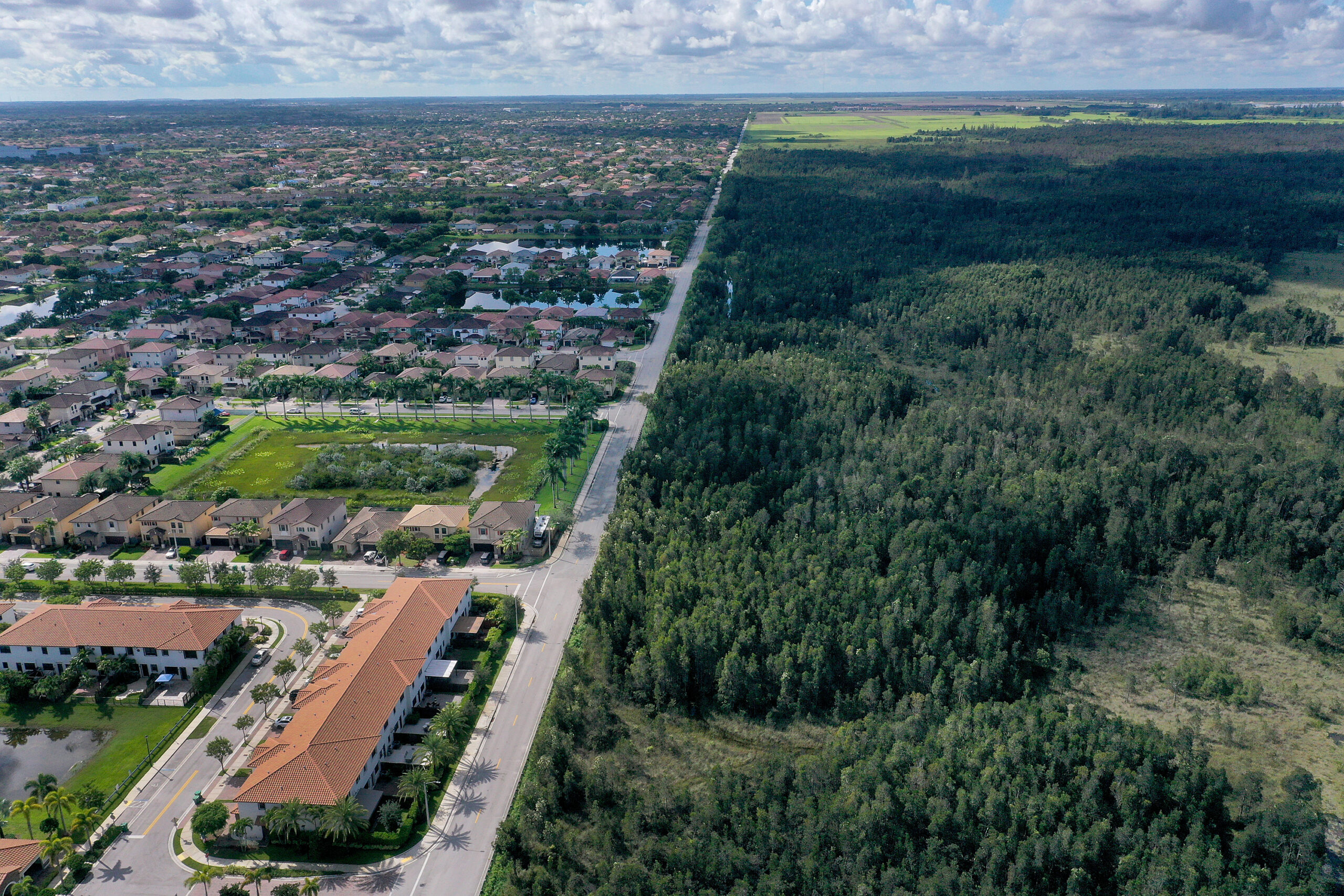
A land-use bill, HB 399, that passed the Florida House on March 3 and is being considered by the state’s senate calls for studying the possible elimination of the 78-mile-long Urban Development Boundary, which has delineated where Miami ends in the west and the Everglades begins since 1983. The senate is expected to vote on the measure on Wednesday.

The Everglades are a vast subtropical wetland that behaves like a giant sponge, soaking up floodwaters and filling an underground lake that supplies drinking water to about 9 million people. Building in the Everglades would curb its capacity to absorb excessive rainfall and threaten the region’s supply of fresh water, conservationists say.

Bill Allowing More Development in Contaminated Lands on its Way to Governor

The Florida House on Tuesday approved Senate Bill 1434, which would require local governments to allow more residential development on contaminated or brownfield land of more than five acres in south Florida’s congested counties.
“The Legislature finds that this state’s urban areas lack sufficient land for the development of additional residential uses, which has led to a shortage of supply; that parcels of land within or near urban areas are difficult to develop or redevelop because of environmental issues and local regulations,” reads the bill, which was sponsored by Sen. Alexis Calatayud, R-Miami.
The House on Tuesday endorsed the measure by a vote of 87-34, just days after the Senate passed it 36-0.
If signed into law, the plan could open up new areas for housing and property insurance but could create questions for underwriters and insurance agents placing homeowner policies on once-contaminated lands. A legislative analysis of the bill can be seen here.

“This legislation is a threat to the open land we need for the future,” said Rachel Silverstein, who heads Miami Waterkeeper, an environmental advocacy group. “Without high hurdles, we will pave over our Everglades, wetlands and farm land, threatening our drinking water supply and worsening flooding issues.”

To build beyond the line, developers currently need the backing of nine of Miami-Dade County’s 13 commissioners. The new legislation would lower that threshold to a simple majority.

Opponents say the measure could also make it more difficult for towns and counties in other parts of Florida to enforce similar boundaries to shield wetlands and agricultural land from sprawl, extending a recent pattern of state leaders eroding local control of zoning, schools and other issues.

Since Ron DeSantis became governor in 2019, the Florida Legislature has stripped powers from towns and counties, including blocking local leaders from banning plastic straws, forcing conservative agendas on public schools, and requiring local police to round up immigrants.

“There’s been multiple versions of these preemptive bills, which take our powers away,” said state Representative Anna Eskamani, a Democrat who represents parts of Orange County and Orlando.

In 2024, 73% of Orange County voters approved a boundary protecting rural areas from higher-density development. If approved and signed into law, the land-use bill could throw that boundary into doubt. At least 20 counties in Florida have similar measures to restrict sprawl that could be weakened by the bill.

“The law goes against what my constituents want,” Eskamani said in an interview.

The bill’s sponsor, Republican Representative David Borrero, said his proposal would yield more affordable housing. “If you let the free market work, you’re going to substantially reduce the cost of housing,” Borrero, who represents Hialeah, a dense, heavily Hispanic city in Miami-Dade County, said during debate on the measure.

Borrero didn’t respond to requests for comment.

Advocates of maintaining the boundary, however, reject that notion. Laura Reynolds, the science director of the Hold the Line Coalition, an environmental advocacy group, said homes built in the area would be far from work places and need costly taxpayer-funded infrastructure like new roads.

The legislation has triggered a wave of lobbying. Thirty-six cities, counties, advocacy groups, developers and builders have lobbyists registered to work on the bill. The list includes billionaire Joe Lewis’s Tavistock, whose Lake Nona development is Orlando’s largest, home to 64,000 people.

A representative for Tavistock declined to comment for this article.

Home builder Lennar Corp. has built multiple housing developments near the Everglades in the past few years, and its chief executive officer, Stuart Miller, said Miami’s urban boundary is antiquated and need to be revised. Lennar has been engaged in discussions about the issue for years, he said.

“I generally believe hard-fast rules that live for many, many, many years probably outlive their benefit,” Miller said. Lennar, he said, has an “interest in expanding the ability of housing to be expanded so that more people can afford housing.”

Not all developers want to get rid of the restrictions. In Miami, billionaires Jorge Perez and Armando Codina have publicly opposed the idea as a threat to smart planning and preserving drinking water.

The line “is not an obstacle to progress; it is a guardrail protecting Florida’s future,” Codina wrote in an op-ed in the Miami Herald last month.

Top photo: Urban sprawl next to protected wetlands on the fringes of Everglades National Park in Miami Dade County, Florida, in 2021. (Joe Raedle/Getty Images/Bloomberg)

Copyright 2026 Bloomberg.

Topics
Florida

Bills Brownfields Door Everglades Florida Housing Open
Follow on Google News Follow on Flipboard
Share. Facebook Twitter Pinterest LinkedIn Telegram Email Copy Link
Awais
  • Website

Related Posts

Recreational Marijuana Effort Fizzles After Florida High Court Declines to Review

March 11, 2026

College sports’ “pro”-era risks reshape insurance strategies

March 11, 2026

CalPERS ILS investments hit $1.451bn at YE 2025, with Tangency, Integral, Swiss Re allocations

March 11, 2026
Leave A Reply Cancel Reply

Our Latest Blogs

Fund Trying to Turn New Mexico Desert into an Advanced Tech Hub

March 11, 2026

‘It’s More About the Coverage’

March 11, 2026

Alabama Dentist Sentenced After Blowing Up His Office to Gain Insurance Payout

March 11, 2026

Recreational Marijuana Effort Fizzles After Florida High Court Declines to Review

March 11, 2026
Recent Posts
  • Fund Trying to Turn New Mexico Desert into an Advanced Tech Hub
  • ‘It’s More About the Coverage’
  • Alabama Dentist Sentenced After Blowing Up His Office to Gain Insurance Payout
  • Recreational Marijuana Effort Fizzles After Florida High Court Declines to Review
  • College sports’ “pro”-era risks reshape insurance strategies

Subscribe to Updates

Insure Genz is a modern insurance blog built for the next generation. Subscribe it for more updates.

Insure Genz is a modern insurance blog built for the next generation. We break down complex topics across categories like Auto, Health, Business, Life, and Travel Insurance — making them simple, useful, and easy to understand. Whether you're just getting started or looking for expert tips and guides, we've got you covered with clear, reliable content.

Our Picks

Fund Trying to Turn New Mexico Desert into an Advanced Tech Hub

March 11, 2026

‘It’s More About the Coverage’

March 11, 2026

Alabama Dentist Sentenced After Blowing Up His Office to Gain Insurance Payout

March 11, 2026

Recreational Marijuana Effort Fizzles After Florida High Court Declines to Review

March 11, 2026
Most Popular

Fund Trying to Turn New Mexico Desert into an Advanced Tech Hub

March 11, 2026

‘It’s More About the Coverage’

March 11, 2026

Alabama Dentist Sentenced After Blowing Up His Office to Gain Insurance Payout

March 11, 2026

Recreational Marijuana Effort Fizzles After Florida High Court Declines to Review

March 11, 2026
  • About Us
  • Contact Us
  • Disclaimer
  • Terms & Conditions
  • Privacy Policy
© 2026 Insure GenZ. Designed by Insure GenZ.

Type above and press Enter to search. Press Esc to cancel.