

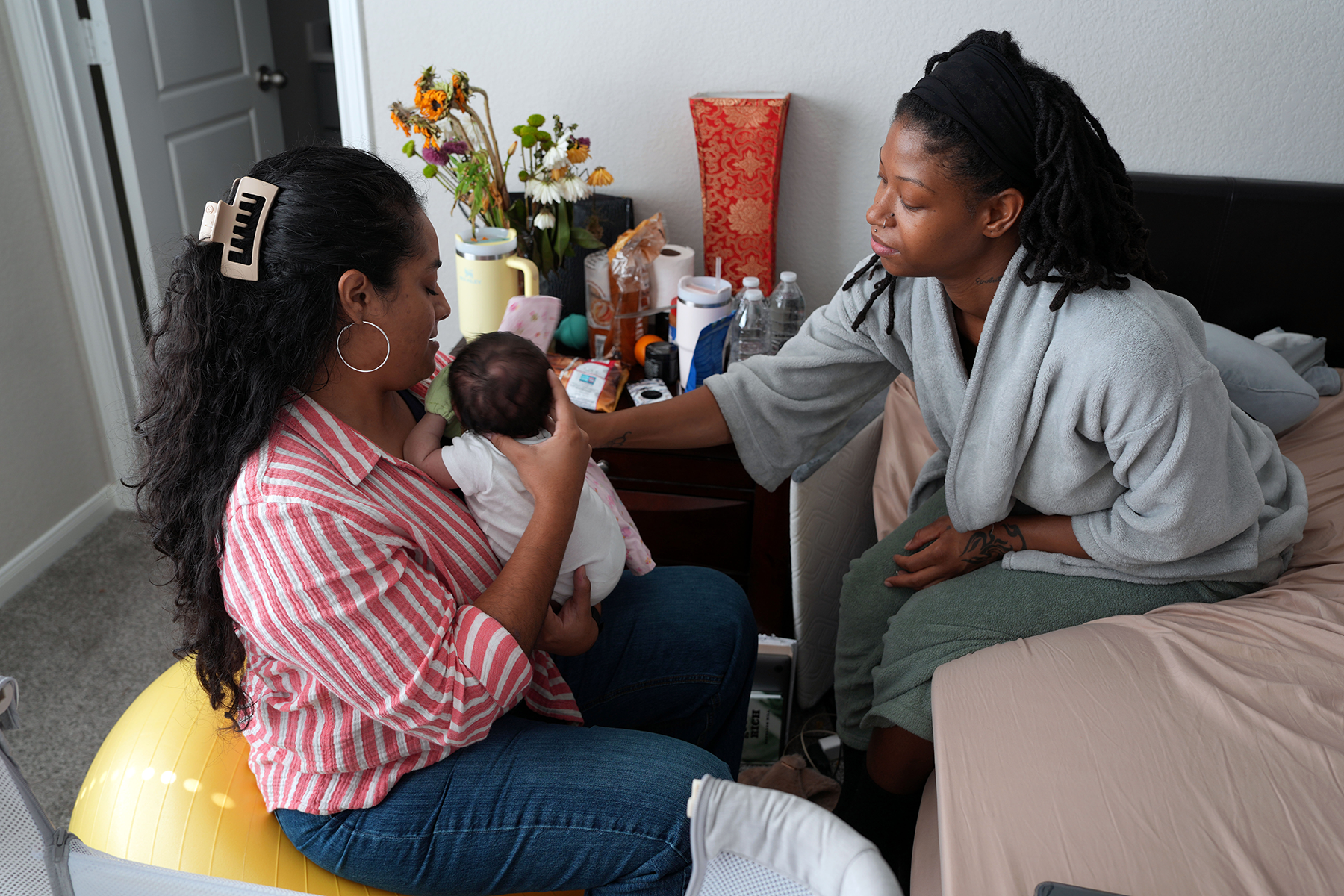
Doula care. Since 2021–2022, 13 states have added doula care expectations to their contracts, including three states with new requirements to include postpartum doulas as providers (Calif., Kan., Mass.). In total, 21 states now include doula requirements, and seven states explicitly name doulas as care providers during the postpartum period (Calif., Kan., Mass., Md., Minn., N.J., Va.). This substantial uptick in doula care expectations mirrors the growth in states providing Medicaid coverage for doulas — from eight states and D.C. in late 2022 to 23 states and D.C. as of June 2025. Some states go even further to include doula accessibility and workforce development requirements. For example, Maryland’s MCO contracts now include a stipulation that requires urban and suburban areas to have a minimum of four doulas per area, and rural areas to have a minimum of two doulas serving each region. Tennessee now requires that MCOs cocreate doula workforce development initiatives with the state.
Postpartum case management. Eight additional states included contractual expectations for postpartum case management or care coordination since the postpartum extension. Six states added requirements for all postpartum individuals (Calif., Del., Kan., Ohio, N.J., N.M.), and two states added requirements for “high risk” postpartum populations (Mass., Neb.).
Implicit bias training. Since 2021–2022, nine additional states have required implicit bias trainings for their in-network providers and/or MCO staff (Calif., Mass., Mich. Neb., N.J., Ohio, R.I., Tenn., Va.). States may be seeking to address the well-documented impact of racism and biases on the health and well-being of Medicaid enrollees, including postpartum enrollees.
Postpartum visit performance measure. The Centers for Medicare and Medicaid Services includes a postpartum care performance measure in its “Maternity Core Set” that tracks the percentage of mothers who receive a postpartum visit between 7 and 84 days after delivery. However, as of 2024–2025, this measure remains voluntary for state reporting. Since the postpartum extension, five additional states began requiring MCOs to report the postpartum visit performance measure (Colo., Ky., Mass., Mich., Mo.).
Postpartum risk assessments. Five new states included expectations for postpartum risk assessments in their MCO model contracts: D.C., Del., Fla., Md., N.Y. Two of these states have started requiring assessments of all postpartum individuals (Del., Fla.), while the remaining three require assessments for specific populations, such as those at high risk who are receiving postpartum home visits (D.C., N.Y.) and Maternal Opioid Misuse model participants (Md.).
References to postpartum care guidelines. Five additional states included references to postpartum care guidelines, including Ariz., Calif., Del., Kan., and Neb. These states now require that MCOs’ postpartum care must align with American College of Obstetrics and Gynecology (ACOG) guidelines or other nationally recognized standards for postpartum visits (Ariz., Calif., Kan.), postpartum risk assessments (Calif.), or general postpartum care (Del. and Neb.).
MCO contractual expectations fall short of best practices.
Despite improvements in postpartum contractual provisions, clear gaps remain between postpartum “best practices” and states’ expectations for MCOs delivering postpartum care. Among the states with MCO contracts in 2024 (39 states and D.C.), just half or fewer included expectations for five subdomains that are considered core elements of high-quality postpartum care, including postpartum visits, postpartum home visiting/in-home health services, postpartum case management, postpartum risk assessments, and postpartum mental health screenings (Exhibit 3). One notable exception is that 24 states require MCOs to report on the postpartum visit performance measure.
States that included requirements for services that fall under these five subdomains used highly variable contractual language, which often only applied to a specific subpopulation, such as “high risk” populations, as defined by the state or MCO. For example, among the 20 states that require postpartum case management, 11 require case management for all postpartum patients, and nine states require case management for those at high risk. High risk is defined differently in each of these nine states. Definitions can include postpartum patients with medical, social, mental health, or substance use disorder risk.
