

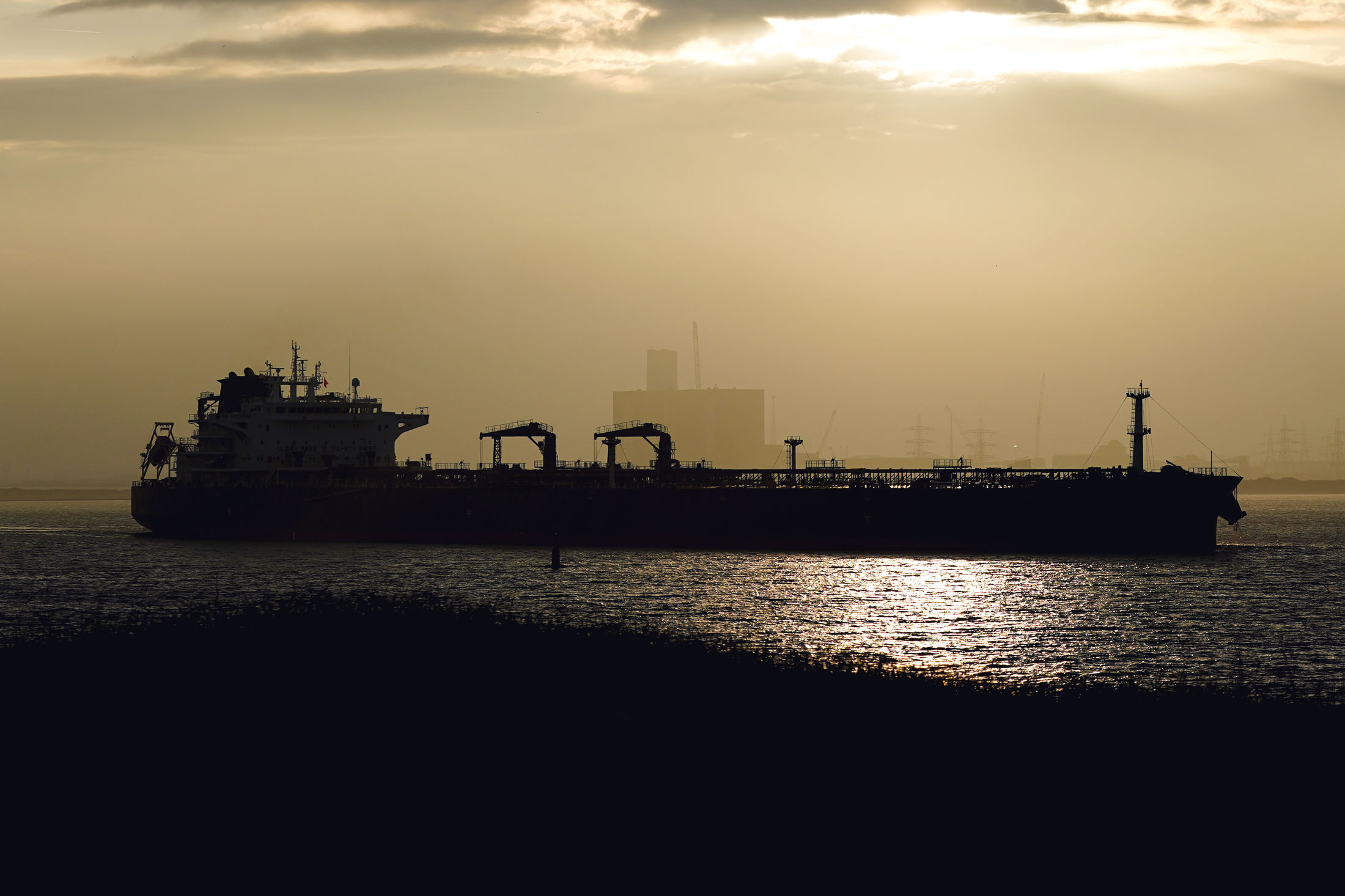
Policymakers around the world are readying measures to absorb surging energy and commodities prices triggered by the Middle East war that now threaten the global economy with its biggest shock since the pandemic.
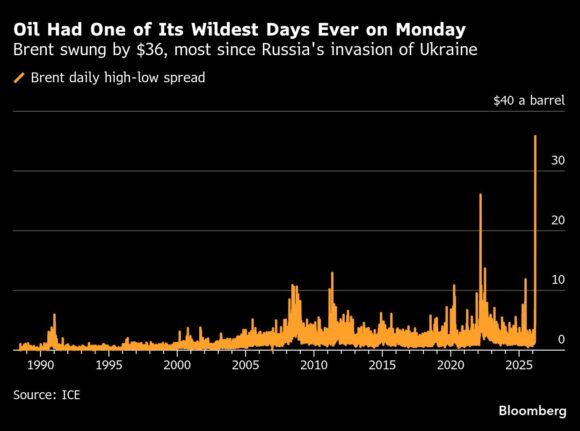
What were cast as dire scenarios when the conflict began have quickly become reality, with Brent crude surging Monday to almost $120 a barrel from around $72 dollars before the war with Iran started.
While oil fell back below $100 after President Donald Trump indicated the war would be resolved “very soon” and said he plans to waive oil-related sanctions, it remains unclear how the conflict ends and how long it’ll take to unwind the energy supply problems. That’s injected fresh uncertainty into a global growth outlook facing a host of disruptors from AI and tariffs to rising debt.
Beyond oil, the effective closure of the Strait of Hormuz has led to a spike in prices for LNG, fertilizer, jet fuel and other key commodities, stoking fears of a new wave of global inflation, slower growth and supply snarls as factories are forced to slow production.
Before the US and Israel’s Feb. 28 attacks, the World Bank’s GlobaI Supply Chain Stress Index was already hovering at its highest level since the pandemic.
After an initial wait-and-watch response, governments are now studying options that include releasing oil from strategic reserves, price caps to help households and subsidies and tax relief to cushion business and farmers.
South Korea’s President has called for a cap on fuel prices; the UK government has floated support for households; the Philippines has switched government offices to a four-day week; and Indian officials are considering whether measures to offset spiking energy costs are needed.
Short-Term Fixes
“All of these are sticking plasters that can help absorb some degree of the energy shock in the short term, but are unlikely to make much difference in the longer run if the conflict proves prolonged,” said Michael Brown, senior research strategist at Pepperstone Group Ltd, based in London.
In perhaps the clearest indication of how concerned policymakers now are, the Group of Seven finance ministers met virtually Monday to discuss the prospect of a coordinated release from the strategic oil reserves. They said the group stands ready “to take necessary measures, including to support global supply of energy such as stockpile release.”
French Finance Minister Roland Lescure said the group was “not there yet” in terms of actually releasing the fuel, but added that he and his colleagues are monitoring the situation closely in conjunction with the International Energy Agency. Coordinated releases of strategic stockpiles have been carried out only five times before, including twice in response to Russia’s invasion of Ukraine in 2022.
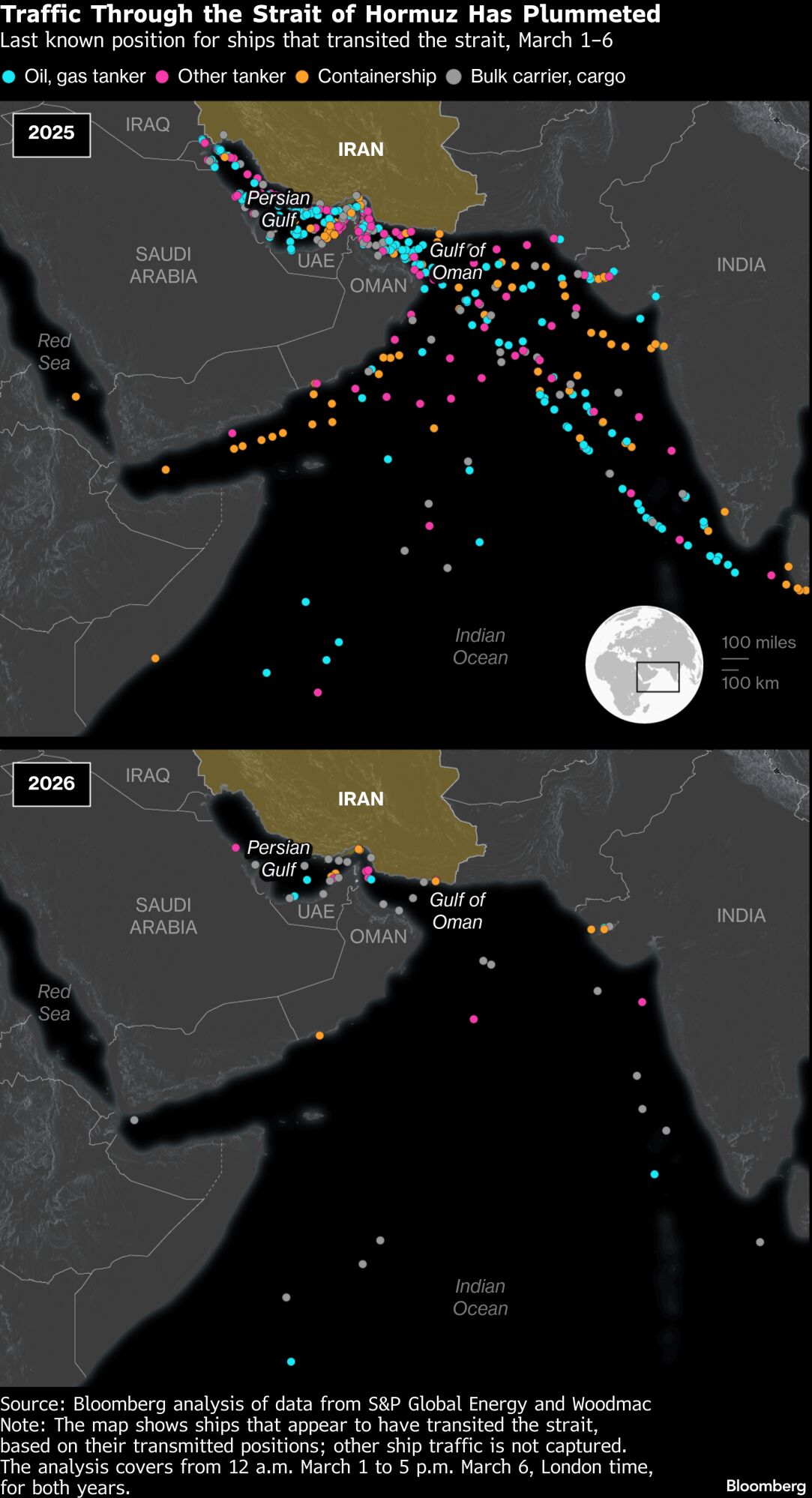
Trump announced last week that the US will provide insurance guarantees and naval escorts to vessels traversing the Strait of Hormuz. The insurance plan, which is being administered by the US International Development Finance Corp., creates a reinsurance program that guards against losses up to about $20 billion for vessels that go through the strait.
The Trump administration also eased restrictions on India accepting seaborne oil from Russia, which has been under US sanctions following the invasion of Ukraine. Treasury Secretary Scott Bessent said on Fox Business Friday that the US may lift sanctions on further Russian oil supply if needed.
Economists warn that unless an off ramp in the conflict is found soon, the spillover effect will be severe.
“If this is sharp but short lived, it is mainly an inflation and confidence event,” said Douglas A. Rediker, a managing partner of the political advisory firm International Capital Strategies in Washington. “If it spreads through shipping, insurance, gas, fertilizers, and trade routes, it becomes a real stagflation risk.”
Read more: World’s Farmers See Fertilizer Price Surge as Iran War Blocks Exports
While the world’s biggest energy producers, including the US, Brazil and Saudi Arabia will be insulated from the brunt of the oil price spike, the ultimate impact will be universal: Growth will slow as consumers and businesses tighten their belts amid higher prices.
For central banks, the combination of rising prices and slowing growth complicates the outlook for monetary policy. While officials will likely look through the initial price increase, the longer it lasts, the more likely they will need to U-turn from rate cuts to rate hikes.
Rate-Cut Bets
Traders have already dialed back bets on the pace of rate cuts by the Federal Reserve this year and fluctuated on wagers for the European Central Bank and Bank of England.
Meantime, fiscal firepower to cushion the energy blow has been limited by years of crisis fighting that has left governments saddled with debt.
Global borrowing ballooned to a record $348 trillion last year, marking the fastest annual increase since the pandemic as governments ramped up borrowing, according to an Institute of International Finance report. Developing nations face more than $9 trillion in refinancing needs this year, raising the stakes as global liquidity conditions fluctuate.
The war raises new credit risks for emerging markets, warned Fitch Ratings, as higher oil prices bloat subsidy and import bills, as well as disrupt remittances, tourism and investment flows. It tagged India and the Philippines as among the most at risk, with net fossil fuel imports exceeding 3% of their gross domestic product.
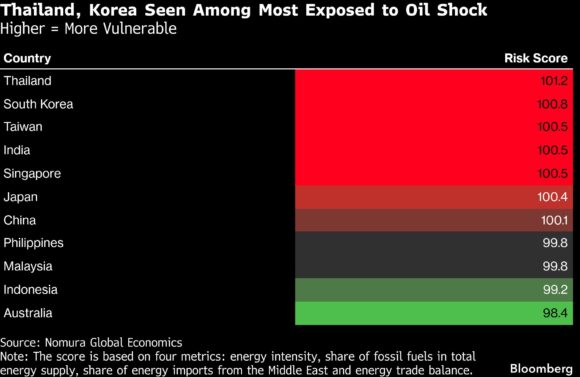
Asia’s emerging markets are particularly exposed to economic fallout. Drivers in cities including Hanoi and Manila experienced long lines to refuel.
Vietnam reduced import tariffs on several petroleum products. Thailand is boosting the use of biofuel blends to reduce the need for crude shipments and also froze the prices of cooking gas. Indonesia and Malaysia said they would keep steady the prices of subsidized fuel and let the government budget absorb the hit.
In the Philippines, the government mandated power conservation measures and slashed the work week to just four days. The tropical nation only has fuel stocks until April and is headed into its summer period when energy demand is at its peak.
COVID Scars
The energy jolt comes as the global economy is already juggling the impact of seesawing US tariffs that have cast uncertainty across manufacturers, retailers and other importers. Factories and households remain scarred by the legacy of the pandemic and the energy crisis in the wake of Russia’s invasion of Ukraine in 2022.
“In comparable past episodes, such as the spring of 2022, the international trade system enabled nimble private-sector responses to trade disruptions that limited the damage,” said Maurice Obstfeld, senior fellow at the Peterson Institute for International Economics and former chief economist for the International Monetary Fund. “Unfortunately, Donald Trump’s attacks on global trade over the past year, along with countries’ responses, may have made the system more brittle.”
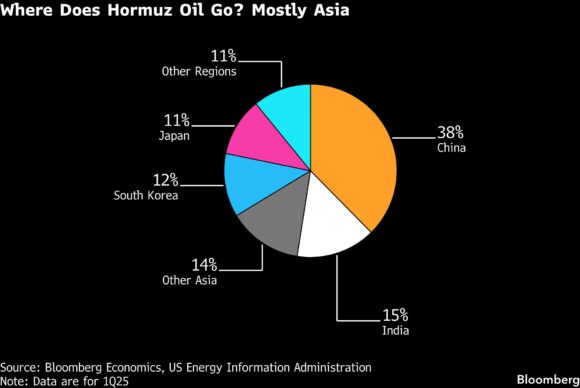
Other worries include a potential hit to production of critical technology, including semiconductors, if factories are forced to wind back production — an outcome that would see vast swathes of global industry grind to a halt. One example: Taiwan is home to the world’s most advanced chipmaker, Taiwan Semiconductor Manufacturing Co., the main supplier to Nvidia Corp. and Apple Inc.
“It’s in everyone’s interest for it to end quickly,” said Charles Lichfield of the Atlantic Council’s GeoEconomics Center. “But that’s not a guarantee that it will happen.”
Photo credit: Ian Forsyth/Getty Images
Related:
Copyright 2026 Bloomberg.
Topics
Leadership
