

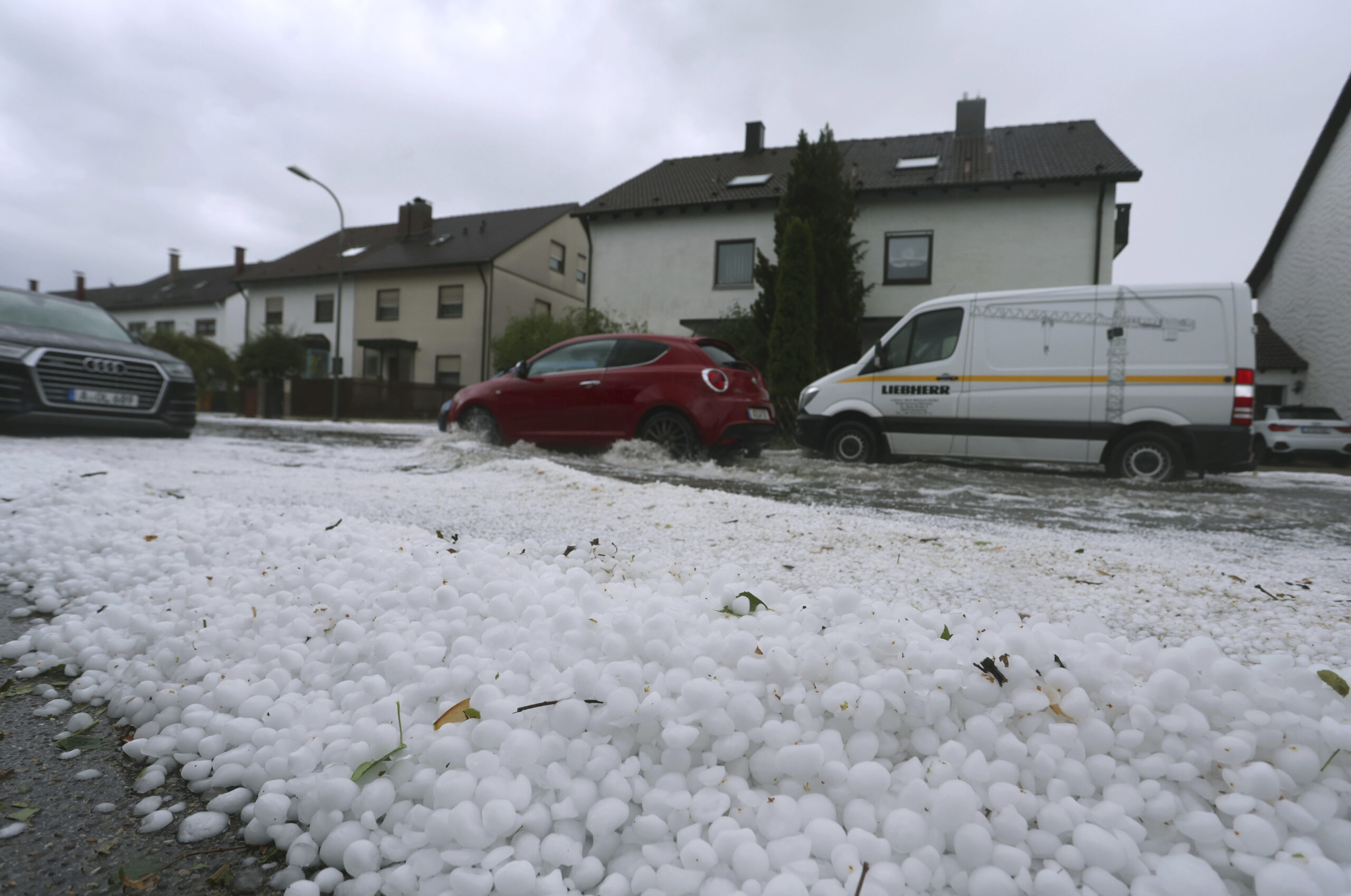
Hailstorms drove record insured damages as severe convective storms become more common and damaging, popping up in new places—and even storms producing small hailstones are posing unforeseen threats, a new report shows.
An Allianz Commercial report out this week shows the frequency and intensity of SCS events continue to increase, pushing global insured losses into the billions of dollars.
The risk report examines the growing SCS threat, which can come with little to no warning and pose “knock-on effects” like flash flooding. According to Alllianz, SCS events amounted to $60 billion last year, or nearly half of all insured natural catastrophe losses.
SCS losses for the last three years total $208 billion in today’s dollars, exceeding long-term averages. In 2025, these storms were 1.3 times as high as the 10-year average, and U.S. insured losses from SCS events were 1.4 times as high as the average for the 10 years from 2015 to 2024, the report shows.
More insurers lately are turning out reports with an eye on mounting losses from SCS events and secondary perils. A Swiss Re Institute report out last week shows that SCS events, as well as floods and wildfires, drove a record 92% of total global natural catastrophe insured losses of $107 billion in 2025.
Gallagher Re in January issued a report showing that SCS events drove at least 47% of insured losses. It states that in 2023, 2024 and 2025, SCS events cost global insurers $208 billion, making the peril “a dominant annual loss driver for the industry.”
According to Allianz, the most significant SCS losses are from hailstorms, which account for as much as 50% to 80% of all losses. The next biggest loss driver is damaging winds, such as tornadoes and derechos.
“I would say that the losses that have resulted from severe convective storms have increased so much over the last five to 10 years, that it kind of caught a lot of people by surprise,” said Andrew Higgins, technical manager – Americas at Allianz Risk Consulting. “In the past, those losses have been manageable and certainly had fallen below the hurricane losses, typhoon losses, things like that. But now they’ve reached a point where they’re comparable with some of the other perils.”
What has also been surprising is the rapid escalation of hail losses, with hailstorms wreaking havoc in more areas.
“What we’re seeing now is that the hail losses are at the biggest component of our severe convective storm losses and it’s interesting that we see how losses are occurring in regions that we really haven’t seen before in the past,” he said.
In the U.S., drier conditions in the Great Plains have shifted Tornado Alley eastwards into the Southeastern states, which have seen an increase in the number of days with conditions favorable to tornadoes. Additionally, a warmer climate with stronger updrafts is expected to produce more of the largest hailstones, with the most damaging projected to increase by broad range of 15% to 75% in frequency, depending on climate scenarios, according to the report. Munich Re has also noted the frequency of SCE events accompanied by hail appears to be increasing in Europe.
The report identifies the most expensive drivers of hail claims as damage to aircraft, buildings, manufacturing plants and renewable power.
For Don Giuliano, with Canopy Weather, a weather technology firm serving the insurance and restoration industries, the report confirms a trend he’s been watching for a while.
“The Allianz report reinforces that severe convective storms are no longer a secondary risk, and their losses now rival major perils such as named storms,” Giuliano said. “Hail is a primary driver of that shift, often accounting for the majority of losses as exposure grows in developed areas. It also aligns with the rise of so-called ‘kitty-cats,’ where frequent, lower-severity events aggregate into large, material losses for the industry.”
Hailstones vary in size from small pellets to the size of grapefruits. The report breaks down the sizes of hailstones and perils posed: The accumulation of smaller hailstones can cause roof or building collapse if building designs cannot withstand the extra load. Medium-sized hailstones (0.2-1 inch) can harm crops, fruit and glass. Larger hailstones (1.2-2 inches) can break roofing materials and damage vehicles, and extremely large hail (3-4 inches) can inflict severe structural damage.
While bigger hailstones have a higher velocity and more kinetic energy that usually results in severe damage, Higgins said he has been seeing severe losses more often in which small hailstones bring the potential of secondary perils, for example clogging roof drains so water pools and collapses roofs.
“I would imagine most building codes in the world generally did not account for hail blocking the drains resulting in ponding of water, resulting in collapse of the roof structure, so we’re seeing some unusual losses as a result of hail,” he added.
Geoffrey Conrad, a 20-plus year claims professional who has spent much of his time training adjusters, sees secondary perils and increased damage potential from small hailstones as particularly concerning because of changes occurring in the adjuster profession.
“The industry is shifting away from the field adjuster model and moving toward desk, and that’s just going to open up a whole issue where, as the size of the hailstone gets smaller, that’s where a lot of the damage is not necessarily seen by the untrained professional, and a lot of damage will be missed,” Conrad said. “Also, as they age out a lot of these veteran adjusters that are trained to identify hail damage, I think we will see a lot of issues of missed damage estimates. Because even with decent-sized hail, newer adjusters tend to miss a lot of the collateral damage—hail is not selective, hail is going to damage the roof, it’s going to damage the siding, it’s going to damage the fence and even the mailbox.”
According to the Allianz report, roofs and roof-mounted equipment—heating, air-conditioning units, solar panels—are the most commonly damaged parts of a building when hailstorms or high winds strike. The largest losses typically come from leaks on a roof that result in water damage in premises below, or a power outage that causes business interruption.
The report contemplates more risk from hail in the future based on projections of a changing climate.
“As climate change influences weather patterns, the frequency and intensity of hailstorms may increase, leading to more frequent claims and heightened risk exposure for insurers,” Allianz said.
Photo: Karl-Josef Hildenbrand/dpa via AP
Topics
Trends
Profit Loss
Personal Auto
Windstorm
