Introduction
National spending on health has increased rapidly over time—rising to $5.3 trillion and 18% of GDP in 2024—and is projected to continue to do so into the future. Growth in health spending contributes to higher costs for families, employers, Medicare, Medicaid, and other payers. In 2025, average annual premiums for employer-sponsored family coverage reached $26,993, with workers paying $6,850 for their coverage, according to KFF’s annual survey of employers. Hospital care accounted for nearly one-third of national health expenditures in 2024, and more than doubled in nominal terms over the preceding two decades, making hospitals a major driver of health spending growth over time.
This data note analyzes the extent to which hospital spending has contributed to the growth in national health expenditures in recent years (2022-2024) and over the long term (2005-2024) using data from the Centers for Medicare & Medicaid Services (CMS) National Health Expenditures Accounts (NHEA). (See Key Facts About Hospitals for more information about hospital spending and the Peterson-KFF Health System Tracker for more on national health expenditures).
Hospital Spending Accounted for 40% of the Growth in National Health Spending Between 2022 and 2024, A Far Larger Share Than Any Other Health Spending Category
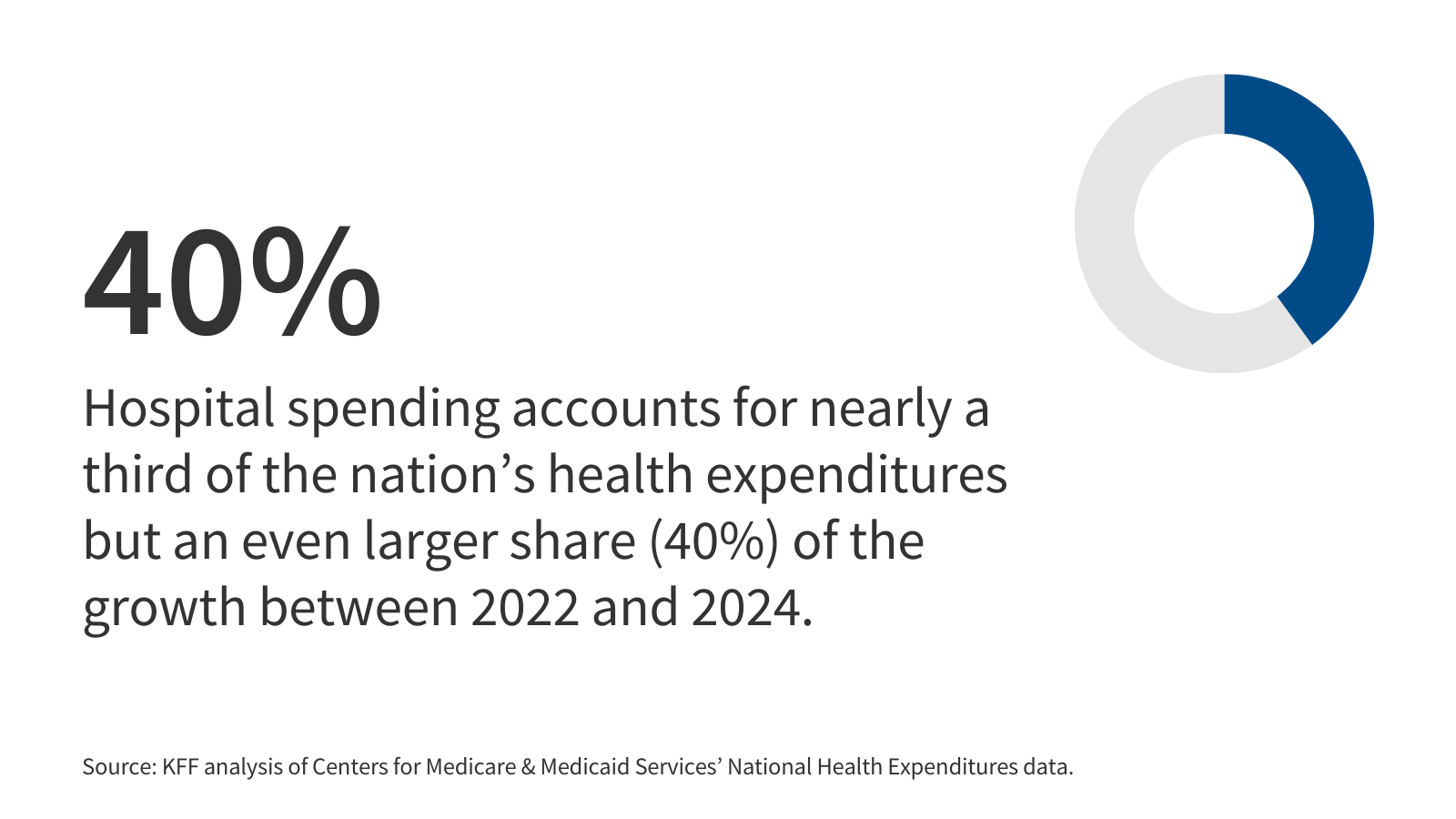
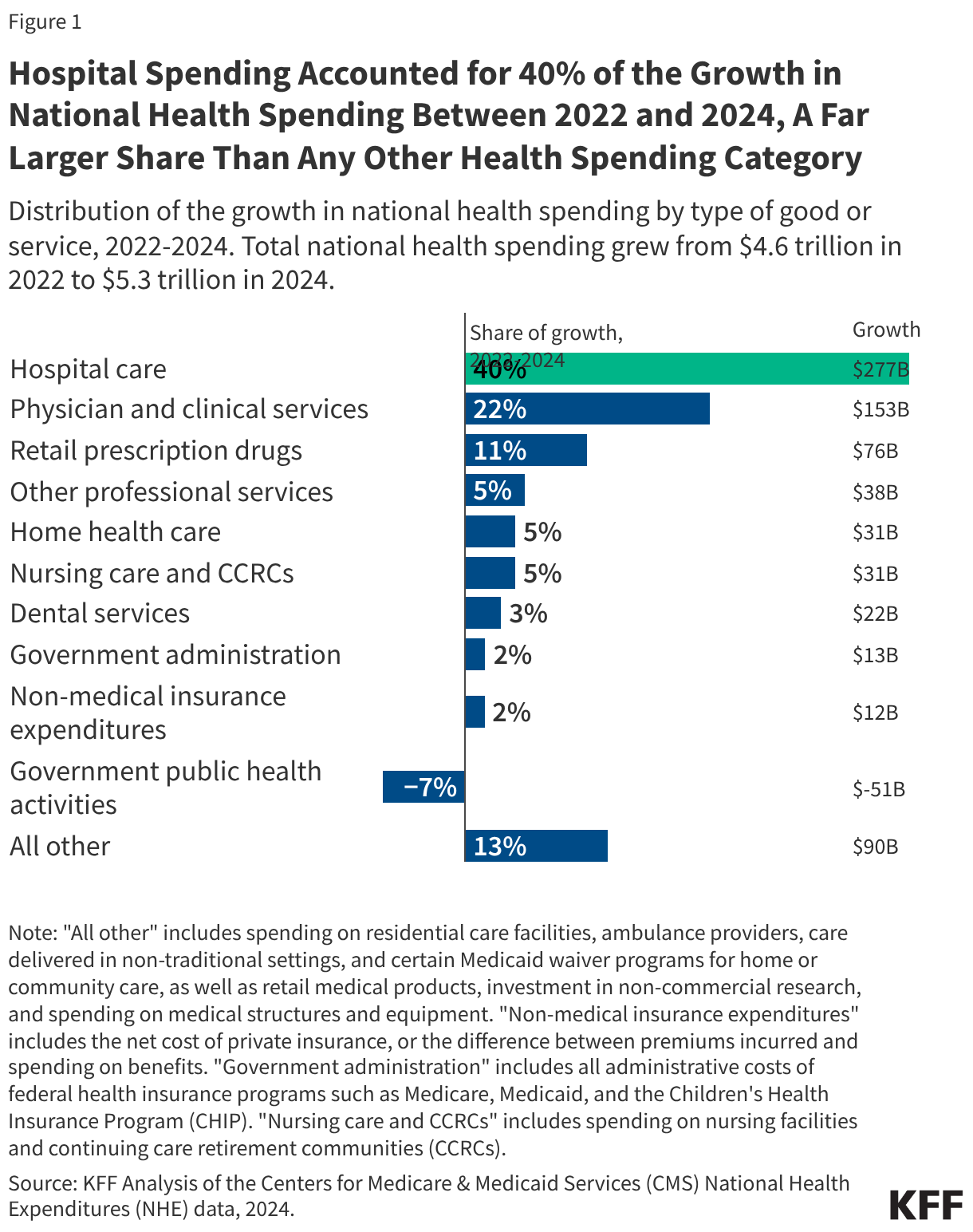
National health expenditures increased by $692 billion between 2022 and 2024, from $4.6 trillion to $5.3 trillion. During this period, spending on hospital care alone accounted for $277 billion of spending growth, or 40% of the total increase in national health spending (Figure 1). The large contribution of hospital care to overall health spending growth reflects the fact that hospital spending accounted for nearly a third of national health expenditures in 2022 (30%) and grew more quickly than national health expenditures overall in both 2023 (10.6% versus 7.4%) and 2024 (8.9% versus 7.2%).
The growth in hospital spending in 2023 and 2024 was primarily due to a “rebound in nonprice factors, such as the use and intensity of services, that were somewhat depressed during the [COVID-19] public health emergency,” according to CMS. Nonetheless, hospital prices, which grew by 2.7% in 2023 and 3.4% in 2024, also played a role. In fact, according to CMS, 2024 saw the fastest hospital price growth since 2007. Hospital price growth includes Medicare and Medicaid as well as commercial prices; hospital prices in these public programs have grown more slowly than commercial prices over time.
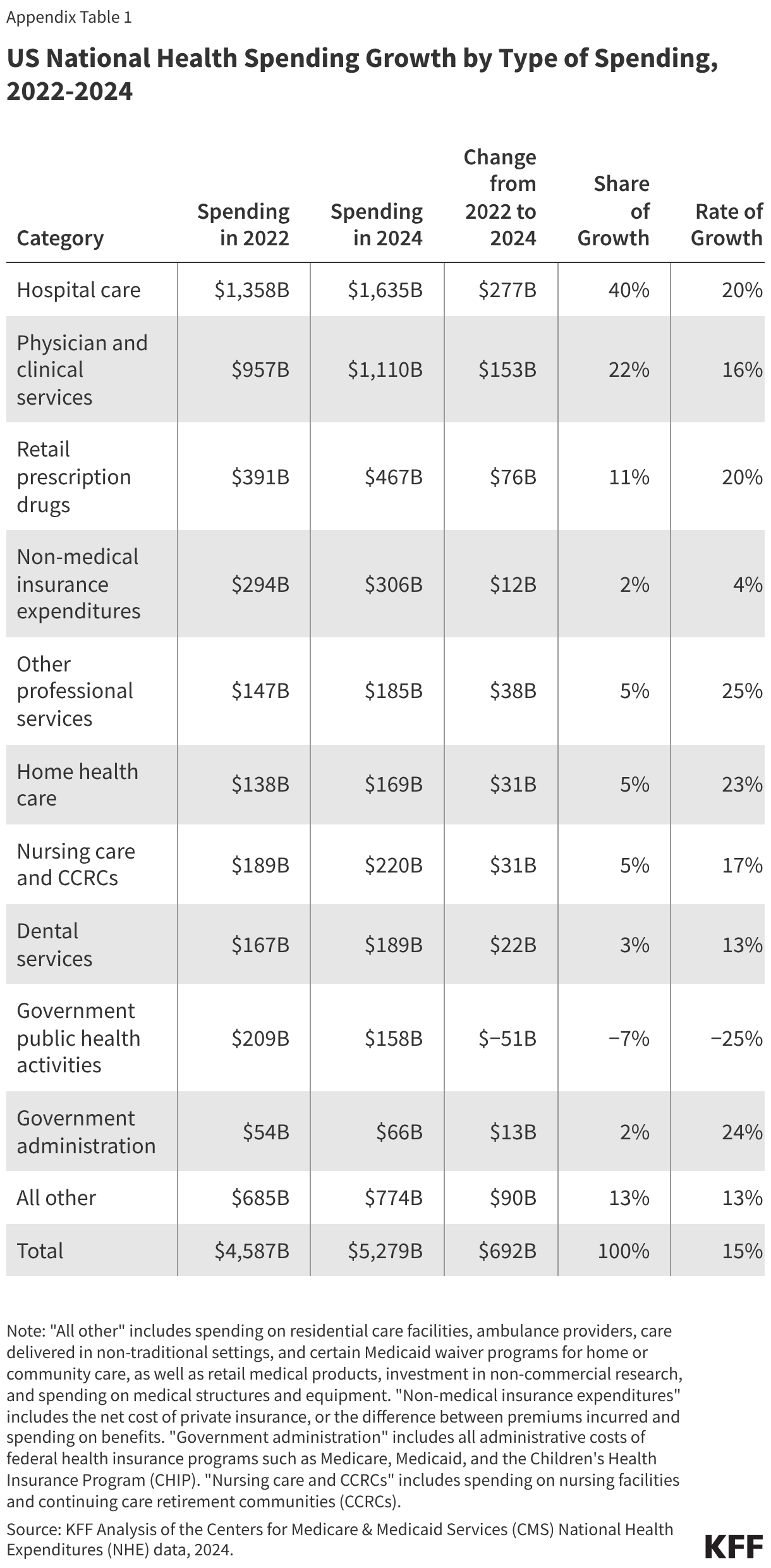
The contribution of hospital care to overall spending growth was larger than that of other major spending categories. Physician and clinical services accounted for the second-largest share at 22% of the growth. Retail prescription drug spending, which grew at about the same rate as hospital spending during the period between 2022 and 2024, accounted for 11% of the growth during this period (Appendix Table 1). Spending on non-medical insurance expenditures, other professional services, home health care, nursing care and continuing care retirement communities, dental services, and government administration accounted for smaller shares. Spending on government public health activities declined by 7% during this period, likely due to the winding down of activities related to the COVID-19 pandemic. Spending on all other goods and services, which includes some long-term services and supports, accounted for 13% of the growth in total spending.
Hospital spending grew at a faster rate (20%) than total health spending (15%) from 2022 to 2024. Retail prescription drugs (20%), other professional services (25%), home health care (23%) and government administration (24%) also grew more quickly than total health spending, although these categories contributed less to overall growth than hospitals because they had lower baseline spending in 2022.
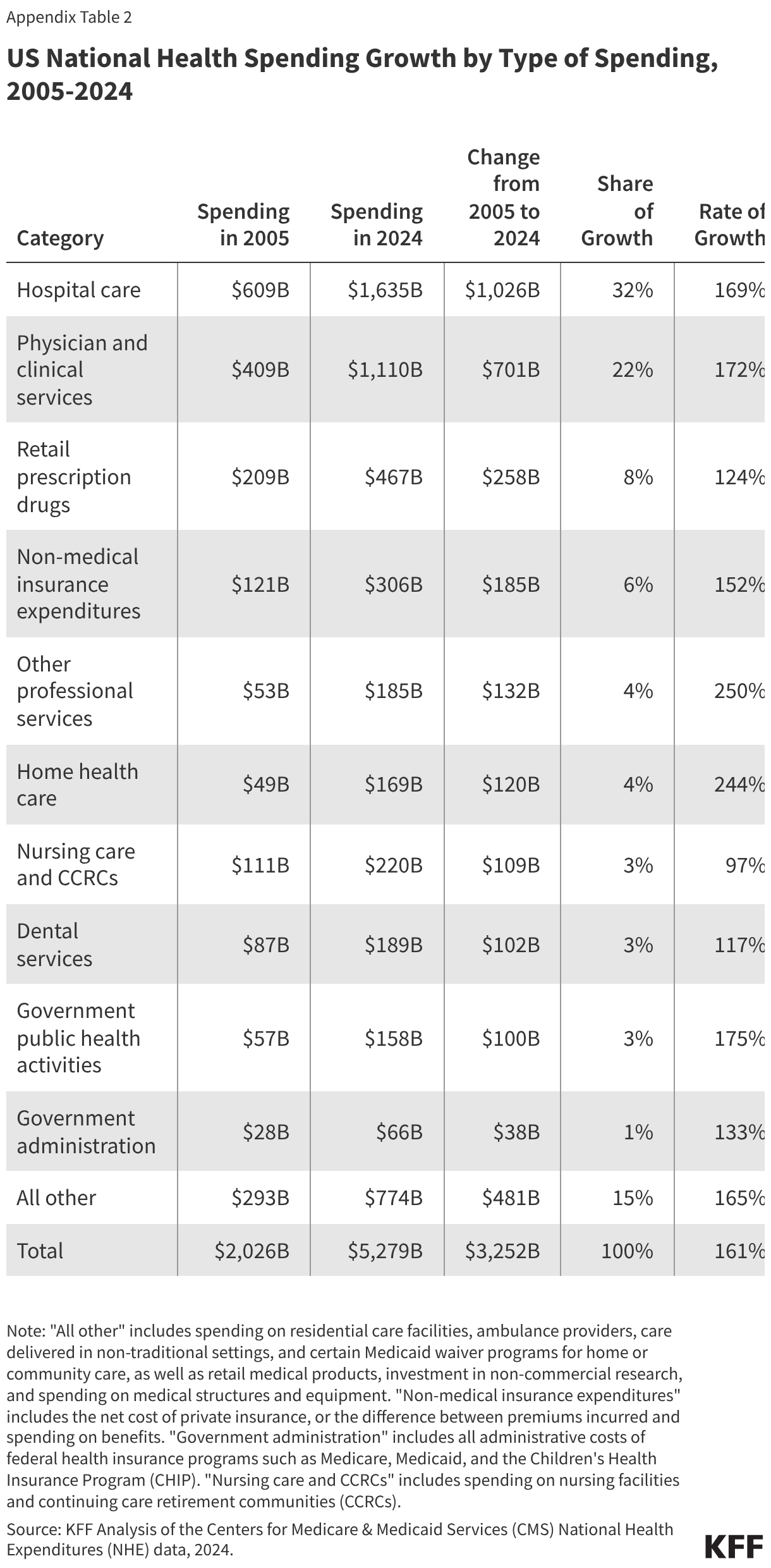
Over a longer period, 2005-2024, hospital spending accounted for 32% of the overall increase in national health spending growth, while spending on physician and clinical services accounted for 22% and spending on retail prescription drugs accounted for 8% (Appendix Table 2). CMS projects that hospitals will return to a similar share of spending growth through 2033 (32%), down from the 40% share that hospitals have accounted for in recent years.
Hospital Spending Per Year Increased by $1 Trillion Over the Past Two Decades and by $277 Billion Between 2022 and 2024
Hospital spending grew from $609 billion in 2005 to $1.6 trillion in 2024, a $1.0 trillion increase (Figure 2). During this period, total health spending grew $3.3 trillion, from $2.0 trillion to $5.3 trillion. In more recent years, hospital spending increased from $1.4 trillion in 2022 to $1.6 trillion in 2024, a $277 billion increase.
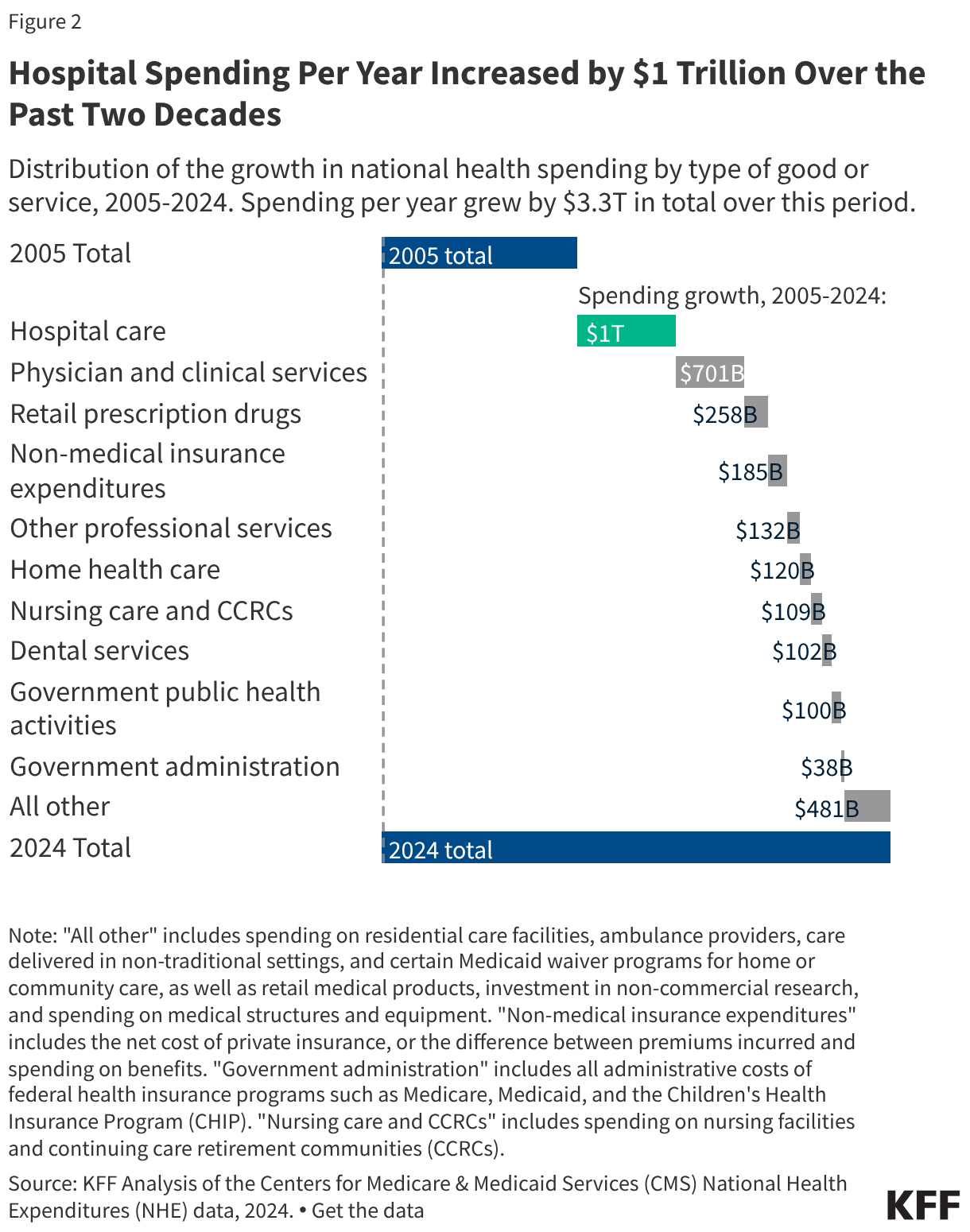
Hospital spending growth over the past two decades was greater than the spending growth for physician and clinical services (the second-largest increase), and substantially greater than the growth in retail prescription drugs (the third-largest increase).
Spending on hospital care specifically and national health expenditures generally have both exceeded overall economic growth over time. Hospital spending increased from 4.7% to 5.6% of GDP from 2005 to 2024, while total health care spending increased from 15.5% to 18.0% of GDP over the same period. By 2033, CMS projects that hospital spending will rise to 6.4% of GDP, with national health expenditures increasing to 20.3% of GDP.
Hospital spending growth over the past two decades is primarily due to increases in both prices and quantity of services provided, particularly when outpatient care is taken into account. From 2005 to 2024, hospital prices increased by 61% based on KFF analysis of the Producer Price Index (PPI). In terms of volume, although total hospital inpatient days decreased 5% (17% per 1,000 population), outpatient visits increased by 44% (25% per 1,000 population), based on KFF analysis of the AHA Trendwatch Chartbook and the AHA Annual Survey Database. The continued growth in hospital spending will contribute to higher costs for public programs like Medicare and Medicaid, employers and families, and exacerbate ongoing concerns about health care affordability.
This work was supported in part by Arnold Ventures. KFF maintains full editorial control over all of its policy analysis, polling, and journalism activities.
Appendix