

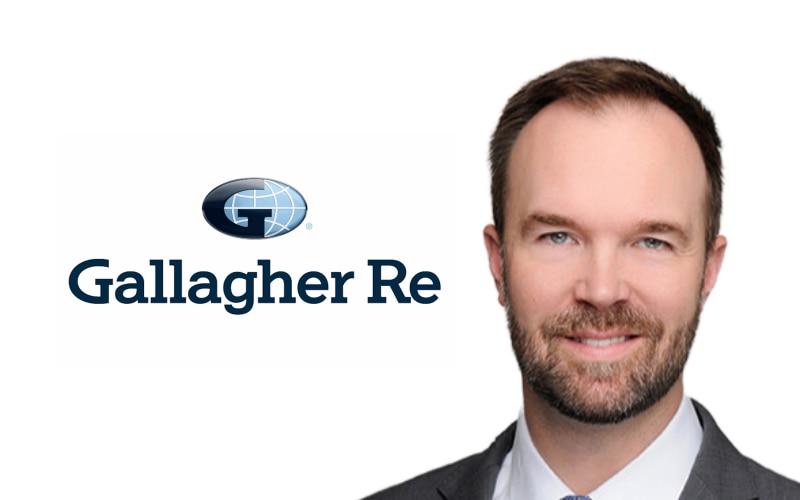
Adam Schwebach of reinsurance broker Gallagher Re is expecting more new cedents to enter the insurance-linked securities (ILS) market in 2026, describing it as a product that can no longer be ignored for catastrophe risk.
“From an overall perspective, we think that there’s still ample supply of reinsurance within the state,” said Schwebach. “There are opportunities and probably a little bit more demand for reinsurance below the Fund. As that business exits Citizens and transitions to the private market, there’s some additional limit that needs to be accounted for at the bottom-end. But I think overall, that’s very, very manageable within the overall reinsurance market.”
Part of that, according to Schwebach, is being driven by the influence of the abundance of ILS capacity at the top-end of programs.
“That’s something that I think when it’s all said and done this year, I think that we are going to see more cedants this year than we did last year. I think we’re going to see some new entrants into the ILS space. It’s a product that I don’t think can be ignored for cat risk any longer. We are moving past the point of calling it alternative capital. It’s a different source of capital, but it’s very much a key source of reinsurance capacity in the cat market. And I think that’s only going to continue,” he said.
Artemis’ data shows that 15 new sponsors entered the catastrophe bond market for the first time in 2025, which is a record for a single year.
It’s set to be a busy first quarter for the market, and three new sponsors have already come to market, supporting Schwebach’s prediction.
Ultimately, Schwebach believes that ILS, alternative, or third-party capital isn’t going away.
“This used to be a topic that you would bring up with Florida carriers, and most people had an opinion. It could be a 50/50 split between, ‘we’re fine the way we are we’re going to continue to partner with the traditional reinsurers,’ and others that said, ‘yes, we’ll absolutely consider it, it’s an alternative form of capital that we would like to have as part of our capital stack.’
“I would say where we sit today, it’s not 50/50 anymore. I would say everybody’s at least open to considering how a cat bond placement could be incorporated in their program. It’s not to say everybody will, but there’s a willingness and an eagerness to learn a little bit more and be a little bit more thoughtful to say, ‘Okay, I know I’ve always said I will stick with my traditional market, but I think it’s gotten to the point now where maybe we should at least think it through, rather than just saying no,’” he said.
Read all of our interviews with ILS market and reinsurance sector professionals here.

