

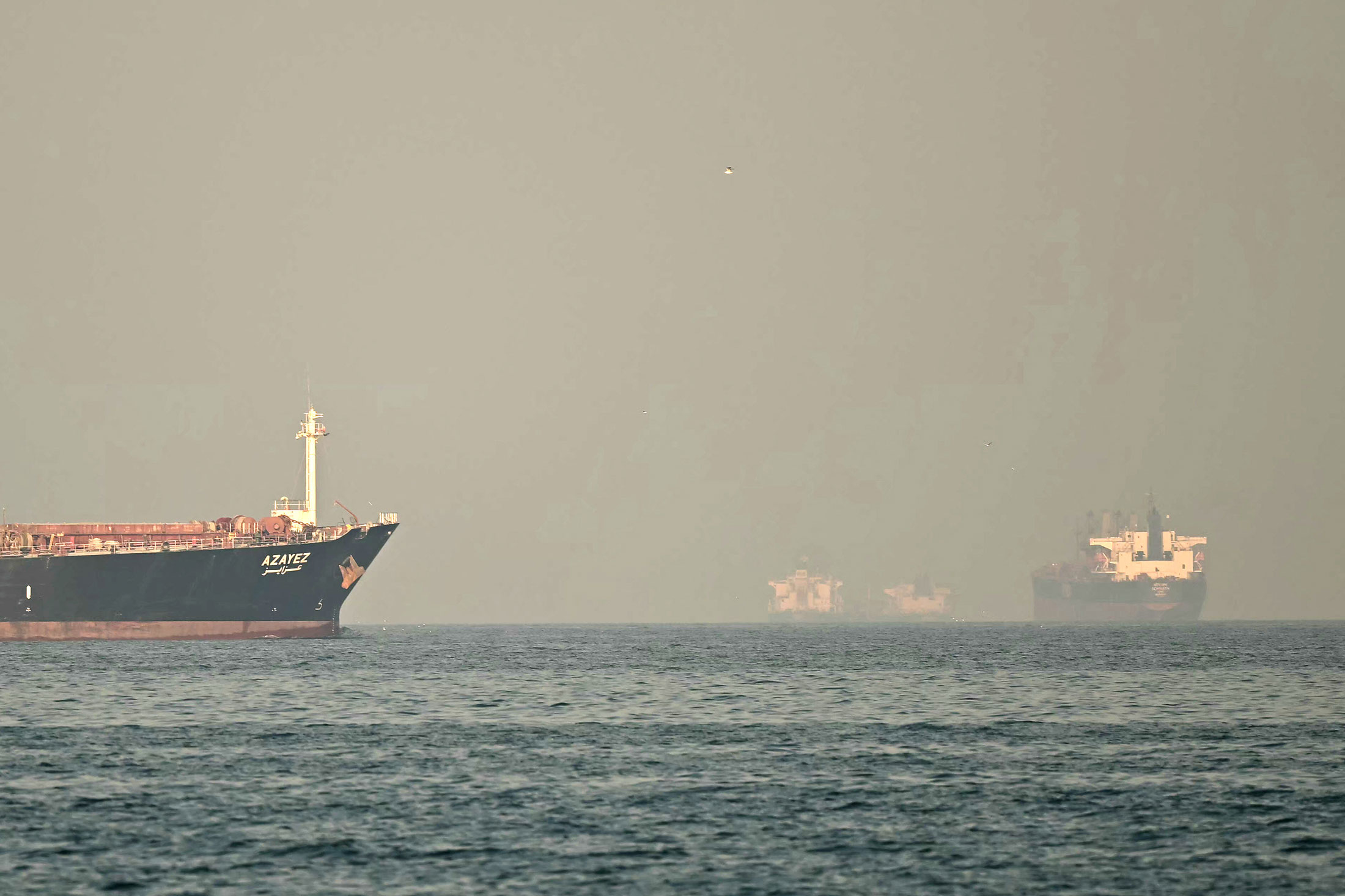

Iran said on Monday it wanted a lasting end to the war with the U.S. and Israel, and pushed back against pressure to reopen the Strait of Hormuz, while U.S. President Donald Trump warned the country could be “taken out” if it did not meet his Tuesday night deadline to reach a deal.
Responding to a U.S. proposal through mediator Pakistan, Tehran rejected a ceasefire and said a permanent end to the war was necessary, the official IRNA news agency reported.
The Iranian response consisted of 10 clauses, including an end to conflicts in the region, a protocol for safe passage through the Strait of Hormuz, lifting of sanctions and reconstruction, the agency added.
The Pakistani-brokered framework for ending the war proposed an immediate ceasefire, followed by talks on a broader peace settlement to be concluded within 15 to 20 days, a source aware of the proposals said.
Trump, who has threatened to rain “hell” on Tehran if it did not make a deal by 8 p.m. EDT Tuesday (midnight GMT) to open the Strait of Hormuz, a vital route for global energy supplies, rejected the Iranian response and said his deadline was final.
Read more: US, Iran Study Ceasefire Plan as Deadline Nears on Trump’s ‘Hell’ Threat
At a news conference, Trump said Iran could be “taken out” in one night “and that night might be tomorrow night,” referring to Tuesday. He vowed to destroy Iranian power plants and bridges, brushing off concerns that such actions would be a war crime or alienate Iran’s 93 million people.
Without an agreement with Tehran, Trump said “every bridge in Iran will be decimated” by midnight EDT (0400 GMT) on Wednesday and “every power plant in Iran will be out of business, burning, exploding, and never to be used again.”
Strikes on University
Iran’s top joint military command in turn said Trump was “delusional” and called Trump’s warnings “rude, arrogant rhetoric and baseless threats,” according to a statement by spokesperson Ebrahim Zolfaqari on state TV.
After Trump’s latest comments, Iran’s deputy sports minister, Alireza Rahimi, called on artists and athletes to form human chains at power plants across the country on Tuesday.
“We will stand hand in hand to say: Attacking public infrastructure is a war crime,” Rahimi said on X.
Iran’s envoy the United Nations said on Monday Trump’s social media post warning about U.S. strikes on Iranian infrastructure constituted “direct incitement to terrorism and provide clear evidence of intent to commit war crimes under international law.”
Independent experts have also said strikes on civilian infrastructure such as power plants and bridges would constitute war crimes. Trump said Iranians are “willing to suffer that in order to have freedom” and the U.S. has intercepted messages asking for bombings.
After the U.S. and Israel attacked on February 28, Iran effectively closed Hormuz, a conduit for about a fifth of the world’s oil and natural gas supply. The waterway’s stranglehold on the global economy has proved a powerful bargaining chip, and Tehran is reluctant to relinquish it too easily.
Iran also threatened to avenge a U.S.-Israeli attack early Monday on Sharif University of Technology in Tehran, one of the country’s top science institutions, where Iran’s WANA news agency said an artificial intelligence data center and other facilities were damaged.
“Aggressors will see our might” in response to the Sharif bombing, Iran’s Foreign Minister Abbas Araqchi said on X. Iran’s science minister has accused the United States and Israel of attacking some 30 universities in the war.
Rescue Mission
At the news conference, Trump and Secretary of Defense Pete Hegseth praised the successful weekend retrieval from Iran of a U.S. airman whose jet was shot down on Friday.
Hegseth, who has faced scrutiny for outspokenly blending his evangelical religious faith with military operations, described the rescue in explicitly Christian terms, comparing it to the resurrection of Jesus Christ.
The rescue mission came amid rising concern about the nearly six-week-long war’s effect on the global economy, including a sharp rise in fuel prices. The conflict has also hit Trump’s approval ratings and intensified anxiety among Republicans about November’s midterm elections.
Further aerial strikes were reported across the region on Monday. Hegseth said Monday would have the most strikes since the start of the war, and Tuesday would see even more.
The Israeli military said early on Tuesday that it completed a wave of airstrikes targeting Iranian government infrastructure in Tehran and other areas across Iran, adding that further details would follow.
A residential area in Iran’s capital Tehran was hit in an attack on Tuesday and rescue teams were searching through rubble, Iranian Red Crescent news site reported.
Israeli Defence Minister Israel Katz threatened to destroy Iran’s infrastructure and hunt down its leaders “one by one.” Israeli Prime Minister Benjamin Netanyahu said the strike on a petrochemical facility in southern Iran was part of dismantling Iran’s Revolutionary Guards “money machine.”
Fighting Back
Iran’s attack on an Israeli-linked vessel and continued strikes on its neighbors underscored the country’s ability to fight back despite Trump’s repeated claims to have knocked out its missile and drone capabilities.
Israel saw a heavy day of rocket volleys on Monday, with the sounds of sirens and missile interception booms ringing out across the country throughout the day.
Then early on Tuesday, the Israeli military identified missiles launched from Iran toward the Israel. “Defensive systems are operating to intercept the threat,” the IDF said.
The United Arab Emirates, Saudi Arabia and Bahrain issued simultaneous public safety alerts on Tuesday, with the UAE saying its air defense systems were dealing with a missile threat, Saudi Arabia activating early warning sirens in its Eastern Region, and Bahrain urging people to head to the nearest safe place after sirens were sounded.
Thousands of people have been killed across the Middle East in the Iran war, including 3,546 in Iran, U.S.-based rights group HRANA said, and nearly 1,500 in Lebanon.
