

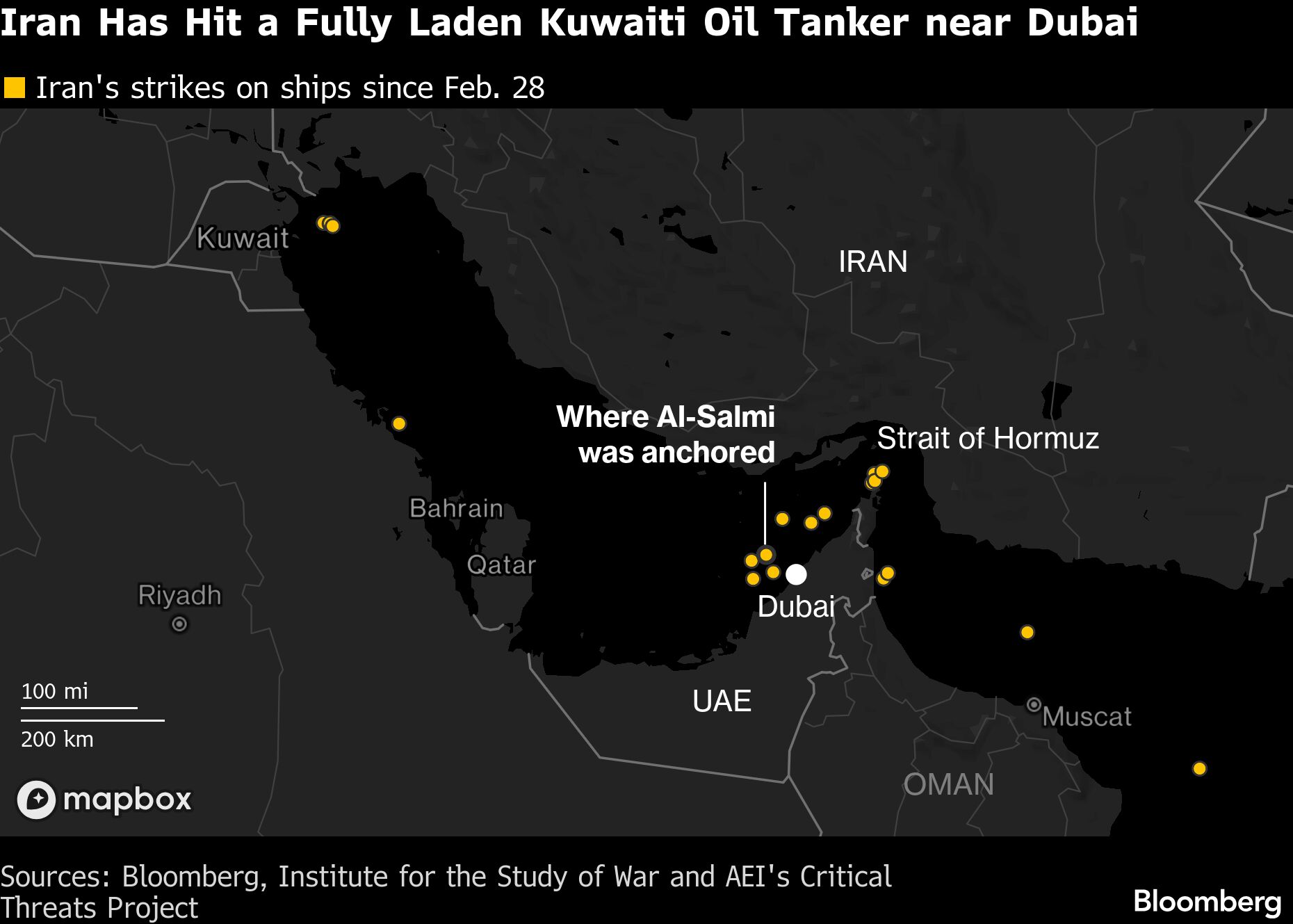
An Iranian drone hit a fully laden Kuwaiti oil tanker off Dubai early on Tuesday in one of the most significant attacks on a vessel in a month of war, pushing crude prices higher and heightening tension around the vital Strait of Hormuz.
The Al-Salmi, a Kuwait-flagged very large crude carrier, was in the anchorage zone of Dubai’s port, just 31 nautical miles northwest of the emirate and in an area packed with ships waiting to exit the Persian Gulf. The strike — which happened just after midnight local time — damaged the hull and started a fire on board, state-run Kuwait Petroleum Corp. said in a statement.
The Dubai Media Office said on X later on Tuesday that the fire had been extinguished and the incident had been contained, with no oil leakage. All 24 crew members were safe.
The incident is yet another sign that a deepening Middle East conflict shows little sign of nearing a resolution, with mooted peace plans still at odds with reality on the ground and inconsistent rhetoric from Washington. US President Donald Trump earlier issued threats against Iranian infrastructure, including power plants and oil facilities, and has sent more troops to the region as the war extends into a fifth week.
The tanker attack pushed oil prices higher, with West Texas Intermediate futures jumping almost 4% toward $107 a barrel, before paring gains.
Iran has near-total control of the Strait of Hormuz — the narrow waterway that’s the gateway to the Persian Gulf — and has effectively closed it to all but a trickle of vessels, paralyzing shipments of energy and other goods. Tehran has targeted ships and energy infrastructure on several occasions, but attacks on vessels in and around the strait appeared to have eased in recent days.
The last reported incident was on March 21, when a bulk carrier reported a near miss.
The latest attack will revive shipowners’ concerns, even as Iran takes steps toward restoring some traffic through the strait on its own terms. Dubai’s anchorage area is a frequent stopping point as vessels wait to secure war-risk insurance cover and finalize details before exiting via the narrow corridor.
As of Tuesday morning, there were more than 400 ships of all types in and around the anchorage where Al-Salmi was struck, according to data compiled by Bloomberg. Electronic interference can potentially misrepresent ships’ true locations in the area.
Read More: Iran’s Grip on Hormuz Is Tighter Than Ever After a Month of War
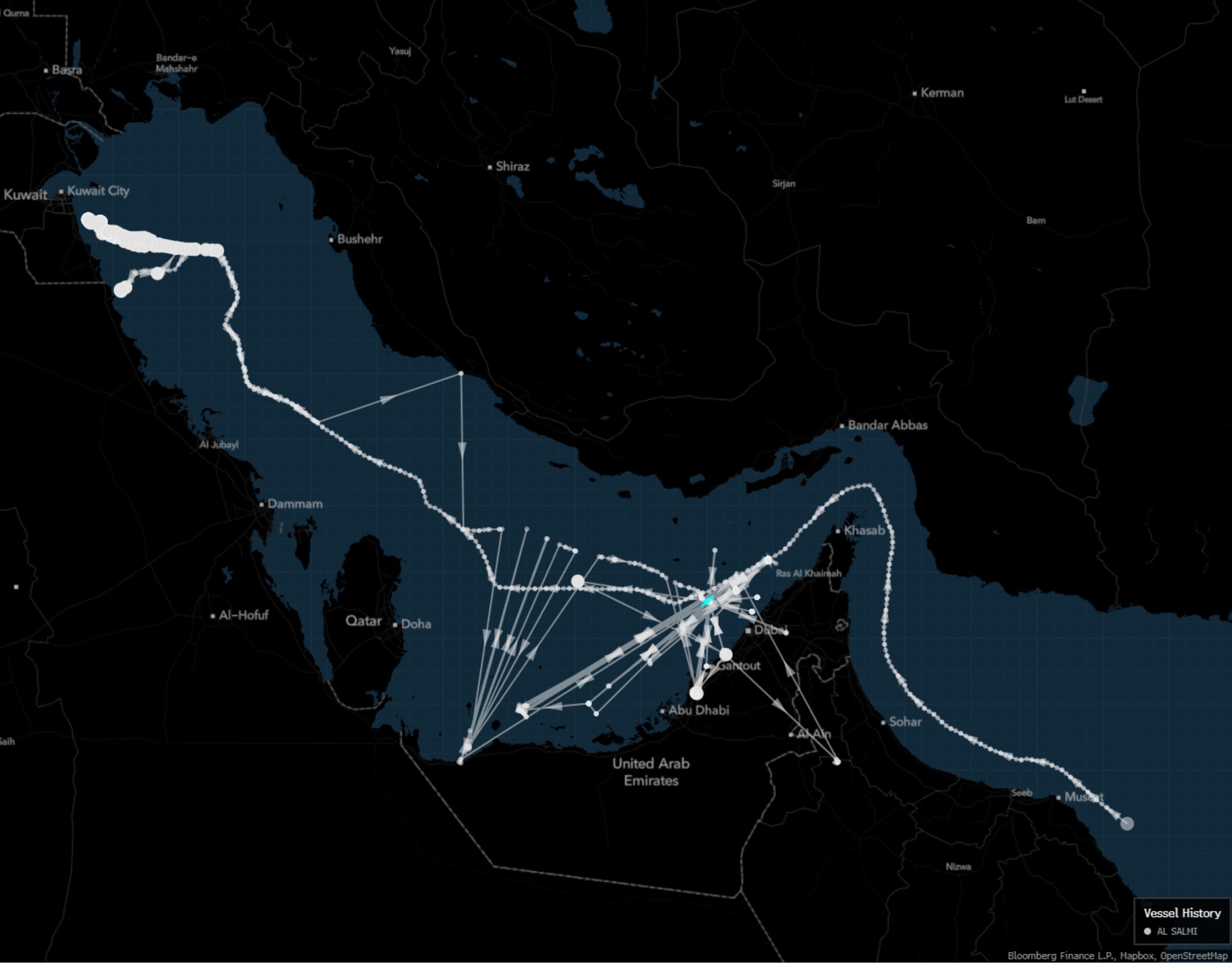
Al-Salmi crossed the strait into the Gulf in late February, reaching Saudi Arabia’s Khafji port to pick up some barrels, ship-tracking data show. The tanker then sailed onward to Kuwait’s Mina Al Ahmadi for another cargo, before moving, fully laden, to the United Arab Emirates. It has been off Dubai since.
The ship’s signals through this time indicate that it wanted to make clear its associations as Iran stepped up attacks on vessels. It said it was sailing under the Kuwaiti flag as it entered the Gulf, adding that it was bound for China’s Qingdao. At times, it switched to saying it had Chinese cargo.
Related:
Copyright 2026 Bloomberg.
Topics
Energy
Oil Gas
Interested in Energy?
Get automatic alerts for this topic.
