


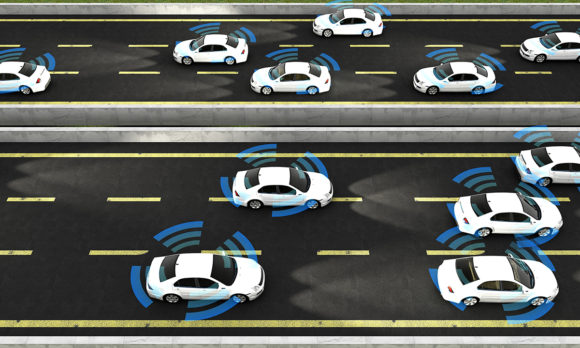
Industry trade associations side with caution to ensure regulations promote safety as autonomous vehicles (AVs) share the road with traditional automobiles.
The National Association of Mutual Insurance Companies and the American Property Casualty Association each submitted statements to the Senate Committee on Commerce, Science, and Transportation for its Feb. 4 hearing on the future of self-driving vehicles.
Sen. Ted Cruz, R-Texas, chairman of the committee, said AVs are already on the road and they present some potential in improving safety and traffic, but to date Congress “has failed to establish a clear federal framework to govern AV deployment.”
“That inaction is no longer neutral—it is unsafe,” Cruz said in opening remarks. “Without federal oversight, we risk a fragmented patchwork of state laws that undermine safety, innovation, and American competitiveness.” He added it is “imperative that Congress acts now to create a national standard for AVs.”
Jimi Grande, senior vice president of federal and political affairs for NAMIC, said in submitted testimony that “AVs need to prove they’re safe before we’ll take our hands off the wheel,” and “rigorous oversight and proper validation of safety and data are needed to instill confidence in [AVs].” Of course, safety is a paramount issue for insurer; however, while regulators should review existing rules, that “should not extend to those areas where states have authority.”
NAMIC believes states should retain: authority of registration, licensing, and operation of AVs; determination of regulations for insurance; authority of liability issues in state law; a working relationship with federal partners to clarify data security and privacy requirements.
“There will still be crashes, especially in the immediate future where AVs share the road with human drivers,” Grande said. “A crash between any combination of AVs and humans will likely involve multiple insurance policies, raising complicated, difficult, and fact specific liability questions. And when that happens, states and localities know best what works for their roads, driving populations, and state courts, and must retain the authority to define and address AV liability issues.”
In its statement, APCIA said it urged federal lawmakers to “focus on vehicle and roadway safety; support the continued primacy of state regulation of insurance and liability issues; and ensure that vehicle owners’ have control and can grant access to vehicle-generated data.”
“Consumers deserve clear safety standards, strong state-based insurance protections, and confidence that crash-related data will be available when needed to determine what happened,” said Sam Whitfield, APCIA’s senior vice president of federal government relations and political engagement. “Innovation must go hand in hand with accountability, transparency, and a regulatory framework that continues to put people first.”
APCIA agreed, “Federal law should not pre-empt or conflict with state insurance requirements or limit the ability of states to identify automated driving system equipped vehicles in registration or titling. The responsibility for
determining liability apportionment should also stay with the states.”
In a statement to the committee and sent to Insurance Journal, the Owner-Operator Independent Drivers Association said, “Despite unfounded forecasts and empty promises that automated vehicles will lead to zero deaths, there continue to be real-world situations in which automation has devastatingly failed.”
Advancement in AV technology should include mandatory transparency from manufacturers to support education, lawmakers, and regulators. OOIDA warned of the cybersecurity vulnerabilities of AVs, especially with China and Russia.
“Congress must protect national security and personal privacy by ensuring that AVs are not prone to cyberattacks from malicious actors,” said OOIDA, adding the same regulatory approach to passenger and trucking AVs should be avoided due to different safety challenges.
Topics
Legislation
Interested in Legislation?
Get automatic alerts for this topic.
