

From 2014 to 2024, over half a million lives (516,790) were lost to suicide, with 2022 marking the highest annual total on record. Since then, overall suicides have declined somewhat, but trends diverged by method: firearm suicides continued to rise, reaching a new high in 2024. As a result, firearms accounted for 57% of all suicides in 2024, up from 50% in 2014, while suicides by other methods fell. Some of the shift may also reflect undercounting if some suicides are recorded as unintentional drug overdose deaths. These shifts may have implications for prevention strategies including the capacity and design of crisis and treatment systems.
In July 2022, the 988 Suicide and Crisis Lifeline launched nationwide, replacing the prior 10-digit number with an easier to remember, three-digit option that connects people in distress to counselors at 200+ local crisis call centers and, when needed, other crisis services. Since launch through October 2025, 988 has received more than 19 million calls, texts, or chats nationally, alongside improved answer rates and shorter wait times.
The combination of 988, other benefit expansions and distance from the pandemic may be factors contributing to small declines in overall in suicides since the 2022 peak; however access to mental health and substance use disorder treatment gaps persist. In 2025, the Trump administration discontinued the LGBTQI+ 988 call line and advanced an array of federal policy actions that could limit access to care including projected coverage loss in Medicaid and the Marketplace.
Key takeaways from analysis of CDC WONDER data from 2014 to 2024, which represents the most recent and comprehensive data available include the following:
Overall death rate: The age-adjusted suicide death rate in 2024 was 13.7 per 100,000 people.
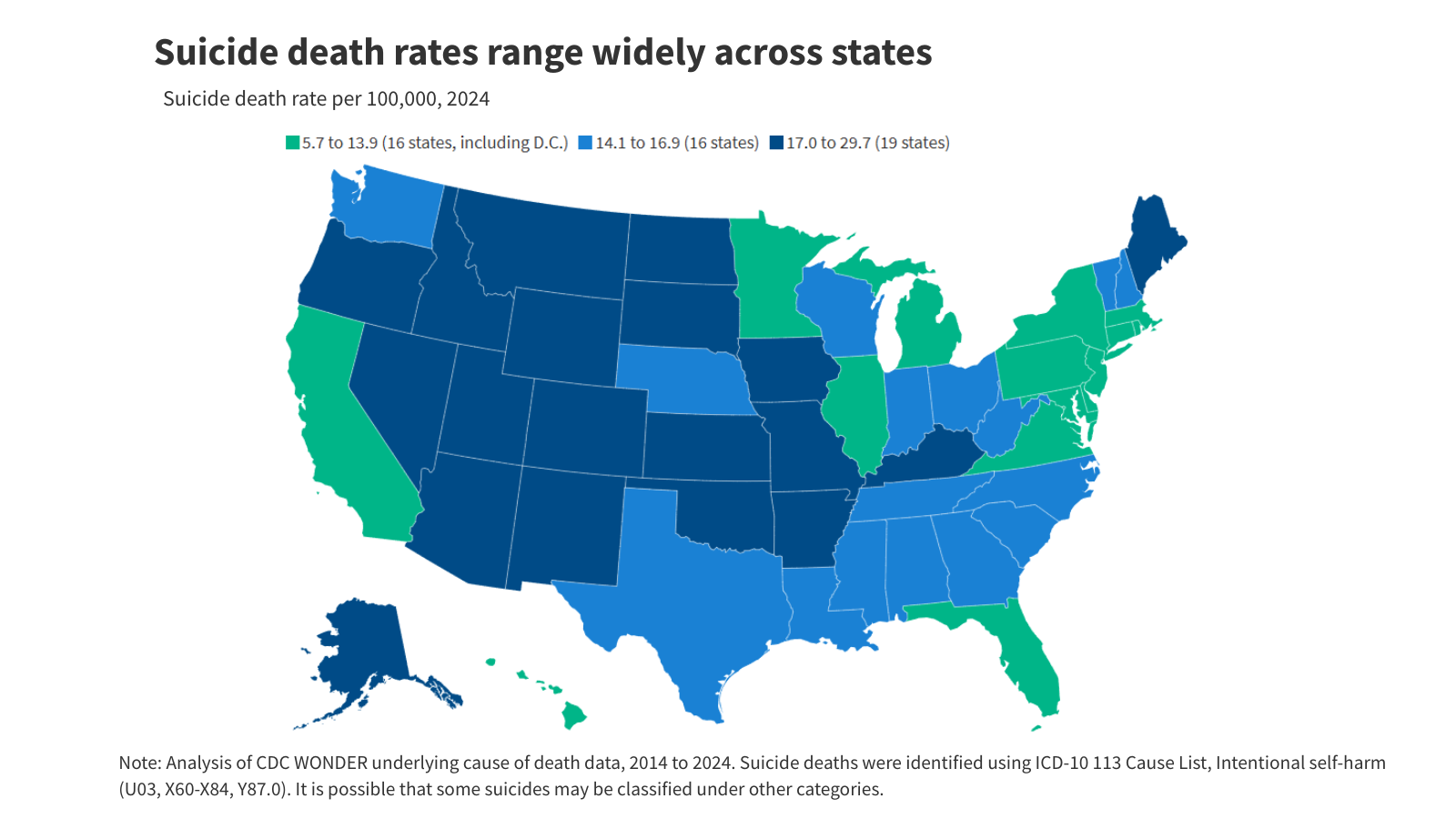
Overall trends: Suicide deaths fell slightly from their peak of 49,476 deaths in 2022 to 48,824 deaths in 2024, but trends by suicide method diverged: suicides by other means declined while firearm suicides reached their highest level and accounted for 57% of all suicides (up from 50% in 2014).
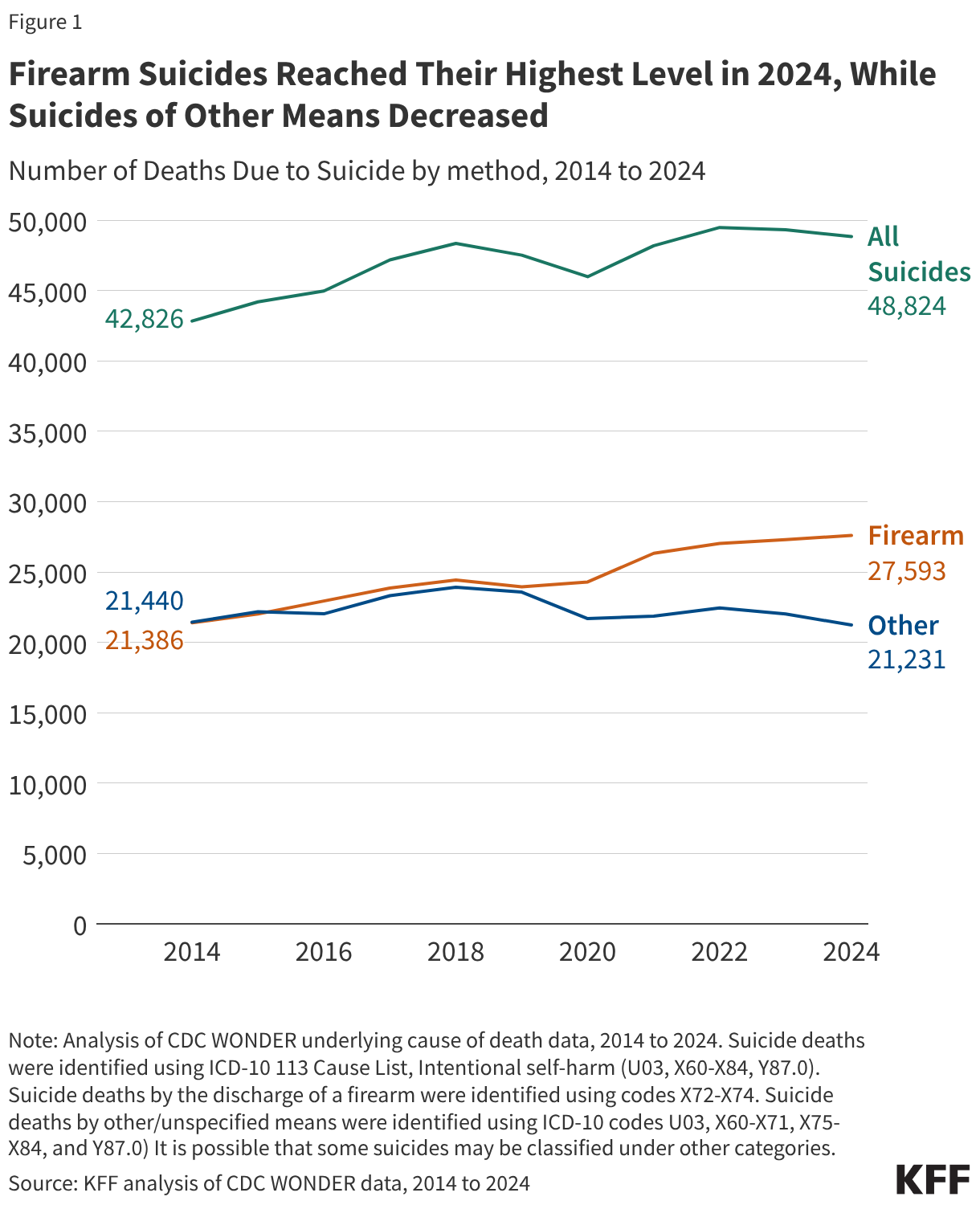
Demographic variation: In 2024, suicide death rates were highest among AIAN people and males (22.5 and 22.3 per 100,000, respectively). Over the past decade, rates increased the most for Black people, while rates were stable or declined somewhat for adults ages 45 to 64 and females.
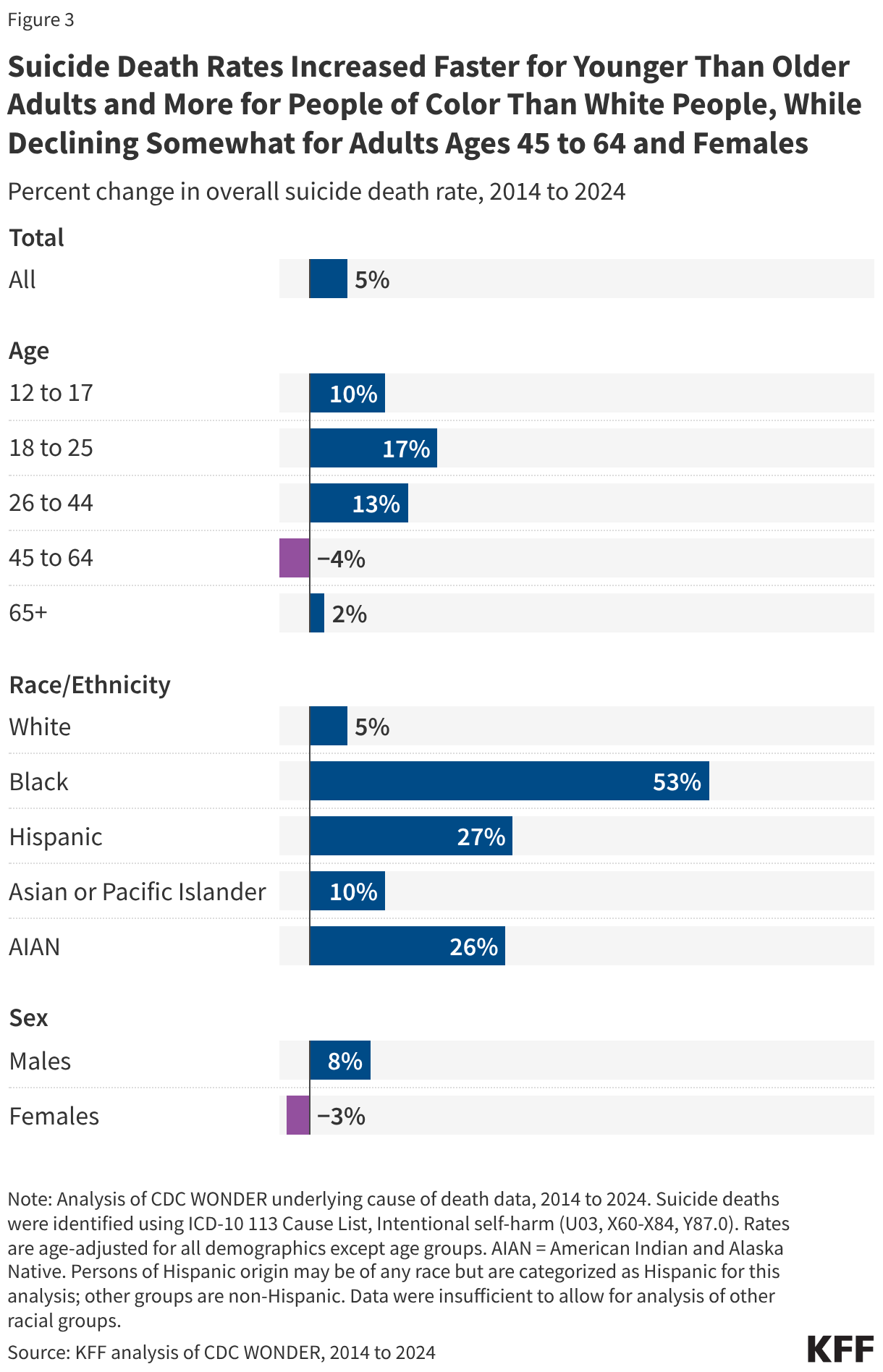
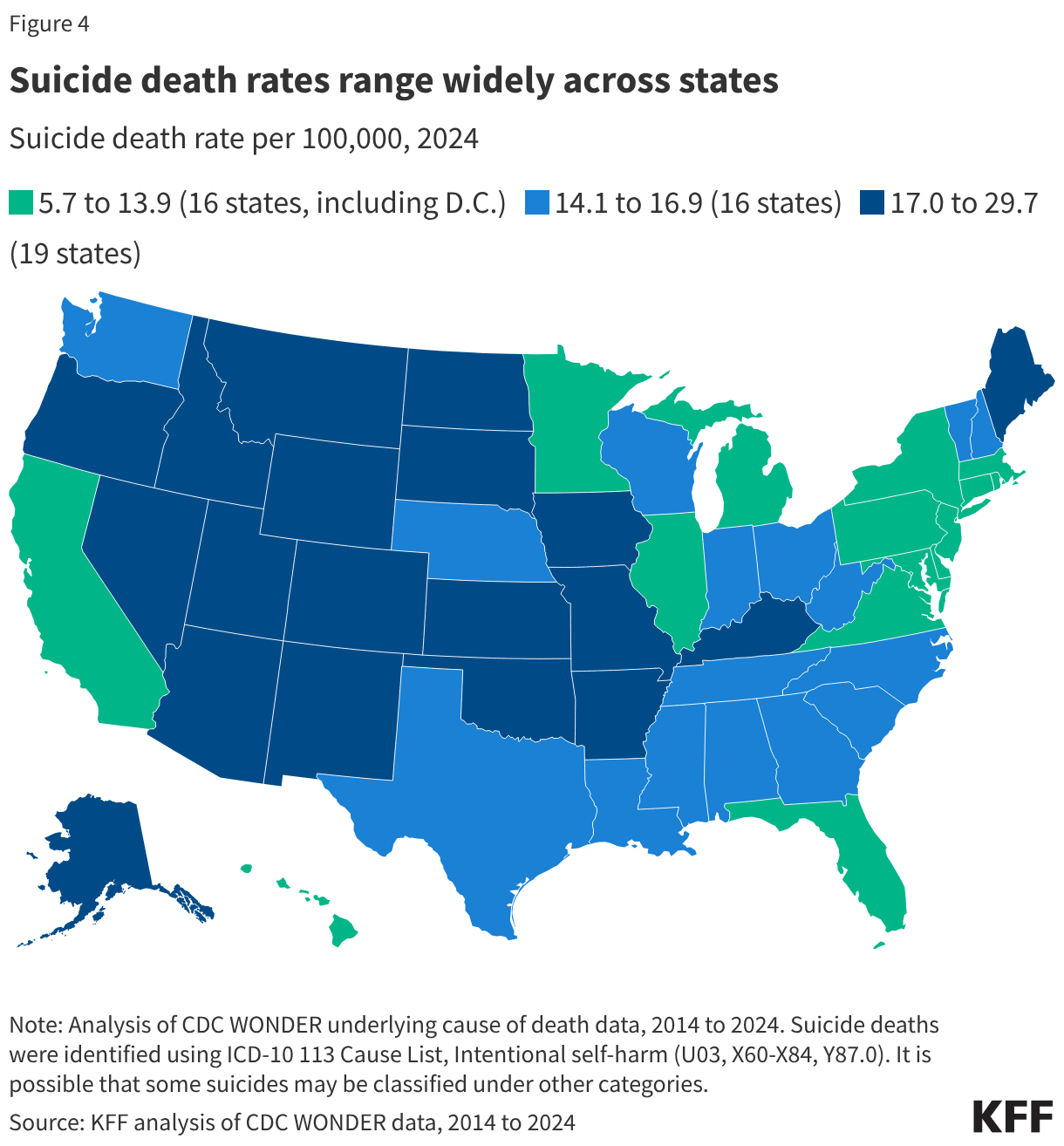
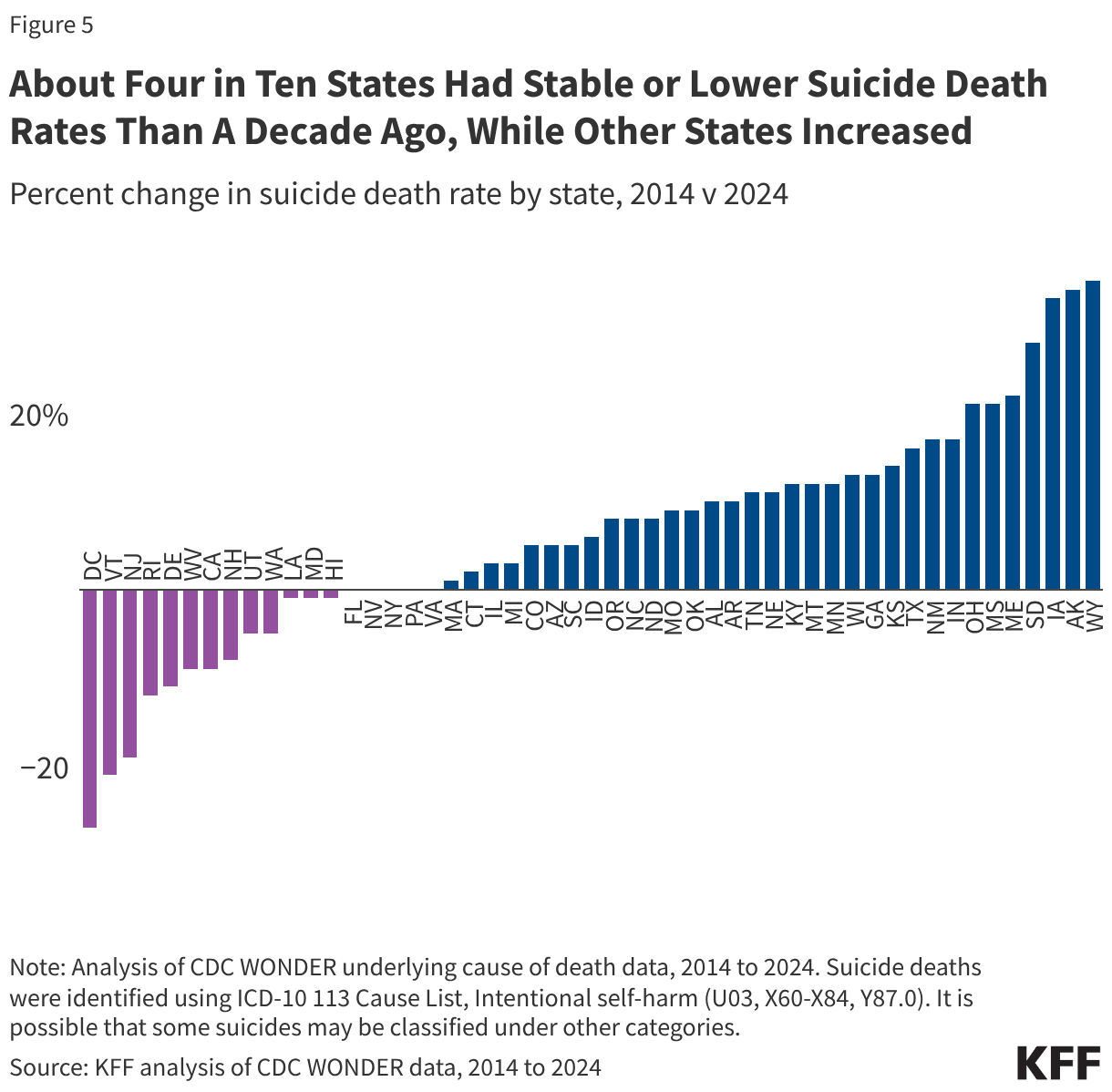
State variation: State suicide death rates in 2024 ranged from 5.7 per 100,000 in Washington D.C. to 29.7 in Alaska. About four in ten states had stable or lower rates than in 2014, while rates increased in the remaining states, ranging from a 27% decrease in Washington D.C. to a 35% increase in Wyoming. Rates tended to be higher in many Western states, while lower rates were more common in parts of the Northeast and a few coastal states.
What are the trends in suicide deaths?
Firearm suicides reached their highest level in 2024, while suicides of other means decreased (Figure 1). Total suicide deaths peaked in 2022 and fell slightly by 2024 (about 600 fewer deaths). Even as overall suicides decreased, firearm suicides rose to their highest level in 2024, about 6,000 higher than in 2014, and accounted for 57% of all suicides in 2024 (up from 50% a decade ago). The increase has coincided with changes in gun ownership, including a surge in new buyers during the pandemic and greater racial and ethnic diversity among gun owners. Because firearms are highly lethal, greater access can reduce opportunities for intervention. Some state policies, including extreme risk protection orders (ERPOs) and other gun laws, have been linked to declines in firearm suicides.
How do suicide deaths vary across demographics?
Overall suicide death rates were highest among AIAN people and males in 2024 (Figure 2). AIAN people had the highest suicide death rate (22.5 per 100,000), higher than the rate among White people (17.2), while rates for other racial and ethnic groups were lower. Because White people make up a much larger share of the population, the total number of suicide deaths was higher among White people than AIAN people (36,560 vs. 545), even though AIAN people had a higher suicide death rate. While females are more likely to report mental illness and to attempt suicide, males had a suicide death rate about four times higher (22.3 versus 5.6 per 100,000). There are similar suicide rates across age groups in 2024 except that adolescent rates are lower (5.7 per 100,000) than other age groups.
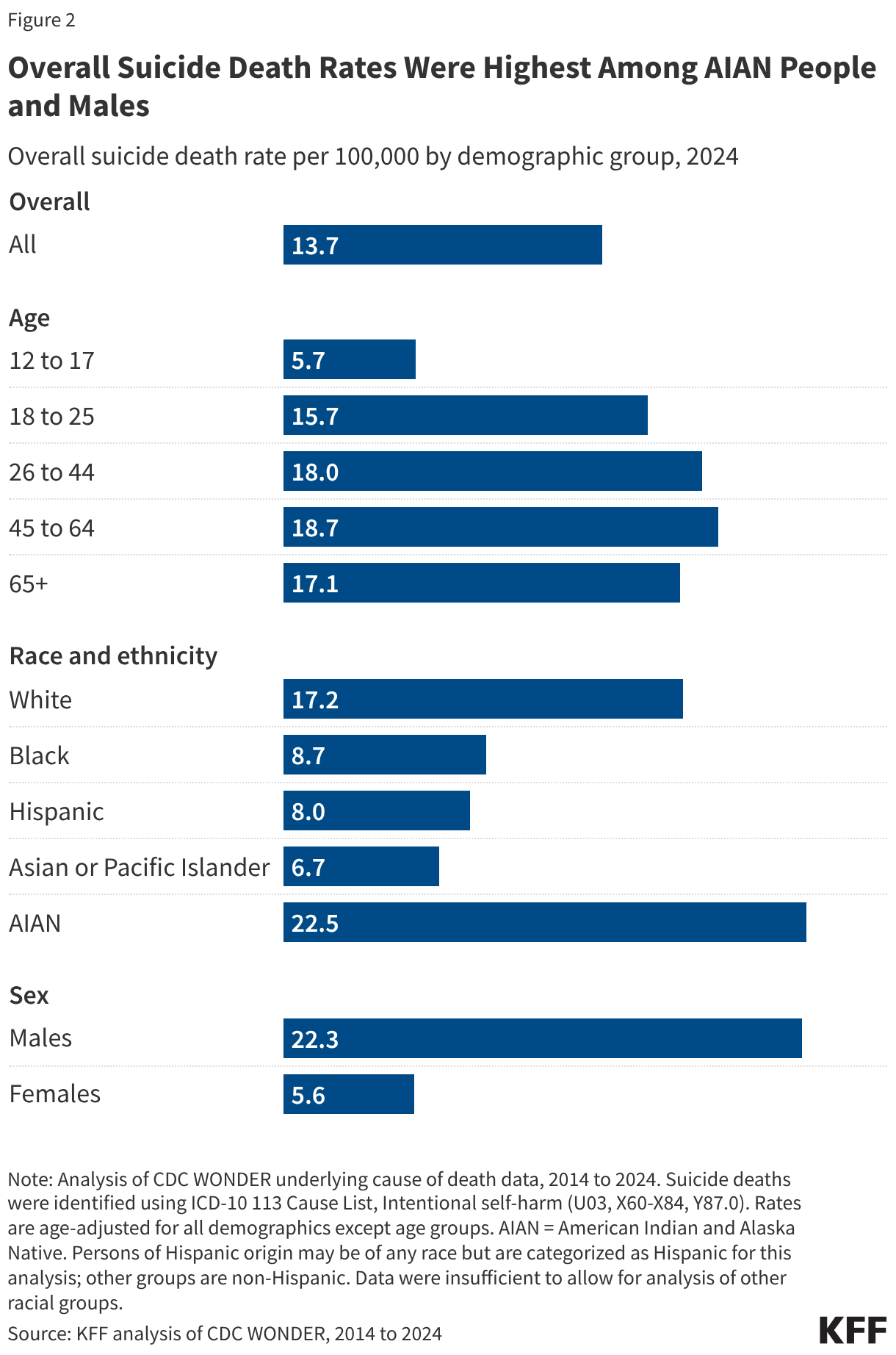
Over the past decade, suicide death rates increased faster for younger than older adults and more for people of color than White people, while declining somewhat for adults ages 45 to 64 and females (Figure 3). From 2014 to 2024, rates increased 17% among adults ages 18 to 25 (from 13.4 to 15.7 per 100,000) and 13% among those ages 26 to 44 (from 15.9 to 18.0), while rates were mostly flat or declined among older age groups. Rates increased more among people of color than among White people, with the largest increase among Black people (up 53%, from 5.7 to 8.7), followed by Hispanic people (up 27%, from 6.3 to 8.0). In contrast, suicide rates among White people were more stable, rising 5% over the same period (from 16.4 to 17.2). Increasing suicide rates among people of color may reflect differences in diagnosis and access to mental health care, as well as stigma and discrimination. Trends may also be influenced by shifts in firearm access and potential racial and ethnic differences in 988 awareness, use, or perceived helpfulness.
How do suicide deaths vary across states?
Suicide death rates varied widely across states in 2024 (Figure 4). Rates ranged from 5.7 deaths per 100,000 people in the District of Columbia (D.C.) to 29.7 in Alaska, with a median death rate of 15.4 per 100,000. Rates tended to be higher in many Western states, while lower rates were more common in parts of the Northeast and a few coastal states. The suicide rate may vary by state due to factors such as demographics, firearm availability, mental health status, and access to mental health and crisis services.
About four in ten states had stable or lower suicide death rates than a decade ago, while suicide death rates increased in other states (Figure 5). Between 2014 and 2024, suicide death rates decreased or were relatively stable in 22 states. The largest declines were in D.C. (-27%, from 7.8 to 5.7 per 100,000), Vermont (-21%, from 18.7 to 14.7), and New Jersey (-19%, from 8.3 to 6.7). Rates increased by 15% or more in 10 states, with the largest increases in Wyoming (35% increase, from 20.6 to 27.8), Alaska (34% increase, from 22.1 to 29.7), and Iowa (33% increase, from 12.9 to 17.1).
If you or someone you know is considering suicide, contact the 988 Suicide & Crisis Lifeline at 988.
