

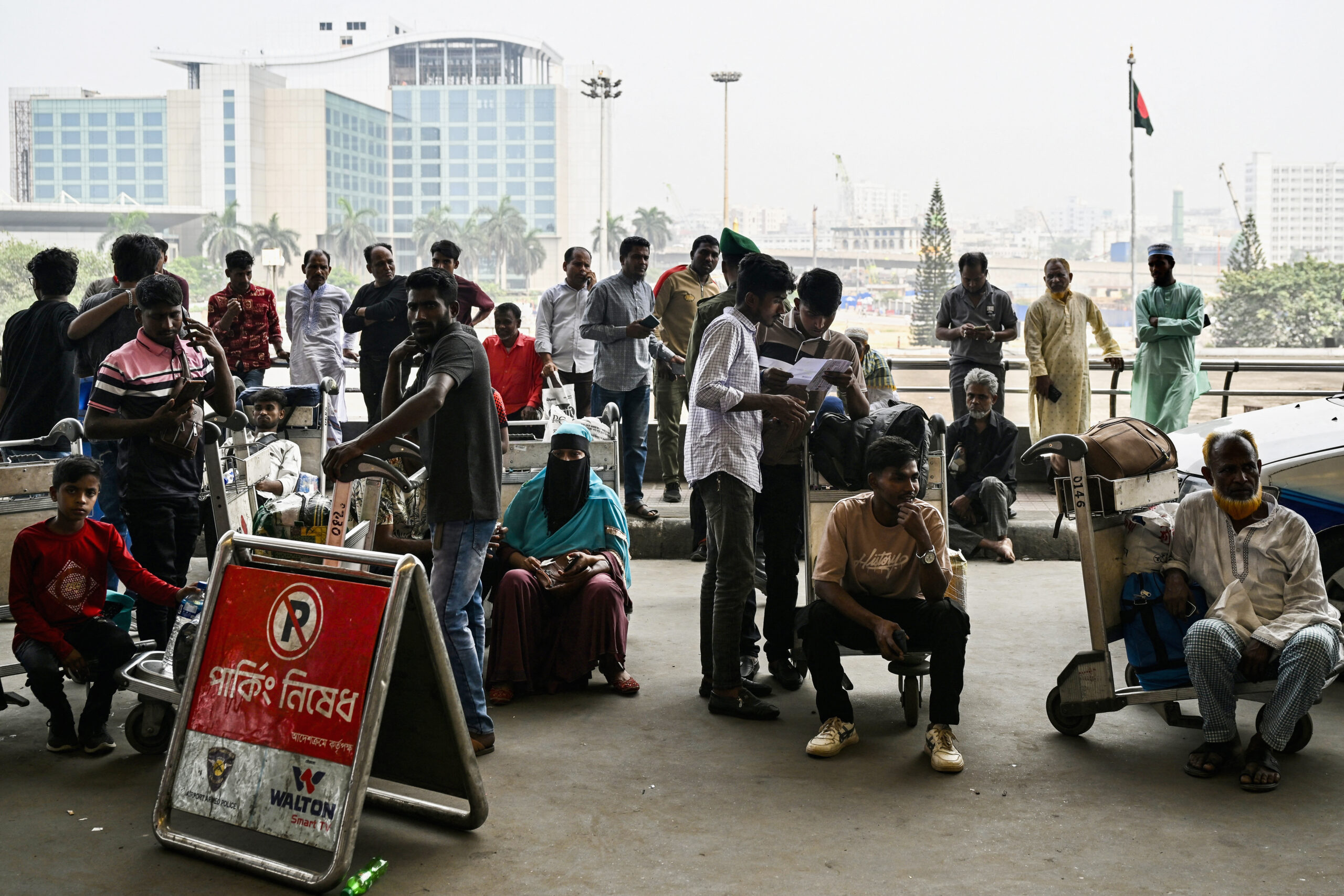
As the war in Iran grounds flights worldwide, hundreds of thousands of travelers scrambling to get home are discovering a harsh reality: their travel insurance won’t cover replacement flights or extended hotel stays.
Insurers, including industry giants Allianz SE and Zurich Insurance Group, don’t cover claims tied to the conflict under standard travel policies, according to advisories. Fighting has shuttered Gulf airports, including the main one in Dubai, severing a critical transit corridor for long-haul travel. At least 23,000 flights to Middle East hubs have been canceled, leaving passengers to rely on airlines for rebooking or pay thousands of dollars out of pocket.
The crisis is exposing a gap in the estimated $31 billion annual travel insurance market: Nearly all policies exclude war-related claims. Consumer advocates have long warned the product offers limited value, citing high commissions, low payouts and sweeping conflict exclusions.
“When it comes to war, that is pretty much a blanket exclusion across all travel insurance policies,” said Jodi Bird, a travel specialist with Australian consumer advocacy group Choice. “We aren’t aware of any travel insurance policies that will cover claims that are directly related to war. And it’s quite broad, unfortunately.”
Travel insurance typically covers new tickets, hotels and meals if flights are delayed or canceled, as well as reimbursement of pre-paid expenses if a trip is scrapped. But the Insurance Council of Australia said standard policies exclude losses directly caused by war or conflict.
“These exclusions exist because the scale and unpredictability of armed conflict create risks that are difficult for insurers to price,” the council said in an advisory. “Without this exclusion, premiums for all travellers would be unsustainable given the risks the coverage would need to account for.”
Fine Print
Providers including Allianz and Zurich’s Australian brand Cover-More said they will extend travel coverage at no extra cost for customers stranded abroad who started their journeys before the conflict began. But the claims allowed, such as medical expenses or lost baggage, remain unrelated to the conflict.
Some insurers offer premium “cancel for any reason” policies that may reimburse a portion of prepaid expenses. Still, even those plans come with caveats, including caps on total trip costs.
As expenses mount, stranded travelers are venting on social media and seeking advice. Reddit users reported sky-high fares after Middle Eastern carriers suspended operations. Others say they were blindsided to learn their policies — annual, single-trip or credit-card-backed — exclude armed conflict.
One Reddit poster said their Melbourne-to-Europe flight via Doha was forced to return when the conflict began. They had to buy more expensive tickets on another airline taking an alternate route, costs not covered by insurance. Another wrote about friends stranded in Europe trying to return to Asia whose insurer deemed the disruption a “domino effect” of military action — language, they wrote, that was buried in the policy’s fine print.
The disruption comes as global aviation and tourism claw back to pre-pandemic passenger levels. The Gulf is a vital crossroads for long-haul traffic, and prolonged instability threatens airline revenues and bookings. It follows high-profile strandings in Mexico after cartel violence erupted — twin shocks that could reshape how travelers assess risk when planning international trips.
Read More: Mexico Visitors Shaken as Cartel Death Fuels Travel Chaos
Allianz advises customers to keep receipts for additional expenses and proof of pre-paid bookings. Advocacy groups also warn passengers not to cancel flights themselves, leaving them unable to recoup costs.
Travel insurance policies have narrowed since the pandemic, with more exclusions and fewer consumer protections, said Steven Berger, a lawyer at the European Consumer Organisation. While insurance may fall short, some passengers retain legal rights depending on the airline and route, he said. That includes European Union rules that say carriers must provide meals and hotel stays even during extraordinary circumstances such as armed conflict.
Still, protections vary widely by jurisdiction. “It’s a hodge-podge of protections, and there aren’t any unifying global passenger protections,” Berger said.
Photograph: Stranded passengers wait with their luggage outside the Hazrat Shahjalal International Airport in Dhaka, Bangladesh on March 3, 2026. Photo credit: Munir Uz Zaman/AFP/Getty Images
Copyright 2026 Bloomberg.
Topics
Aviation
Interested in Aviation?
Get automatic alerts for this topic.
