

Colleges are racing to comply with President Donald Trump’s demand for sweeping admissions data and bracing for those records to fuel a new crackdown on campus diversity efforts. They face a Wednesday deadline to submit these documents, even as a federal judge considers whether that mandate is enforceable.
In August, Trump issued an executive action requiring universities to provide data on race, GPA and test scores for all their applicants since 2019. The administration says the survey, called the Admissions and Consumer Transparency Supplement, is necessary to ensure schools aren’t giving preferential treatment based on race, a practice outlawed by the Supreme Court in 2023.
Earlier this month, a coalition of 17 Democratic states sued the administration to prevent the information’s collection, arguing that it transforms a nonpartisan data transparency initiative into “a mechanism for law enforcement and the furthering of partisan policy aims.”
A federal district judge in Massachusetts extended the deadline for colleges to submit the data to Wednesday, with a hearing scheduled on Tuesday. An Education Department spokesperson did not have a comment.
Demand for race-based admissions data has become integral to the White House’s broader campaign to reshape higher education; officials included it in several settlement agreements with elite universities. If schools are found to be in violation of antidiscrimination law, they could lose access to federal funds and financial aid, essentially a death sentence for most colleges.
Tuesday’s hearing could complicate the White House’s plans, but the administration has made clear that it expects colleges to provide information, and that it has a number of ways to pressure schools that refuse. Angel Perez, president of the National Association for College Admission Counseling, said most colleges are still trying to supply whatever data they can — even if the results aren’t as detailed as the administration is demanding.
“The stakes are so high and they don’t want to be unprepared,” Perez said. “Really, nothing has changed except for the pause.”
Administration officials have said that large gaps in standardized test scores between admitted students of different races could trigger investigations or further scrutiny. Research suggests those gaps could show up in colleges’ data. Of the students who scored a 700 or higher on their SAT, more than 85% are either White or Asian, according to a 2020 study by the Brookings Institution.
“The data points that the Trump administration wants will almost certainly be there,” said James Murphy, senior fellow at the education nonprofit Class Action and a longtime admissions researcher.
Calls for Transparency
Conservative education activists have long called for more transparency around race in admissions. Ed Blum, president of Students for Fair Admissions and the architect of the lawsuit that brought down affirmative action, told Bloomberg last August that the information is “extremely important” because “it is likely that some colleges and universities are ignoring” the Supreme Court ruling.
The Trump administration has accused schools of using personal essays, targeted recruitment practices and optional test score policies as proxies for affirmative action. Last year the Department of Justice launched probes into three University of California campuses and Stanford University, accusing them of unlawful racial preferences.
The added scrutiny appears to be having an effect. Many schools removed essay prompts that explicitly referenced identity in the latest admissions cycle. And elite colleges reported significant drops in Black and Hispanic freshmen this year.
The demand for admissions data is just one way the Trump administration is aiming to reshape US higher education. The White House has frozen research funding, curbed international enrollment, overhauled the accreditation system and levied a new tax on wealthy universities’ endowments. What began as an effort to tackle alleged antisemitism on campuses evolved into a wide-ranging crusade against transgender women in sports, alleged foreign influence, DEI initiatives and liberal faculty bias.
Schools could face consequences not just for what the data shows, but for failing to deliver it on time. Last month the Department of Justice sued Harvard University for allegedly slow-walking their data submission as part of a civil rights investigation into the school’s admissions practices.
Many colleges may not even have the information Trump is demanding. “Applicant data, if they don’t enroll as students, is often gone in a few years or less,” said Christine Keller, executive director of the Association for Institutional Research. “It’s just good data policy to get rid of it.”
Trump’s admissions mandate is the largest expansion of the Integrated Postsecondary Education Data System in history, Keller said. Normally, colleges are given about a year to adapt to new federal reporting requirements; this time, they had a matter of months.
Some schools have won limited reprieves, with the Education Department announcing this month that some extensions would be granted on a case-by-case basis.
Incomplete Datasets
Keller said many colleges will have incomplete datasets. The memo asks for standardized test scores, which many colleges stopped requiring during the pandemic; conversions of weighted GPAs into unweighted, which Keller said can be “nearly impossible” to standardize; and data on graduate school applicants, whose admission is usually determined by individual masters programs.
The mandate, Keller said, has more than doubled the work hours her members must devote to regulatory compliance. She worries that the White House could launch investigations or file lawsuits based on “bad data, which is no better than basing decisions based on no data.”
In their lawsuit challenging the survey, the state attorneys general said it could subject schools to “costly investigations based on unreliable data.”
Even if the executive action is struck down, the Trump administration has other levers to pressure colleges for expanded data on applicants’ race: Officials launched probes into 45 universities last year over alleged discrimination in graduate admissions and scholarships. As the administration pivots to a strategy of civil rights litigation and investigations, more inquiries could follow at the undergraduate level, compelling colleges to comply with demands for data to exonerate themselves.
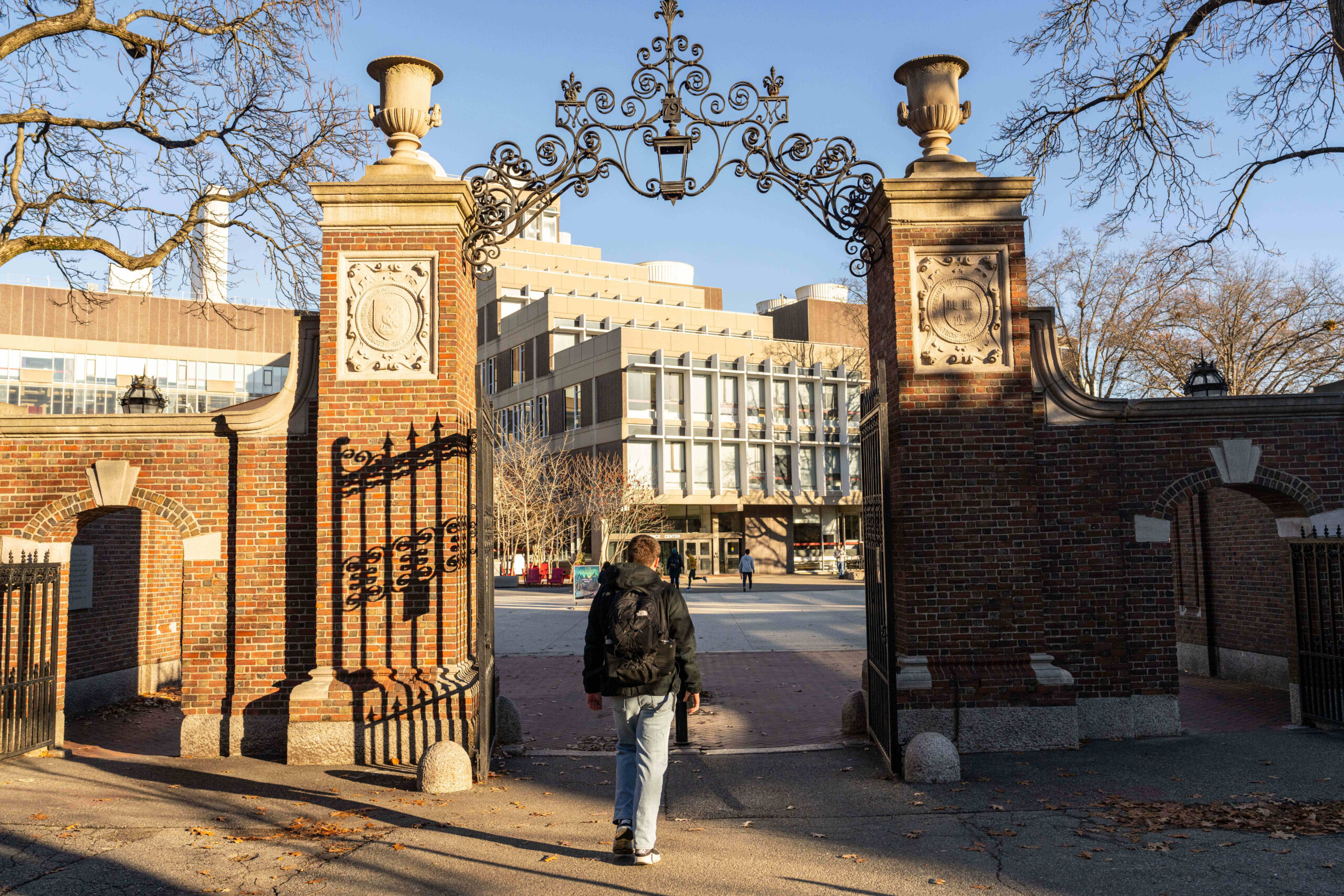
Photo: Students on the Harvard University campus in Cambridge, Massachusetts.Photographer: Mel Musto/Bloomberg
Copyright 2026 Bloomberg.
Topics
Education
Universities
