

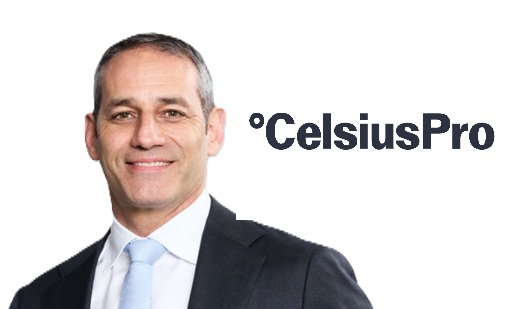
In the increasingly volatile world of catastrophe risk, the primary hurdle for third-party capital has rarely been the risk itself, but rather the tail; the years-long process of loss adjustment and trapped capital that follows a major event. However, CelsiusPro is making the case that parametric insurance offers a cleaner alternative for institutional investors, according to CEO Mark Rueegg.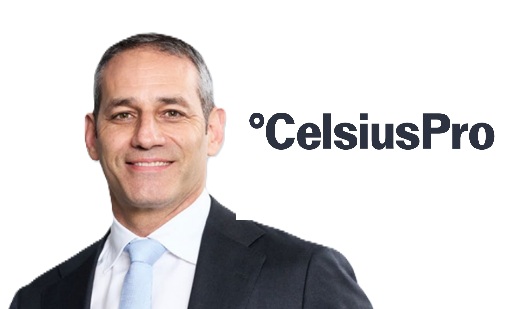
During a recent interview with Artemis, Rueegg explained that the structural advantage for investors lies in the speed of the settlement cycle. Because payouts are triggered by data rather than physical inspections, the uncertainty regarding “claims leakage”, where loss estimates grow over time, is effectively removed.
“A key advantage for third-party capital is that this is a truly short-tail business. You aren’t stuck with claims leakage or reserving for losses that could drag on for years. You know exactly what paid out and what didn’t almost immediately after the season ends, which makes managing and recycling capital significantly more efficient,” the CEO explained.
He continued: “With parametric, you don’t need to be an expert on building codes in Jamaica or the Philippines. You don’t have to worry about whether a house was built to code or how well the local claims adjusters perform. You rely on the data from the provider, and that’s that. It levels the playing field between the insurer and the investor.
“It is much easier to build a diversified global portfolio on a parametric basis. If you have the historical windstorm tracks and a robust wind model, you can price risk anywhere in the world. You can bypass the hurdles which usually make international expansion so difficult.”
This efficiency is central to CelsiusPro’s plans for its National Disaster Fund (NDF).
Currently a public-private partnership, the firm is in active discussions to bring in more private players and governments to scale the fund’s reach.
“Our goal with the National Disaster Fund is to get significantly bigger and have a bigger role in insuring the Global South against climate and natural disasters,” Rueegg told Artemis.
Moving forward, we then asked Rueegg to explain whether CelsiusPro sees parametric triggers reshaping the global catastrophe insurance market over the next decade, particularly in regions where traditional indemnity products struggle to scale.
“Parametric insurance isn’t a silver bullet for low-penetration markets. The barriers, which includes a lack of agent networks, limited infrastructure, and a lack of disposable income, are systemic issues that a simple change in policy trigger cannot solve on its own,” the CEO said.
“We are seeing triggers evolve from pure natural catastrophe data to blended metrics that reflect the real drivers for a buyer. For example, a government cares less about rainfall millimeters and more about the number of people affected; using social impact as a proxy makes the product far more appealing.
“The future of the protection gap lies in two areas: regional risk pools that onboard governments in the Global South, and the humanitarian sector using parametric products to fund anticipatory action, both of which will help get capital into the field exactly when it’s needed.”
He continued: “Nobody wakes up wanting to buy standalone insurance. To scale, we must hop on the “bandwagon” of traditional products and provide an embedded solution, for example, by adding a parametric layer to a homeowner’s policy that provides immediate cash to cover a deductible while the traditional claim is being processed.”
With the AI build-out creating massive concentrations of value in data centers and other large scale projects, Rueegg shared his views on the role that parametric triggers can play as the industry continues to grapple with this current wave of momentum.
“It is an interesting challenge that ultimately depends on the specific location and vulnerabilities of these facilities. However, parametric triggers certainly have a significant role to play, particularly if we are thinking of locations in more weather-exposed regions. This can be achieved through several mechanisms, such as installing localized flood sensors or utilizing tropical cyclone covers,” he said.
“While traditional insurance handles physical perils, like a fire that reduces a data center to ashes, the more complex risk is Business Interruption (BI). And this is where parametric solutions can truly make an impact.”
Rueegg concluded: “If a data center cannot function due to a power blackout or an internet outage, the financial loss is immediate. Because these facilities rely entirely on connectivity and power, parametric covers can be structured to trigger automatic payouts based on these specific metrics. It’s a straightforward and efficient way to reflect and cover the business interruption risks that traditional policies might struggle to address.”
Read all of our interviews with ILS market and reinsurance sector professionals here.

