


Harrowing scenes are unfolding at health facilities at the epicenter of an Ebola outbreak in the Democratic Republic of Congo.
A 25-year-old midwife and a doctor in his early 30s are sick with Ebola symptoms, including fevers and severe joint pain, said their colleague Elisabeth Furaha, the medical director at SOFEPADI’s Karibuni Wa Mama Medical Center in the northeastern province of Ituri.
They had cared for patients with similar symptoms in early May, before the outbreak was detected. One of the patients is now dead, Furaha said, and none of them has been tested for Ebola, even though samples were taken. The hospital still lacks access to tests, and an adequate supply of protective gowns and plastic masks to keep doctors and nurses safe.
The outbreak took the world by surprise, with nearly 250 suspected Ebola cases and 80 deaths by the time Ebola was confirmed in Congo. Disturbed by the extent of silent transmission, and by cases in neighboring Uganda, the head of the World Health Organization sounded the group’s highest alarm on May 17, declaring the outbreak a “public health emergency of international concern.” That triggered donations from around the globe, including a pledge of more than $162 million from the U.S. State Department to “stop the outbreak at its source and ensure Ebola does not reach the United States.”
But despite international attention, doctors in northeastern Congo say that many clinics lack even rudimentary supplies: gloves, protective gowns, masks, Ebola tests, and even clean water. Without rapid action to bolster those on the front line, researchers say, the outbreak will grow exponentially, costing even more money and risking lives far beyond Congo.
“All signs point to this becoming the biggest outbreak we’ve ever seen in the DRC,” said Nahid Bhadelia, the director of Boston University’s Center on Emerging Infectious Diseases. “That could lead to regional instability, and that has repercussions for the world.”

Some supplies from the country’s Ministry of Health, the WHO, and other United Nations agencies have landed in northeastern Congo, but not nearly enough to stock hundreds of health facilities where Ebola patients may seek care. Furaha has spent her own money on gloves, masks, and a tarp to build a makeshift tent to isolate patients with Ebola symptoms from the rest of the hospital. But she said it’s “inhumane” to put patients there before she can afford a mattress for them to rest on, or reliable access to tests.
Without testing, patients who turn out to have Ebola can infect those who don’t. Malaria and other diseases have initial symptoms similar to Ebola, causing fevers, soreness, and gastrointestinal problems.
Aid workers say shipments of medical supplies have been delayed by logistical hurdles, such as suspended flights within Congo and between Congo and neighboring countries.
“We need flights to move a lot of things, so this is a big challenge,” said Chikwe Ihekweazu, executive director of the WHO Health Emergencies Program. Small planes used in humanitarian crises have been permitted to move, but Ihekweazu said those are insufficient, expensive, and unsustainable.
Moving between remote clinics can be an impossible task because roads are often badly eroded or blocked by armed groups, said Rafaramalala Volanarisoa, a doctor with Catholic Relief Services in Kinshasa, Congo’s capital. Conflict, combined with the Trump administration’s abrupt withdrawal of funds from the U.S. Agency for International Development, has made Congo’s already ailing health system dysfunctional, Volanarisoa said.
“It’s very dangerous,” she said. “There is no medicine, no equipment, no surveillance.”
Dilapidated Labs
Researchers at Congo’s National Institute of Biomedical Research had built a sophisticated molecular biology laboratory for surveillance in Goma, the country’s eastern economic hub. But the lab stopped functioning last year after the Rwandan-backed armed group M23 violently seized control of Goma and shuttered its airport, stunting the flow of international aid.
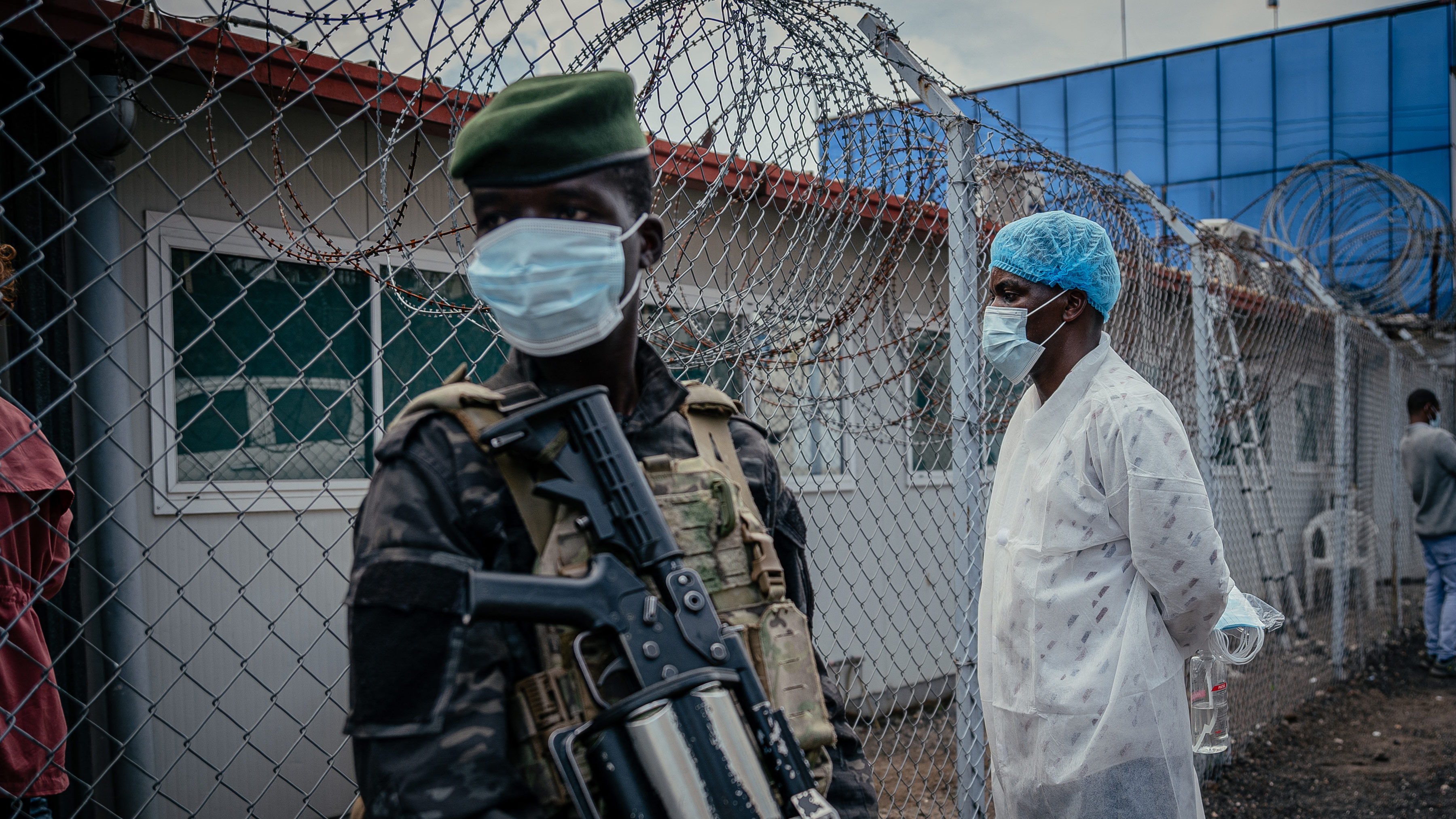
Other cities in Congo lack well-stocked molecular biology labs, so they have instead relied on simple, automated tests that detect only one type of Ebola virus, said Eddy Kinganda-Lusamaki, a microbiologist at the biomedical institute. The shortcomings of these simple tests became obvious when the first samples tested in early May were negative for Ebola. Doctors were still worried, so they collected more samples, packed them in an icebox, and sent them to the institute’s main lab, in Kinshasa.
It took the samples six days to get there, traveling over bumpy roads and between storage facilities, Kinganda-Lusamaki said, and many were degraded by the time they reached the institute on May 14. Still, researchers identified an unusual variety of Ebola caused by the Bundibugyo virus, with a fatality rate of up to 50% and with no vaccines or drugs existing to treat it. They alerted authorities.
Later, investigators traced the first confirmed cases back to several deaths from unknown causes in a gold-mining town in Ituri. The Red Cross suggests Ebola was spreading there as early as March, with three of the group’s volunteers dying of unknown causes after burying bodies as part of their humanitarian work.
As of June 3, 363 Ebola cases and 62 deaths had been confirmed in the country, according to Congo’s National Institute of Public Health. Tallies of suspected cases have fluctuated dramatically, a reflection of gaps in surveillance.
Researchers at the biomedical institute urgently want to improve labs in eastern Congo so they can test for Bundibugyo.
“We need support for local staff, training, equipment, consumables, and fuel,” for cars and backup generators, Kinganda-Lusamaki said. He also worries that expensive lab equipment could be stolen or destroyed by roving militias if war is permitted to continue in the east. “My brothers and sisters are perishing,” he said.
Conflict Aids Ebola’s Spread
Violence abets Ebola in other ways. As the outbreak was silently spreading in Ituri in late April, nearly 200 people caught in the crossfire of armed groups fled, potentially carrying the virus with them. South of Ituri, Maurice Kakule Mutsunga, a doctor at a large general hospital, said he’s seen a surge of people injured or killed by members of the Allied Democratic Forces, an armed group linked to the Islamic State. “Every day this week we’ve received patients massacred by the ADF,” Kakule Mutsunga said in French, adding that bodies carried into the hospital have been decapitated by machetes.
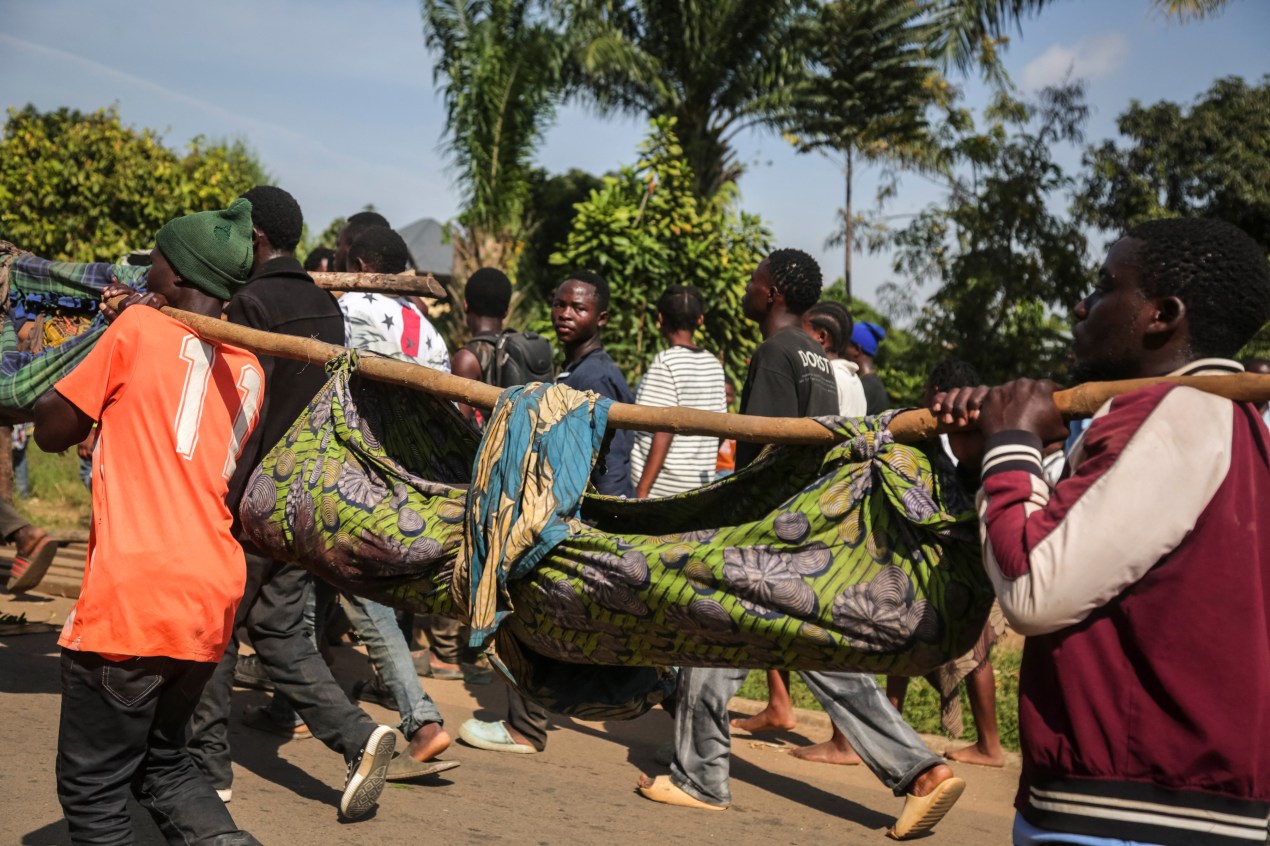
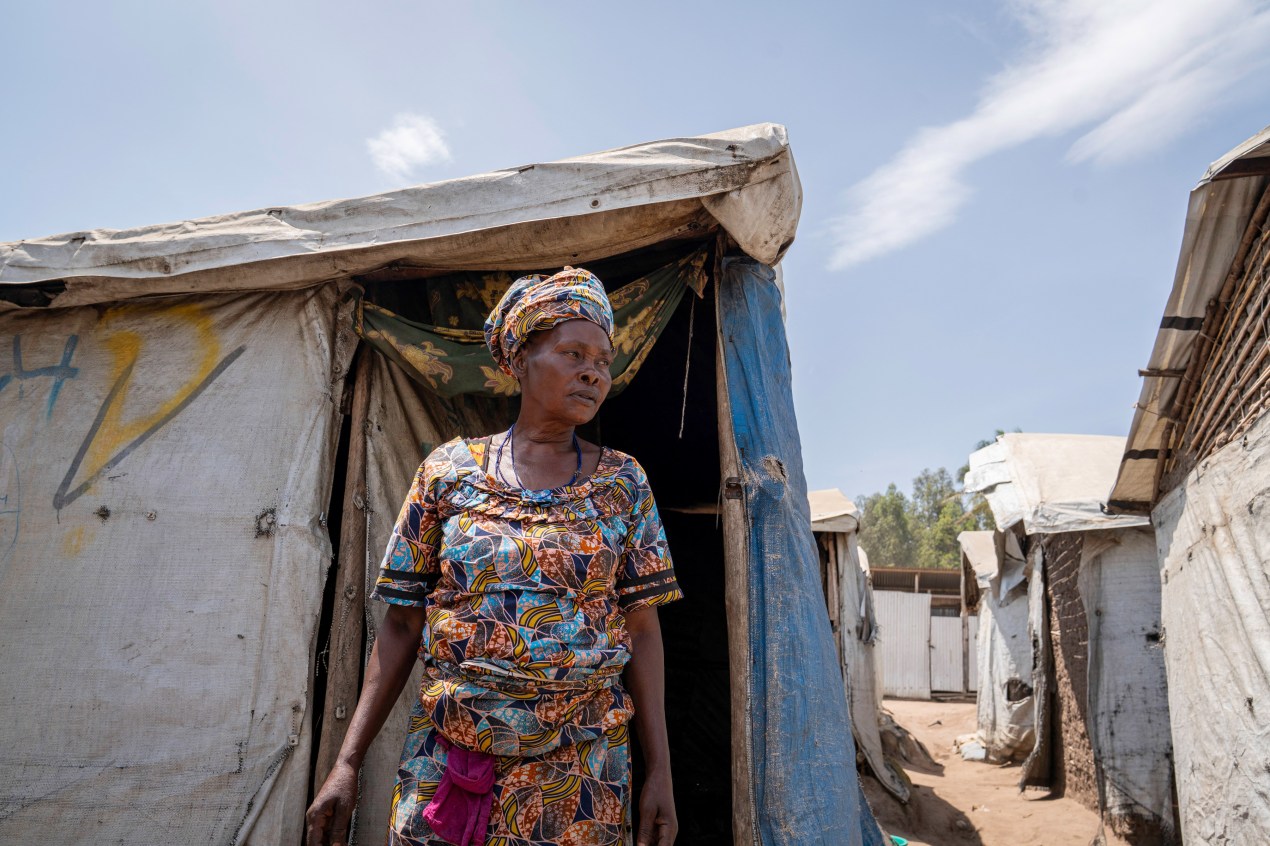
People displaced by attacks are living in dense quarters that provide perfect conditions for a virus that spreads through touch. A person sick with Ebola, or recently killed by it, excretes sweat, blood, and other liquids packed with viruses that cause the disease.
Unpredictable attacks have also prevented health workers from tracking down people who may be infected in remote villages, to offer them care and keep the virus from spreading to others, Kakule Mutsunga said. Less than a quarter of contacts that Ebola responders identified had been monitored for signs of infection, the WHO reported on May 21.
Contact tracing and isolation — the cornerstones of an Ebola response — are also fraught because of the slow turnaround time on tests. Kakule Mutsunga said samples from his hospital in the town of Oicha are shipped to Kinshasa on humanitarian flights that take off only once they are at capacity. Many patients can’t or won’t isolate themselves for a week while they wait on results, he said, so they may pass the deadly virus to those closest to them.
Congolese researcher Gang Karume said that scientific information about Ebola isn’t reaching many communities, partly because of the trauma of daily life. On top of years of conflict, more than 220,000 young children are severely malnourished in provinces where Ebola is spreading. He wasn’t surprised to learn that angry youths have set fire to Ebola treatment centers and stolen corpses from morgues.
“An empty stomach does not have ears to listen,” he said.
To reach people, the Catholic humanitarian group Caritas is relying on its network of some 250 priests in Ituri. “They’re deeply rooted,” said Volanarisoa, with Catholic Relief Services, which partners with Caritas. “They understand how to approach communities who refuse to seek treatment.”
Through this network, Volanarisoa and her colleagues have gotten in touch with health workers seeking medical advice and protective equipment. With private donations, the Catholic charities have transferred money to priests in the northeast who arrange for jeeps to carry cash and supplies to clinics.
“What we’ve provided will only last for a few weeks,” Volanarisoa said. “The need is really immense.”
Another crippling factor is that the United States is far less involved than in the past, aid workers said. The Trump administration left the WHO, dissolved USAID, and downsized the Centers for Disease Control and Prevention.
“The U.S. is just not the player it used to be,” said Jeremy Konyndyk, a former USAID official who led the agency’s response to the world’s largest Ebola outbreak, in West Africa from 2013 to 2016. “We used to have a stockpile of gear for an Ebola response that we could throw on an airplane and get it to where it needs to go,” he said.
The U.S. used to give hundreds of millions of dollars to the WHO and nongovernmental organizations with experience fighting outbreaks. Under President Donald Trump, the State Department has announced that it will give $350 million to a pooled fund maintained by the U.N. Office for the Coordination of Humanitarian Affairs, which will then distribute funds to aid groups.
“This adds steps,” Konyndyk said. “The organizations that are ready to roll now are not confident that they will get money, so they’re kind of frozen.”
Even then, aid can take weeks to materialize on the front line. During the West Africa outbreak, more than two months passed between the WHO’s declaration of an international emergency and significant help arriving. In the interim, the Ebola death count more than quadrupled. Nurses, doctors, and ambulance drivers lost their lives.
Front-line workers in Congo face a similar fate if help doesn’t arrive soon. Furaha said her hospital is running out of clean water. “All of this accumulates,” she said. “Healthcare workers will reach a breaking point.”
Chloé Fostier Hernández helped translate interviews for this report.
