

Major corporations are pushing back against a possible tightening of emissions reporting standards that would have implications for the clean energy transition in years to come.
More than 60 companies — including Apple Inc., Amazon.com Inc., General Motors Co., FedEx Corp., BYD Co. and Patagonia — submitted a joint statement Wednesday to the Greenhouse Gas Protocol, asking that some of its potential revisions to how companies report their Scope 2 emissions be optional rather than mandatory. The climate governing body is considering stricter rules to help tamp down on greenwashing risks, and the new rules would go into effect as soon as next year.
The statement comes as much of the corporate world is rolling back climate commitments, in the face of political headwinds and rising energy prices. Stricter rules could make it more difficult for a company to claim that it is powered by 100% renewable energy or that it’s on track to reach its net-zero goal.
The crux of the issue is how companies use renewable energy certificates to match their electricity use with generation. Many power grids draw on a mix of fossil fuels and renewable energy. Companies can use certificates to offset their electricity emissions with clean energy that was on the grid the same year. The new rules would require companies to match that down to the hour.
Instead of being able to source certificates on an annual basis, companies would have to find clean energy that is operating at the same time and in geographical proximity to their own operations.
“We have concerns about the feasibility of implementing the proposed hourly and location matching requirements not only for our own Scope 2, but for our suppliers who contribute to Patagonia’s Scope 3 footprint,” said Mel Shank, senior environmental impact program manager for decarbonization at Patagonia. “We believe that if the proposal goes forward, it will have a chilling effect on investment in renewable energy.”
Amazon declined to offer further comment. Apple, FedEx, General Motors and BYD didn’t respond to requests to comment.
The Greenhouse Gas Protocol (GHG Protocol) is a global framework overseen by two nonprofits, the World Resources Institute and the World Business Council for Sustainable Development. Its current Scope 2 guidelines haven’t changed in more than a decade. Stakeholders submitted thousands of comments on the proposal through the end of January.
Those advocating for the revisions say the current rules make it too easy to overestimate emission reductions, and that this is a step forward for accuracy and accountability.
“Some people want the rules to be more robust and have more integrity and other people just want the status quo,” said Matthew Brander, a researcher at the University of Edinburgh who was, until January, a member of the GHG Protocol’s technical working group for Scope 2 emissions. “The status quo allows companies to claim to have used electricity that is physically impossible they did actually use.”
Signers of the letter — environmental consultants and non-governmental organizations as well as companies — argue some of the changes could slow clean energy development and drive up electricity prices.
Miranda Ballentine, senior advisor at consultancy Green Strategies, which signed the letter, and former chief executive officer of the Clean Energy Buyers Alliance, said she worries that the more rigid standards would deter companies from signing large power purchase agreements, agreeing upfront to purchase energy from a renewables developer over many years.
“These markets are what’s keeping clean energy afloat right now,” she says. “We’re just at a moment where we need voluntary procurement of clean energy more than we ever have.”
A spokesperson for the GHG Protocol said it is working to ensure “the final scope 2 update reflects both technical rigor and practical feasibility for global users” and that the recommendations are “the product of a rigorous, transparent multi-stakeholder process.”
The group is evaluating feedback and a summary will be shared on its webpage in the coming months, the spokesperson added.
At the Renewable Energy Markets Asia conference in Singapore on Tuesday, panelists discussed the potential impact of the change in the Asia-Pacific region. Henry Richardson, a senior analyst for WattTime and a member of one of the GHG Protocol’s working groups, said the new rules could stymie corporate clean energy procurement. WattTime, a US-based nonprofit, also signed the letter.
“The increased granularity requirements are a pretty significant accounting burden, and that will fall much more on small companies than large companies,” he said. “And in a time when people are retreating from climate commitments, I’m afraid that will just accelerate that trend away from increased investment in climate solutions.”
Michael Gillenwater, executive director of the nonprofit Greenhouse Gas Management Institute and also a Protocol working-group member, criticized the joint statement because “it implies that the status quo of annual matching is good and we should stick with it.” At the same time, he said, what is most crucial is increasing the capacity of clean energy, and the proposed changes may not move the needle on that.
“It’s not clear that this is going to help anything from the environmental standpoint,” Gillenwater said.
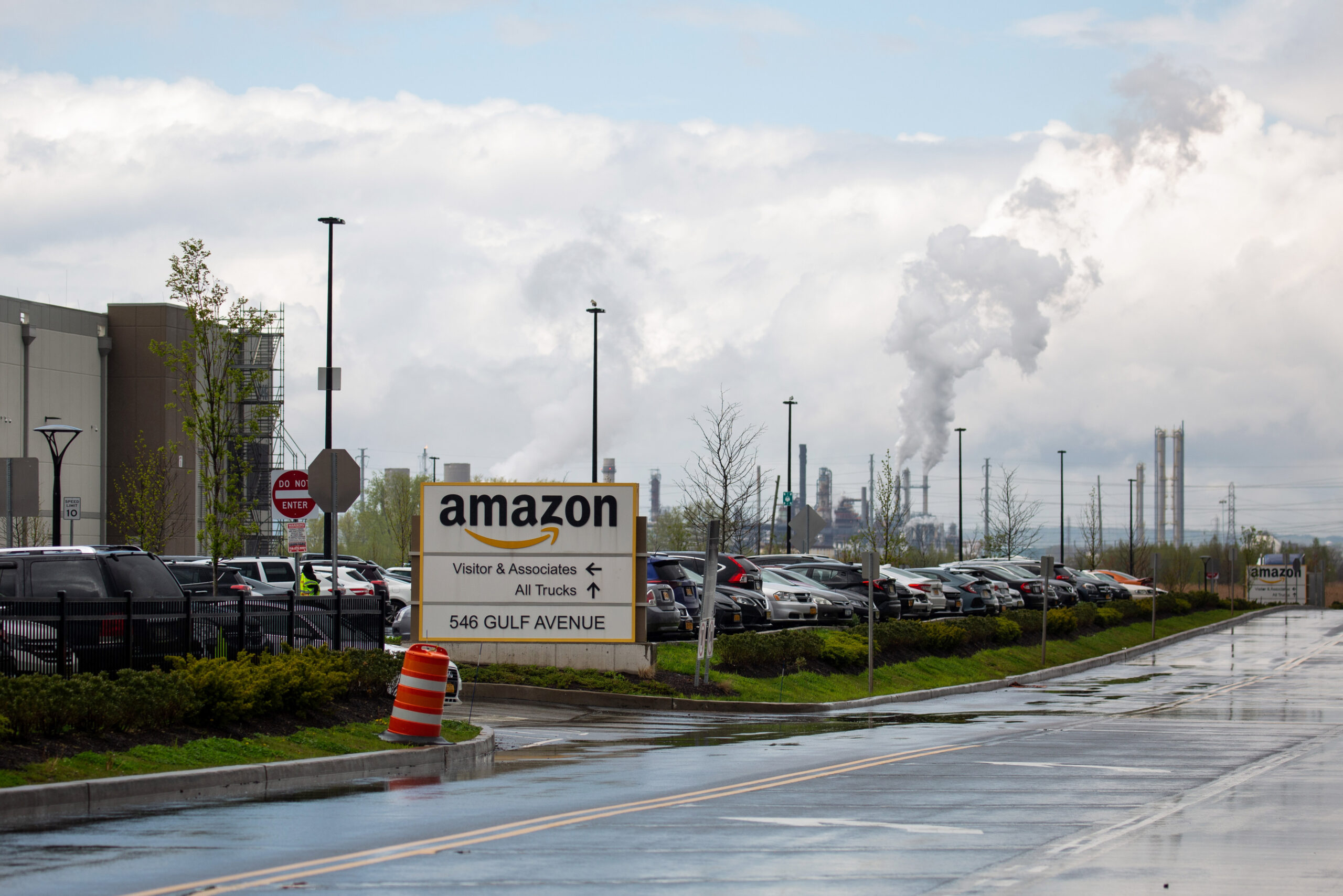
Photo: An Amazon facility in Staten Island, New York. Photographer: Michael Nagle/Bloomberg
Copyright 2026 Bloomberg.
Topics
Amazon
The most important insurance news,in your inbox every business day.
Get the insurance industry’s trusted newsletter
