


The current conflict in the Middle East has been as disruptive commercially as it has been geopolitically. Many businesses operating in the region are suffering from a combination of sharp demand declines, blocked routes to market, surging input costs, and physical damage to assets.
Consequences are being felt by manufacturers, logistics operators, energy companies, and retailers alike. For businesses navigating these impacts, the question is not only whether insurance coverage exists, but whether the financial evidence is sufficient to support a claim once coverage is established.
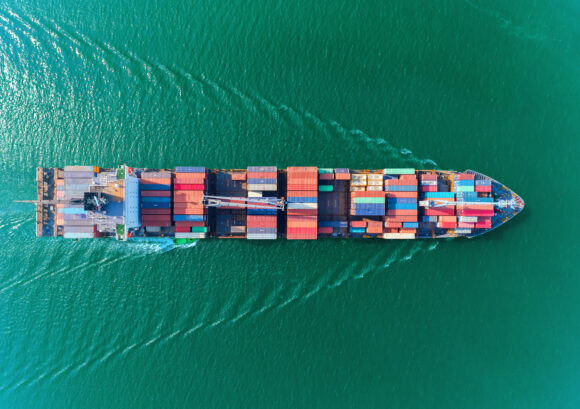
The quantum of any business interruption claim is only ever as credible as the evidence behind it. This disruption is already visible across key sectors. By way of illustration, commercial traffic through the Strait of Hormuz — a key choke point for approximately a quarter of global seaborne oil trade, significant volumes of LNG, and critical fertilizer supplies — has fallen from 138 vessels per day to near zero.
Another heavily impacted sector is hospitality. The World Travel & Tourism Council estimated that the conflict is the travel and tourism sector across the Middle East by at least US$600 million per day in international visitor spending. These operational shocks are now crystallizing into insurance claims.
Exclusions for war, terrorism, and hostile acts could be an obstacle for many policyholders. Whether a policy provides coverage is a contested question that will determine the outcome of many of these claims. That threshold question is for legal counsel to address. What follows assumes coverage can be established and focuses on the financial complexity of supporting any claim. The strength of a business interruption (BI) claim will depend not only on the quantum of the loss but equally on the availability of financial evidence and a robust analysis to support it.
The Policy
Before any loss is quantified, the financial expert must understand the relevant terms of the policy, such as coverage limits, duration of indemnity, deductibles, and waiting periods. There are two primary methods for quantifying a BI claim:
- Gross Earnings Policy (commonly referred to as the “top-down” method) covers the loss of gross earnings from the date of the insured event until operations are restored (as defined under the insurance policy, not the financial statements, which are rarely the same.) It generally does not extend to the post-reopening recovery period. That is, once commercial operations resume, indemnity ends.
- Profits Policy (commonly referred to as the “bottom-up” method) covers the loss of gross profit until revenues return to pre-loss levels, subject to the maximum indemnity period (commonly 12 months).
It is important to assess the relevant policy, since the two approaches can produce materially different outcomes in practice.
Establishing Causation
A BI claim arising from geopolitical conflict presents a distinct evidentiary challenge. Unlike a fire or a flood, the commercial consequences of conflict may accumulate gradually, through a series of interconnected disruptions. Demonstrating that a specific revenue shortfall is attributable to the conflict, rather than to pre-existing trends or other market factors, requires clear, contemporaneous, and sufficient documentation.
The most relevant evidence to establish causation will vary by sector but typically includes dated cancellations and supporting correspondence, government travel advisories, trade restrictions, supplier disruption notices, internal financial information, and third-party market data that capture broader industry trends. Contemporaneous evidence is generally far more persuasive than evidence reconstructed after the fact.
Quantifying the Loss
The core framework compares the but-for financial performance (what the business would have earned absent the insured event) against its actual financial performance during the indemnity period. In quantifying a BI loss, key financial considerations generally include projected and actual sales, gross profit margins, continuing and non-continuing costs, and additional mitigation costs.
However, in the specific circumstances of this conflict, considerations also extend to:
- Establishing a baseline: Many businesses in the region were performing at or near record levels in the period immediately preceding the conflict as a result of factors such as post-COVID-19 recovery, record-high tourism, and sustained investments. A but-for analysis consistent with that trajectory may attract challenge. An analysis must demonstrate that the projected performance is supportable, not merely an extrapolation from an exceptional run.
- Seasonality: The timing of the conflict overlaps with Ramadan, a period that carries its own distinct operational patterns across many sectors. Separating the impact of the conflict from the effect of seasonal demand requires analysis of prior-year comparatives and, where possible, benchmarking against comparable businesses operating outside the affected markets.
- Period of recovery: Business operations will not return to pre-conflict levels overnight. Operations will likely ramp up to a normal level over time. Depending on the policy, indemnity may extend through the recovery period. It is important for an expert to assess when conflict-related losses end and provide a defensible, evidence- based position.
Building a Supportable Claim
The considerations above illustrate why the financial expert’s role in a conflict-related BI claim extends well beyond computation — it is to deliver an independent, objective assessment of the loss that can withstand scrutiny from all sides.
What distinguishes a claim that survives scrutiny is the quality of the evidence and analysis supporting it. A supportable claim includes a causal narrative grounded in contemporaneous records, a loss calculation anchored to the specific terms of the policy, and a transparent consideration of the factors that reduce the claim as much as those that increase it. Insurers will scrutinise the but-for assumptions, challenge the causation narrative, and push back on mitigation costs; a well-constructed claim must be built with that challenge anticipated from the outset.
Mitigation is a particularly live issue in the current environment, where businesses across the region have been forced to adapt rapidly. Many policyholders have a contractual duty to mitigate their losses and may claim for expenses incurred in doing so. Businesses have offered promotions, reduced prices, restructured operations, or conducted capital investments ahead of schedule to adapt to operational disruptions and reduce impact.
Mitigation gives rise to two distinct and competing considerations. First, to the extent that mitigation reduced the loss, that reduction must be reflected in the claim. Insurers will push hard on this point, particularly where businesses pivoted successfully to alternative revenue streams or markets. Second, the reasonable costs incurred in mitigating are generally recoverable in their own right. A rigorous analysis addresses both, without allowing one to obscure the other.
Key Takeaways for Policyholders
Early, disciplined action will materially strengthen any business interruption claim arising from the conflict. In particular:
- Capture and record disruption-related costs and losses in real time.
- The indemnity period may have already started. Review the relevant policy early to understand coverage limits, waiting periods, and the applicable method of quantification.
- Mitigation efforts will be scrutinised by insurers. Document all steps taken, to adapt to the circumstances, the costs incurred and their impact on losses from the outset (not after the fact).
(This article has been reprinted with permission of Secretariat, an Atlanta, Georgia-based specialist in expert services, litigation consulting, forensic accounting, and economic advisory. Some minor style edits have been made from the original article, published on April 6, which can be found here.)
Related:
Topics
Claims
