


China has ordered its companies to ignore US sanctions, an unprecedented act of defiance that threatens to trap a vast banking sector in the crossfire as tension rises between the world’s largest economies.
Beijing has often railed against unilateral sanctions and pronounced them illegitimate, but it has also quietly allowed its largest companies to comply with them, in order to avoid blowback on its own economy and to preserve access to the US financial system.
Saturday’s announcement — coming before a long-awaited meeting later this month between President Donald Trump and his counterpart Xi Jinping — signals a far more aggressive stance. Beijing has now directed companies not to abide by US sanctions on private refiners linked to the Iranian oil trade, including heavyweight Hengli Petrochemical (Dalian) Refinery Co., which was sanctioned last month.
Within China, state media outlets and academics who advise the government sought to frame the retaliation as a forceful but calibrated response against US overreach. A commentary on the People’s Daily app, the Communist Party mouthpiece, called it “a pivotal step” in using the legal instrument to restrain what it called the “long-arm jurisdiction” of the US.
Beijing’s move will test the US sanctions system at a time when it’s already under pressure, as Washington vacillates on curbs against Russia, Venezuela and Iran. With Trump’s war against Iran straining its global alliances, China has seized the opportunity to defend a major piece of its economic system while expanding its arsenal of economic weapons.
Xi’s government has been progressively cranking up the use of alternative tools, from rare earths to technology. Beijing last week blocked Meta Platforms Inc.’s $2 billion purchase of AI startup Manus, moving to scuttle the deal even after it had already been sealed.
“They want to have as many levers as possible,” Ja Ian Chong, an associate professor of political science at the National University of Singapore, said of Saturday’s move to instruct defiance. “This should be seen in the context of increasing controls. It is not a one off.”
China is deploying a blocking measure introduced in 2021 that was aimed at protecting its firms from foreign laws it deemed unjustified. The refiners — including Hengli, and several other privately-owned processors — had been facing asset freezes and transaction bans.
Lenders working with Hengli and related companies have been scrambling to understand the decision and are seeking clarity from the banking regulator. Public holidays in China this week allow them some time, since business is on hold, as does the grace period provided by the Treasury Department’s Office of Foreign Assets Control.
Hengli Petrochemical Co., the Shanghai-listed parent of the sanctioned Dalian refinery, said in April that it envisaged securing total banking credit of 235 billion yuan ($34.4 billion) for itself and all units this year, some of it on a revolving basis.
China’s private processors have shown themselves more willing to run the gauntlet of US sanctions, making the most of discounted oil from Iran, Russia and Venezuela. Though the sector includes some heavyweights, like Hengli, it is typically less dependent on the US financial system than large state refiners. The biggest players do, however, have close links with China’s major state-owned lenders.
Workarounds for banks can include transactions in the yuan, which makes them less visible to US authorities. Under the blocking order, companies can also apply for exemption from the rules and may be granted approval if they show that compliance would cause exceptional hardship or inconvenience.
“Judging by its specific provisions, the prohibition order primarily targets the concrete US sanctions imposed on particular Chinese firms,” Ji Wenhua, a law professor who’s advised the Commerce Ministry, wrote in an opinion piece for the state-run Economic Daily. “Its central objective is to nullify their legal effect within Chinese territory, rather than simultaneously resorting to more aggressive retaliatory measures.”
The US measures unlawfully restrict normal trade with third countries and breach international norms, the country’s Commerce Ministry said in a statement on Saturday. It banned recognition, enforcement, and compliance with the sanctions aimed at the five companies.
“The Chinese government has consistently opposed unilateral sanctions that lack authorization from the United Nations and a basis in international law,” the department said.
While the blocking measure is not likely to derail the Xi-Trump summit, Washington’s reaction to it will indicate if the matter escalates, according to analysts from Eurasia Group.
“The refineries primarily work with Chinese banks that have not yet been directly sanctioned,” the analysts led by Dominic Chiu wrote in a note. “If the US extends secondary sanctions to those institutions, or major state-owned entities, Beijing would likely respond with more forceful countermeasures.”
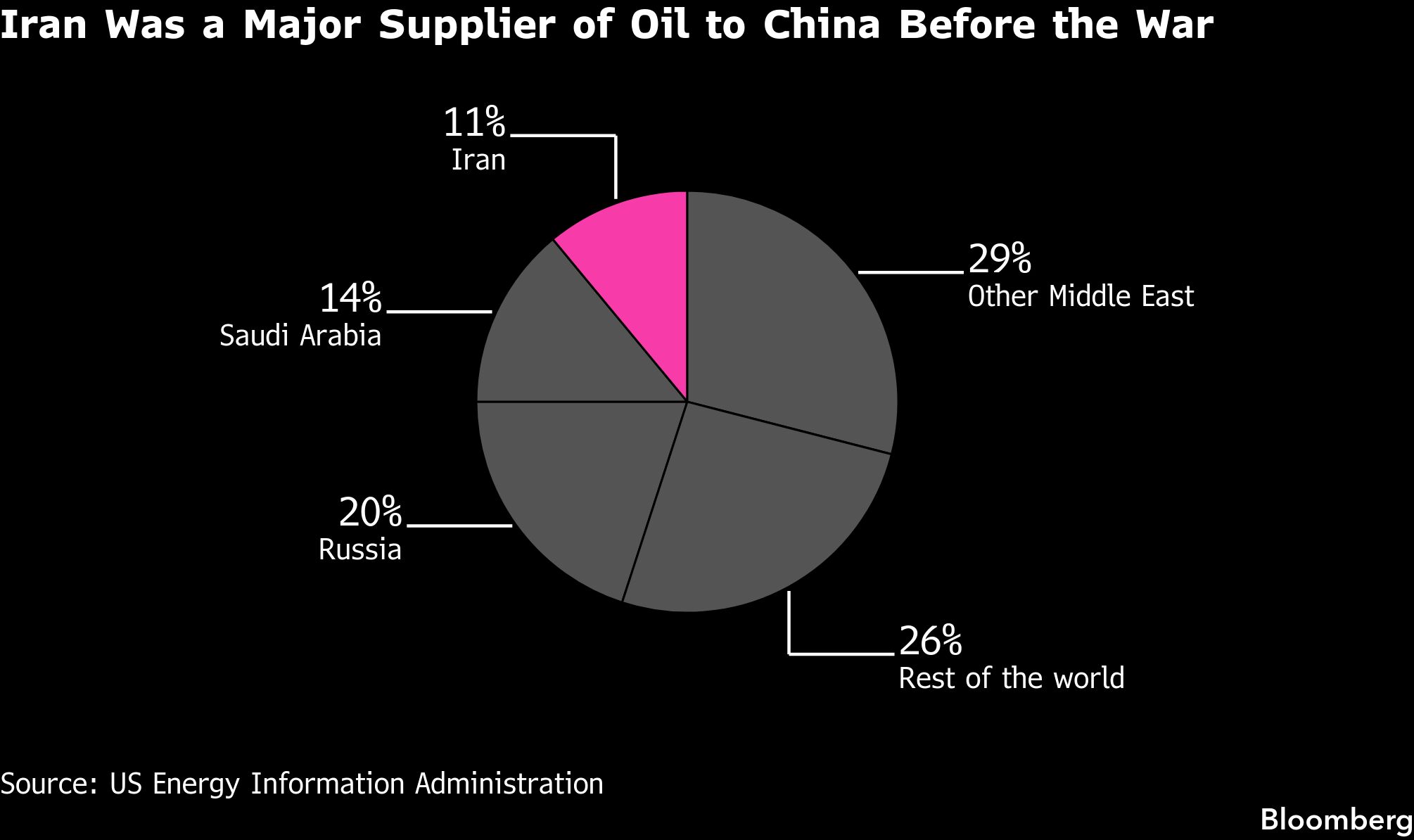
China has long been the single largest buyer of Tehran’s oil shipments, many of them arriving indirectly and through private refiners, and then turned into gasoline, diesel and other oil products. Chinese customs data do not reflect that trade, with the last official shipment recorded several years ago.
Before Hengli, and wary of the economic and diplomatic fallout, Washington’s efforts to cut off Tehran’s oil revenue had targeted smaller Chinese companies and facilities. Hengli, by contrast, is representative of the most modern of China’s private refiners, with a sprawling oil-processing and chemicals complex in the northeastern province of Liaoning.
Cui Fan, a professor who’s previously advised the Commerce Ministry, said Beijing had to act after the US targeted Chinese industries from refining to shipping on the grounds of their involvement in Iranian oil transactions, warning such measures since 2025 were becoming increasingly disruptive.
“The scope of these sanctions continues to expand, and the methods have become increasingly heavy-handed, showing a trend of further escalation,” he wrote in China Report, a state-run magazine. “If such abuse is allowed to continue, it will disrupt the stability of China’s energy supply chain and jeopardize China’s energy security and development interests.”
Photograph: A Chinese flag flutters in front of the Shanghai Gaoqiao Company Refinery in Shanghai; photo credit: Johannes Eisele/AFP/Getty
Copyright 2026 Bloomberg.
Topics
USA
China
