


Climate change is linked to a 10% global increase in antibiotic-resistance genes in Salmonella, according to new research that suggests warming temperatures and shifting rainfall patterns could accelerate the spread of hard-to-treat infections.
The study — conducted by researchers from multiple institutes including the Chinese Academy of Sciences and the University of Cambridge — analyzed more than 480,000 Salmonella genomes collected from 139 countries between 1940 and 2023. Published this week in The Lancet Planetary Health, it found that temperature and precipitation levels are significantly associated with increases in antimicrobial-resistance genes, or ARGs, worldwide.
While salmonella is one of the leading causes of diarrheal disease in humans, responsible for tens of millions of infections each year, antimcrobial resistance is primarily driven by the overuse and misuse of antibiotics — causing resistant bacteria to survive and spread.
But the study shows that climate conditions also shape how resistance evolves and circulates in the environment. Higher temperatures can speed up bacterial growth and gene exchange. Extreme flooding can accelerate ARG spread in water systems, while drought can concentrate antibiotic residues and resistant bacteria in compromised water sources — all of which amplify AMR transmission.
Globally, the abundance of ARGs in Salmonella has increased by 38% over the study period, with climate change accounting for 10% of the rise. An overwhelming 82% of countries showed rising ARG levels, with the strongest climate-linked surges observed in the Middle East, North Africa, South Asia and Sub-Saharan Africa.
Looking ahead, the researchers project that ARG levels in Salmonella will continue to rise by 2100. However, if countries meet low-emission climate targets and strengthen responsible antibiotics use, the level of the ARGs could be 24% lower than in the highest-emission scenario.
“These findings highlight the importance of mitigating climate change as a strategic intervention to curb the spread of ARGs and ultimately to combat the global challenge of antibiotic resistance,” the authors wrote. Addressing climate change, alongside robust “antimicrobial stewardship” is “essential to safeguard public health and ensure the effectiveness of antimicrobial therapies in the future,” they wrote.
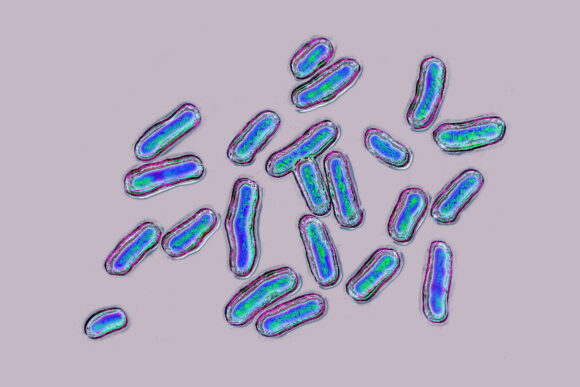
Photograph: Salmonella bacteria; photo credit: Cavallini James/BSIP/Universal Images Group/Getty Images
Copyright 2026 Bloomberg.
Topics
Climate Change
Interested in Climate Change?
Get automatic alerts for this topic.
