


As artificial intelligence and automation become faster and more precise, insurance industry leaders are finding that the differentiator isn’t just better technology but how the people behind the technology are using it. That’s according to experts at InsurTech New York’s annual spring conference, held this year in March.
“It’s an art,” said Gaurav Vasisht, executive director and CEO of The New York State Insurance Fund. “We believe that in the end, data and analytics getting you better insights to make better decisions means using the analytics in the right way.”
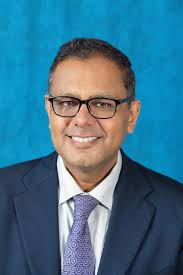
He explained that advanced tools, analytics and models provide a starting point for understanding risk and pricing over time. From there, human expertise takes over.
“And then our people take over from there and start to craft what’s really the outcome of what you need to change moving forward,” he said. “We think that’s a big part of how you build specialty insurance and reinsurance companies, putting those two things together. Yes, I want the data analytics, but I also want the people making the judgments.”
Greg Hendrick, CEO of Vantage Group, agreed, noting that striking the right balance between humans and technology starts with culture and ensuring employees feel secure.
“This is not about a journey to replace swaths of people,” he said. “I know a couple of CEOs have come out over the past 12 months or so and said they expect the workforce to shrink. Thankfully, we’re a young company and growing, and so I can say we’re not going to do less people. We’re going to do more with the same people we have. So, either way, you’ve got to get back to that cultural piece of making them feel secure.”
While no one knows exactly where technology transformation will lead, Hendrick said, organizations must embrace it with intention, starting with clear governance.
“The regulators are rightfully paying very close attention to this, and so we want a governance layer in there to help assure the regulator, help assure our investors and management, that we are not getting off the rails,” he said. “And so, it’s a very, very simple one-pager kind of framework of how we keep everybody moving in the right direction.”
From there, insurance leadership shifts into advocacy.

“The CEO becomes the chief cheerleader,” Hendrick said. “You really get people comfortable with it, you put some guardrails in place, and then your job is just to be rah-rah and to encourage three sets of things. One is continuing to try to use the tool on your desktop to make yourself a little bit more efficient. Two is a bunch of experiments that people can run inside those guardrails: How could I ingest this submission faster? How could I go out and find another data set to bring it in? And then industrialize the ones that have been what we would call worthy of company-wide or underwriter-wide or claims-wide rollouts.”
Vasisht added insurance leaders have the privilege and responsibility of looking at an organization horizontally, or across all departments. This means as friction points are identified in the system, it’s important to go as deep on those issues as possible to address them. The biggest pain point is often not the technology itself, he said, but human resistance to change.
“The limitations often are not the limitations put upon us by the state or any other element you might think would be a possible obstacle. It’s really ourselves often, right?” he said. “Because you’ve got an organization that’s been around for a while. You’ve got deep expertise with people running different divisions who have incredible knowledge, who quite frankly have become used to doing things a certain way. And when you look at innovation, it often means doing things differently. One of the biggest obstacles is to get buy-in from people who’ve been doing the job a certain way for a long period of time.”
Vasisht said it’s important for insurance leaders to focus on their people, not just the technology, to move past these obstacles.
“You have to develop those relationships with your people. As a CEO, you cannot accomplish these things alone. You need to have a team that is focused on achieving those innovations, crossing that finish line,” he said. “So, it becomes important to persuade people, to lead people and to get them to row in the same direction.”
One way Vasisht has done this is to cross the finish line on some important projects so that people begin to see that it is possible to accomplish these things. Then, it becomes easier for the rest of the agenda to be completed, he said. Hendrick added that it’s also important for insurers to remember that it’s a business about people and to not lose sight of keeping those people in the loop.
“I think getting people made whole again when something bad has happened to them is the fundamental purpose of an insurance company,” he said. “So, when you can automate payments, I think that’s fantastic and we should keep doing that. But I don’t think that’s where this ends. We actually need to rethink how we do things altogether, and we need to rethink how we actually price and analyze risk.”
Hendrick said he doesn’t see jobs like claims and underwriting going away or being replaced by automation, but instead, he sees automation as a tool that frees human employees to do more difficult tasks.
“I just don’t think the humans win and AI doesn’t. In the end, you need to start with the AI, start with the model, get as many insights as you can, but in the end, the human is accountable,” he said. “The human owns the decision. Trust is not available between two machines. They can trust each other from an electronic standpoint, but they can’t trust each other as humans do.”
For Vasisht, the present moment presents an opportunity for insurance leaders to reflect and recalibrate.
“I think this is a great opportunity for the industry to take stock…to ensure that our ultimate purpose is fulfilled, that we’re not sort of engulfed by all of this technology in a way that makes us less human, makes us less inclined to achieve our overall objective and the objective of the industry at large,” he said.
Topics
Leadership
