


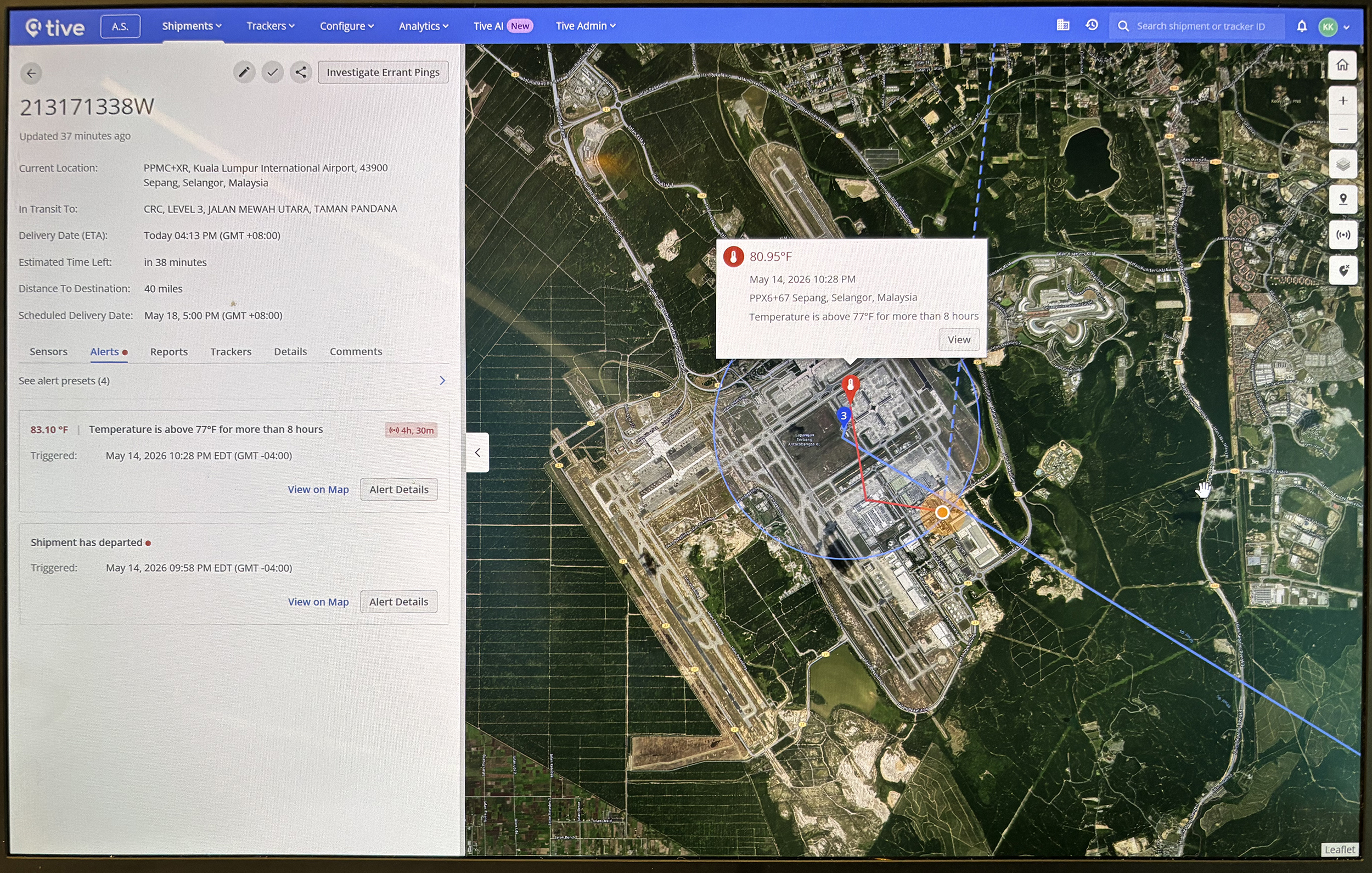
On the tarmac of Kuala Lumpur International Airport, a cargo of drugs on their way to a clinical trial were warming in the rising afternoon sun. At risk of being spoiled, a newly installed tracker that monitors temperature, humidity and location, alerted the pharmaceutical company in real-time about the threat.
The intervention earlier this month is an example of how nascent technology can help protect the world’s $35 trillion global trade system, not just from geopolitical disruption and human error, but also from an increasingly unpredictable climate.
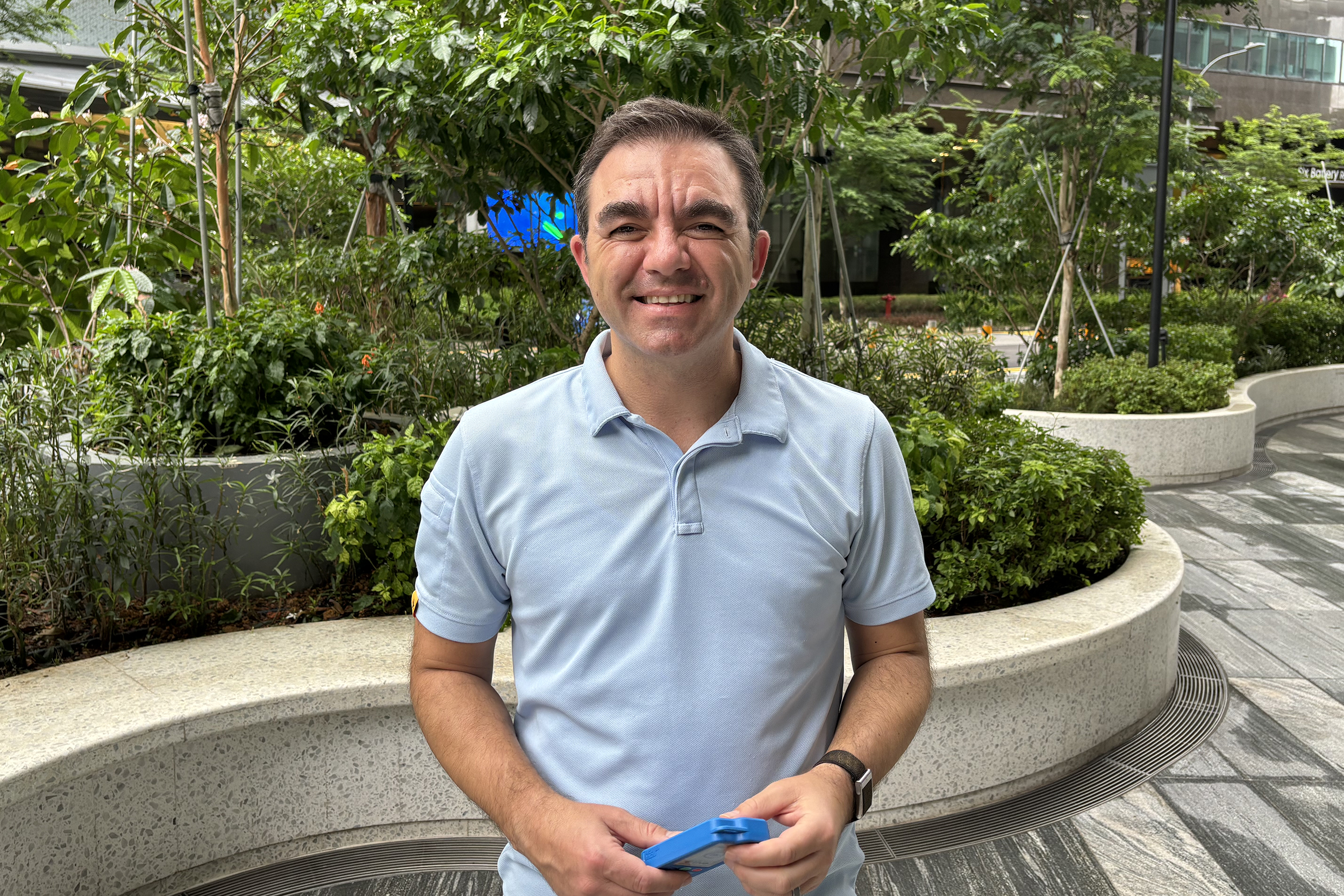
Without an alert about potential high-temperature risks to the clinical product, “then guess what? You wasted thousands of dollars to ship it, thousands of dollars to do the clinical trial,” said Krenar Komoni, the founder of technology startup Tive Inc. that developed the tracker.
This year, the month of April was the joint third-hottest globally on record, behind 2024 and 2025. Heatwaves are continuing across much of Asia and forecasters predict with a high degree of confidence that a powerful El Niño developing in the tropical Pacific Ocean could unleash record temperatures.
The impacts of extreme weather events fueled by global warming, including heatwaves, storms, floods and wildfires, are mounting for business globally. Companies transporting pharmaceuticals, food and high-value technology goods such as microchips are particularly vulnerable to temperature, humidity and delays.
Those threats are delivering new demand for adaptation strategies — everything from sensor manufacturers and climate risk analytics tools to insurance based on catastrophe modeling — and fueling a small but growing investment class offering unexpected returns.
“What you’ve seen is an increasing recognition accelerating over the course of the last 18 to 24 months of real investor awareness,” said Jay Koh, co-founder of the Lightsmith Group LLC, a pioneer of adaptation investing in private markets.
He described it as an “inevitable trendline” because adaptation finance is not impacted by regulatory policy or political headwinds that have impacted renewable energy or electric vehicles. Advances in satellite imagery, more granular weather data, 5G networks and artificial intelligence are also helping to propel new climate tech start-ups.
Private companies held by Lightsmith’s Climate Resilience Partners fund, which has $186 million of assets, include AiDash Inc., which uses satellite imagery and artificial intelligence to reduce wildfire risk for utilities. LGT Bank AG-backed Lightrock is among other investors in Palo Alto-based AiDash.
“We are investing in companies that are already growing, that already have at least $10 to $100 million of revenue,” said Koh, who counts Tive among his fund’s investments. Koh sees supply-chain resilience and energy infrastructure in the US as the next “opportunity set” in the adaptation sector, as well as agriculture technologies in Brazil and Latin America.
Koh declined to provide details of returns for the climate resilience fund, citing compliance requirements, but says the compound annual growth rate of many adaptation investments has proved to be around 20% – double what he had expected.
Boston-based Tive, valued at more than $500 million in a January funding round, has seen about 50% growth in annual revenue for the past three years, aims to turn profitable by the quarter ending next January and be ‘IPO-ready’ by 2029, Komoni said.
Though less politically charged than decarbonization strategies, adaptation still accounts only for about 5% of global climate finance, with the vast majority of funding coming from governments and development lenders. Climate investments broadly have been under pressure since US President Donald Trump returned to office last year, with his administration slashing support for a host of environmental and social projects.
The adaptation sector pulled in $5.5 billion of equity funding by venture capitalists last year, seeing its share of climate finance double since 2021, a Net Zero Insights report showed. Singapore’s sovereign wealth fund GIC Pte. estimated last year that annual revenues from climate adaptation technologies including weather intelligence were already at $1 trillion, and could quadruple by mid-century. Traditional asset managers such as Invesco Ltd., BNP Paribas Asset Management and Wellington Management have also recently entered the adaptation space.
“Companies investing early in resilience are the ones that are better positioned to preserve continuity, protect margins and create long-term value,” Elodie Laugel, chief responsible investment officer at Amundi SA said May 19, speaking at an event during Singapore’s Ecosperity Week conference.
Climate-related disruptions at ports put about $81 billion in global trade at risk every year, according to a 2023 study in the journal Nature Climate Change. Port of Shanghai — the world’s busiest — sustained losses of nearly $400 million between 2006 and 2020 due to typhoons alone, according to research conducted by Tsinghua University and Tohoku University.
There is also a knock-on effect for consumers. A 100-hour shipping delay can increase consumer inflation by as much as 0.5% in the US, according to an International Monetary Fund working paper published in February. And the United Nations estimates that about 13% of food is lost between harvest and reaching store shelves.
Aside from delays and damage caused by climate shocks, supply chain resilience could also help mitigate the impacts of other disruptions. The closure of the Strait of Hormuz and the Covid-19 pandemic both illustrated the need for more precise information on the transportation of goods and the condition of the products.
There could be “massive value creation” in integrating logistics data with weather prediction, details on labor unrest or political disruption, and insurance analytic tools, said Vishal Agarwal, senior partner and co-leader of the Asia sustainability practice at McKinsey & Co.
“You can reroute the shipping, the logistics, you can plan for some buffer inventory and figure out where the most penalties will be if customers do not receive their deliveries on time, what kind of clauses you need to have on contract to be able to protect yourself from these delays,” Agarwal said.
Denver-based Parsyl Inc., a cargo insurer that’s also backed by Lightsmith, is in the midst of developing a port-disruption tracking product and already uses third-party data for catastrophe modeling and weather analysis to understand client exposures.
“When I look at two huge forces shaping modern risk, its climate and supply chain in terms of what companies are trying to manage,” said Ben Hubbard, Parsyl’s chief executive officer and co-founder.
Photograph: Operations at the Port of Los Angeles; Lauren Justice/Bloomberg
Related:
Copyright 2026 Bloomberg.
