

US President Donald Trump said he’ll only consider a halt to attacks on Iran when the Strait of Hormuz is reopened, sowing further confusion about how long he’s prepared to continue the war.Iran’s “New Regime President” has asked the US for a ceasefire, Trump said in a social-media post, possibly referring to comments Masoud Pezeskhian made Tuesday that the Islamic Republic has “the necessary will” to end this war with certain guarantees.
“Until then, we are blasting Iran into oblivion,” Trump said.
Trump’s comments came a day after he suggested he’s keen to exit the conflict sooner rather than later — regardless of a ceasefire with Iran or deal to open Hormuz, a vital shipping lane for global energy supplies. The US leader has vacillated throughout the month-long conflict between threatening a military escalation and saying a deal is imminent, often with little changing on the ground.
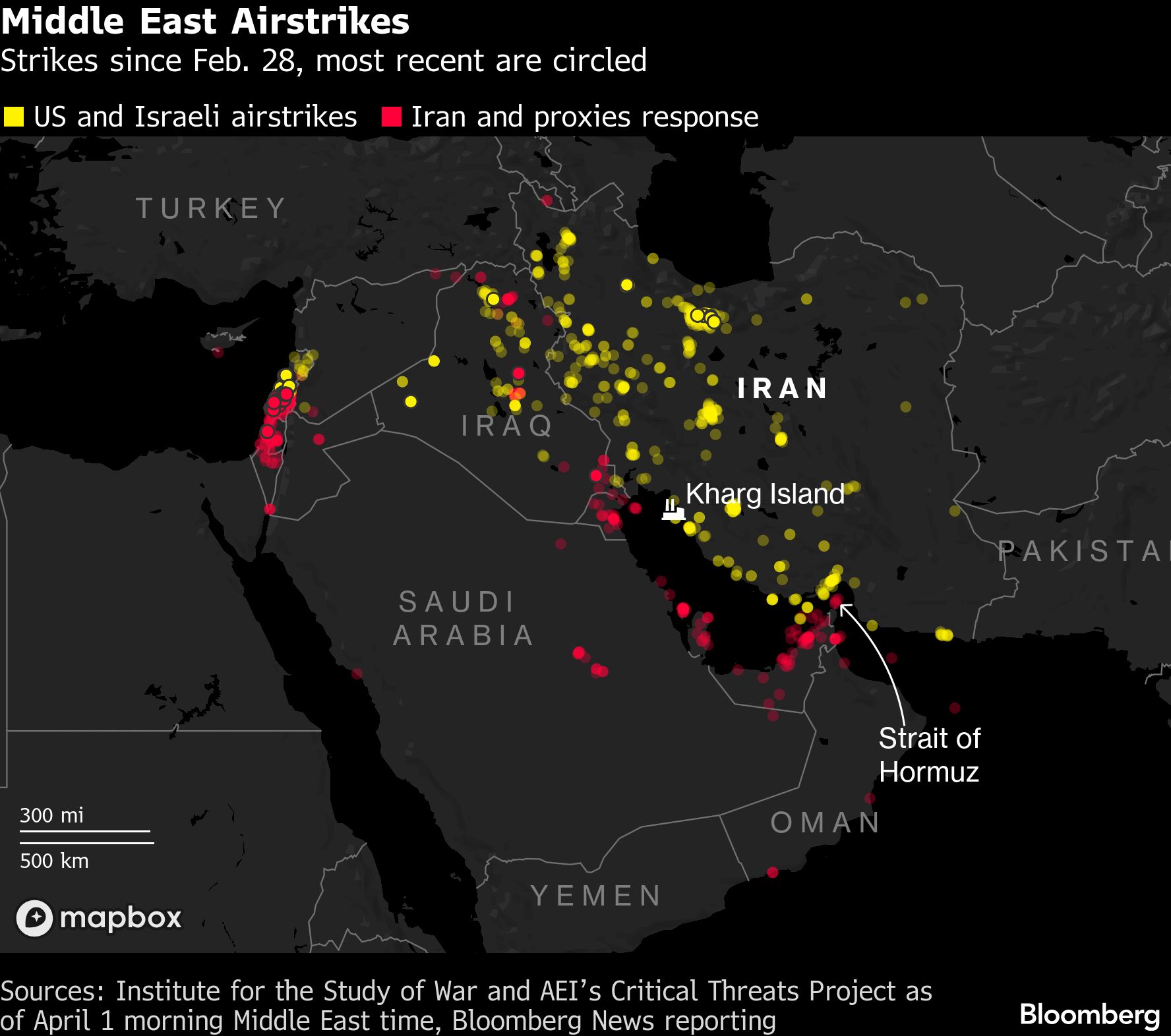
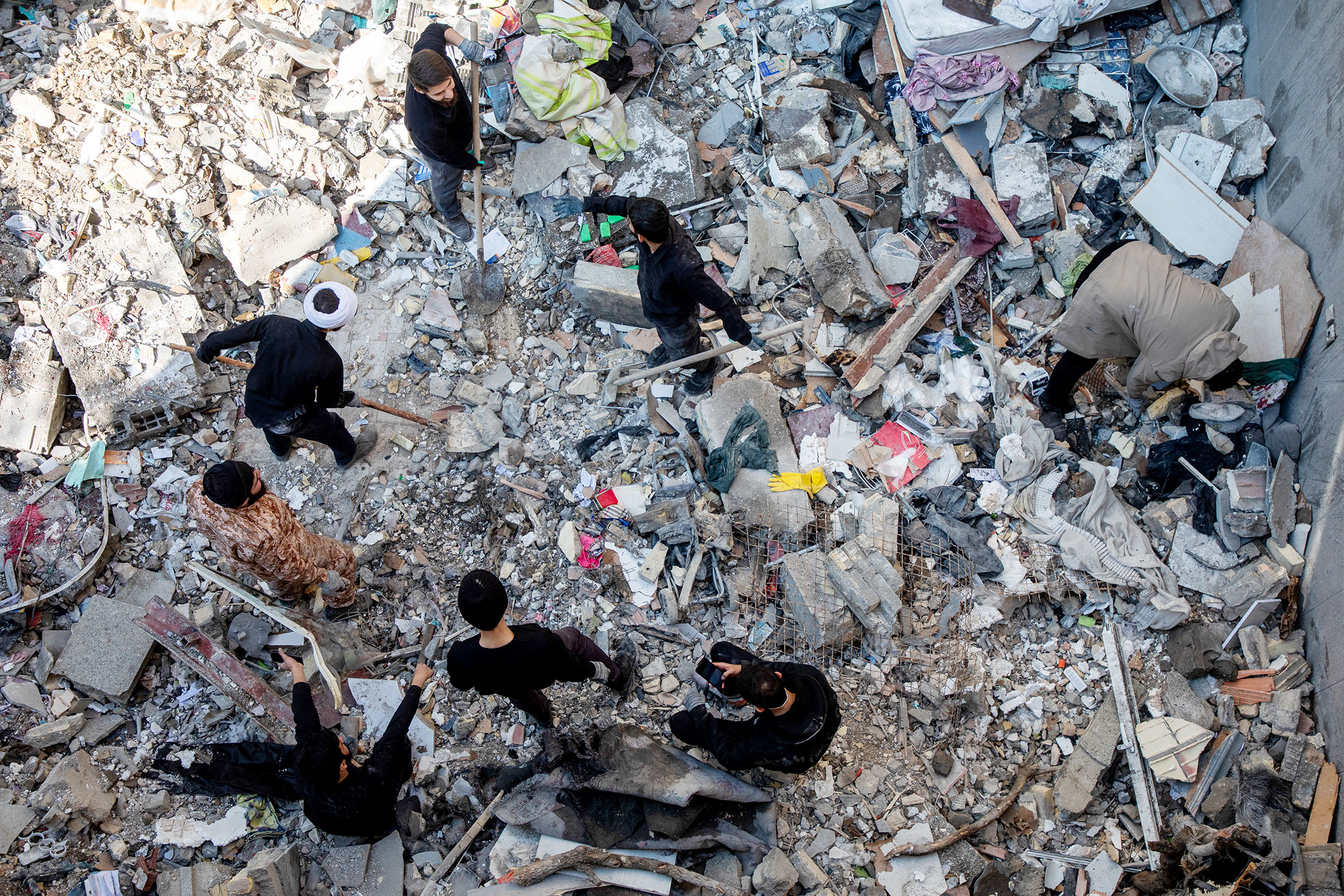
Meanwhile, Iran fired missiles across the Middle East while Israel and the US kept up their bombardment of the Islamic Republic.
Israel, Bahrain, Kuwait and the United Arab Emirates all reported attacks overnight and into Wednesday, while QatarEnergy said a fuel oil tanker was struck in Qatari waters. That incident highlighted the ongoing threat to regional shipping and the month-long effective closure of Hormuz, which has choked key commodities including fertilizer as well as oil and gas.
Iran’s Foreign Minister Abbas Araghchi said his country has been in direct contact with US Special Envoy Steve Witkoff, but told Al Jazeera that “does not mean that we are in negotiations.”
Stocks and bonds surged earlier as investors took the Trump comments as a sign the crisis could be nearing an end. Oil prices briefly fell below $100 a barrel for the first time in more than a week, though later pared declines and remain around 40% higher than before the war began.
Trump on Tuesday suggested the US has accomplished military goals such as preventing Iran from having a nuclear weapon. “We have had a regime change now,” he added, after US and Israeli strikes killed Supreme Leader Ali Khamenei and other senior figures. Khamenei was later replaced by his son, Mojtaba.
The war could be over in two or three weeks, Trump said, although he often sets short-term deadlines that are later ignored or replaced. On Monday, he threatened to destroy Iranian energy assets, as well as desalination plants, if a deal isn’t reached to open the Strait of Hormuz.
JPMorgan Chase & Co. head Jamie Dimon said the US needs to permanently remove any threat from Iran. “It’s much more important that this be successfully completed, than what the market does,” he told Fox & Friends on Tuesday. Anything less will likely leave the world economy vulnerable to shocks, he said.
Trump indicated that it’s possible that the US and Iran could still reach a deal to end hostilities but that one may not be necessary for the war to end. Still, US military assets, including ground troops, continue to be amassed in the region. A third US aircraft carrier strike group left Virginia for the Middle East on Tuesday, according to a US official familiar with the matter.
Araghchi said his country is ready for any confrontation with American forces. He added that Iran had zero trust in Washington and doesn’t expect any talks to produce results.
Whether or not the US withdraws from the conflict, Iran’s closure of Hormuz — through which about a fifth of the world’s oil and liquefied natural gas exports normally flow — remains an unresolved problem. As well as cutting off supplies of oil and gas, a number of critical commodities are transported through the strait, including fertilizer.
Trump on Tuesday called on other nations to wrest control of Hormuz, saying those that rely on energy supplies from the waterway should step up. He’s repeatedly expressed frustration at allies for not joining in the war.
The UAE is one country that would support international efforts to safeguard maritime security in the region, according to an official from the country.
UK Prime Minister Keir Starmer said his country will coordinate a diplomatic push to reopen Hormuz as part of a group of 35 nations committed to coming up with a plan. He added that he doesn’t want to be “dragged” into the military conflict.
Trump has said the US-Israeli bombardment has “obliterated” Iran’s military threat, even as Tehran continues to fire missiles at Gulf Arab states.
About 4,950 people have been killed in the war so far, almost three-quarters of them in Iran, according to government organizations and the The US-based Human Rights Activists News Agency. More than 1,200 people have been killed in Lebanon, where Israel is fighting a parallel war with Iran-allied Hezbollah.
On Tuesday, Israeli Defense Minister Israel Katz announced a plan to occupy parts of southern Lebanon and said about 600,000 residents who have been forced to leave the area will not be allowed back until the safety of Israel’s northern communities is assured.
Trump will address the nation Wednesday night “to provide an important update on Iran,” White House Press Secretary Karoline Leavitt said in a post on X.
She did not provide further details. The war has pushed US pump prices above $4 a gallon, which could cause political pain for Trump’s Republican party in what’s already shaping up to be a difficult midterm election year.
The president realizes that the current situation is untenable, according to a person familiar with his thinking who requested anonymity to discuss private deliberations.
