

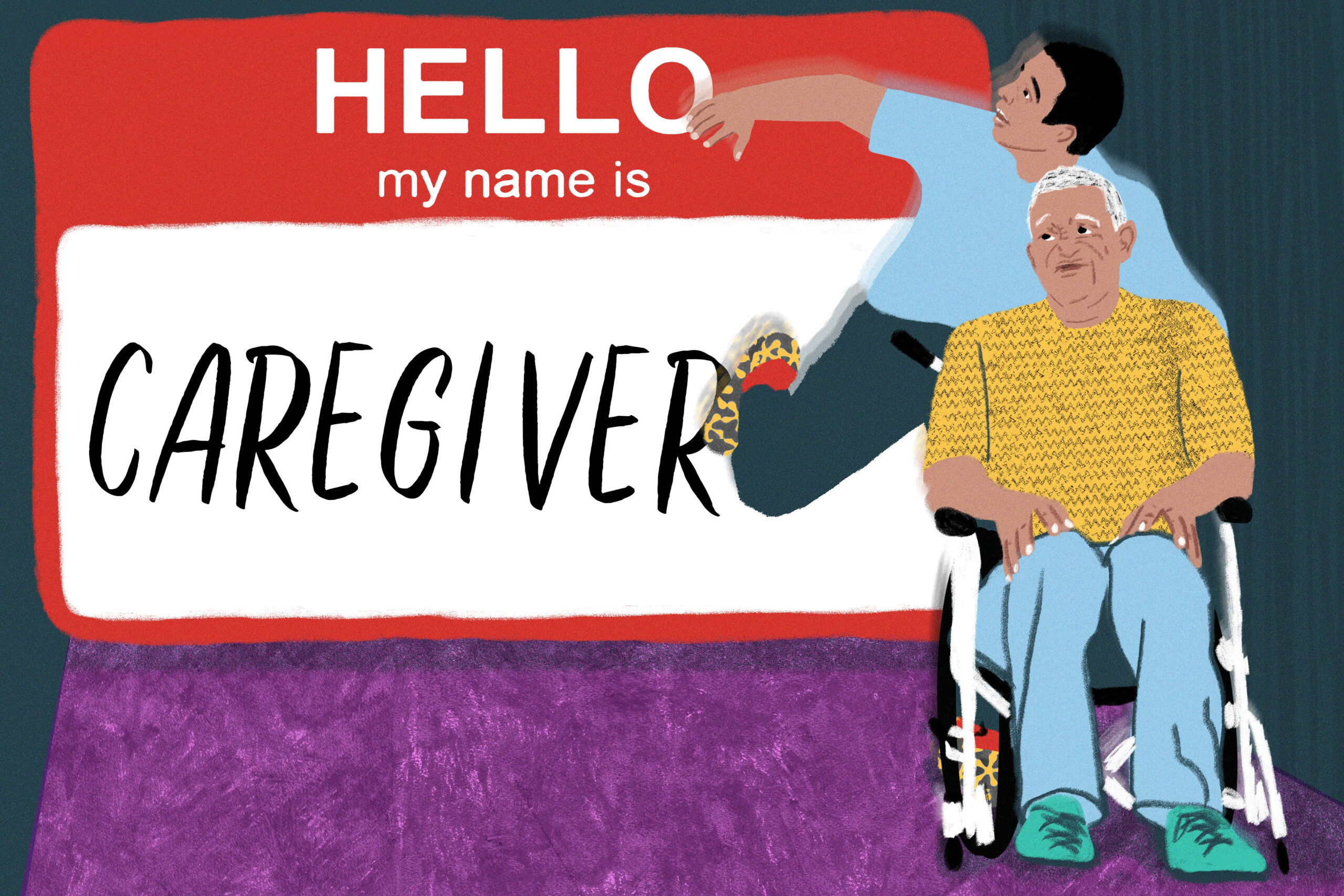
Cara Anthony tries to convince her HealthQ co-host Blake Farmer that there are benefits to embracing the caregiver identity when helping an aging parent.
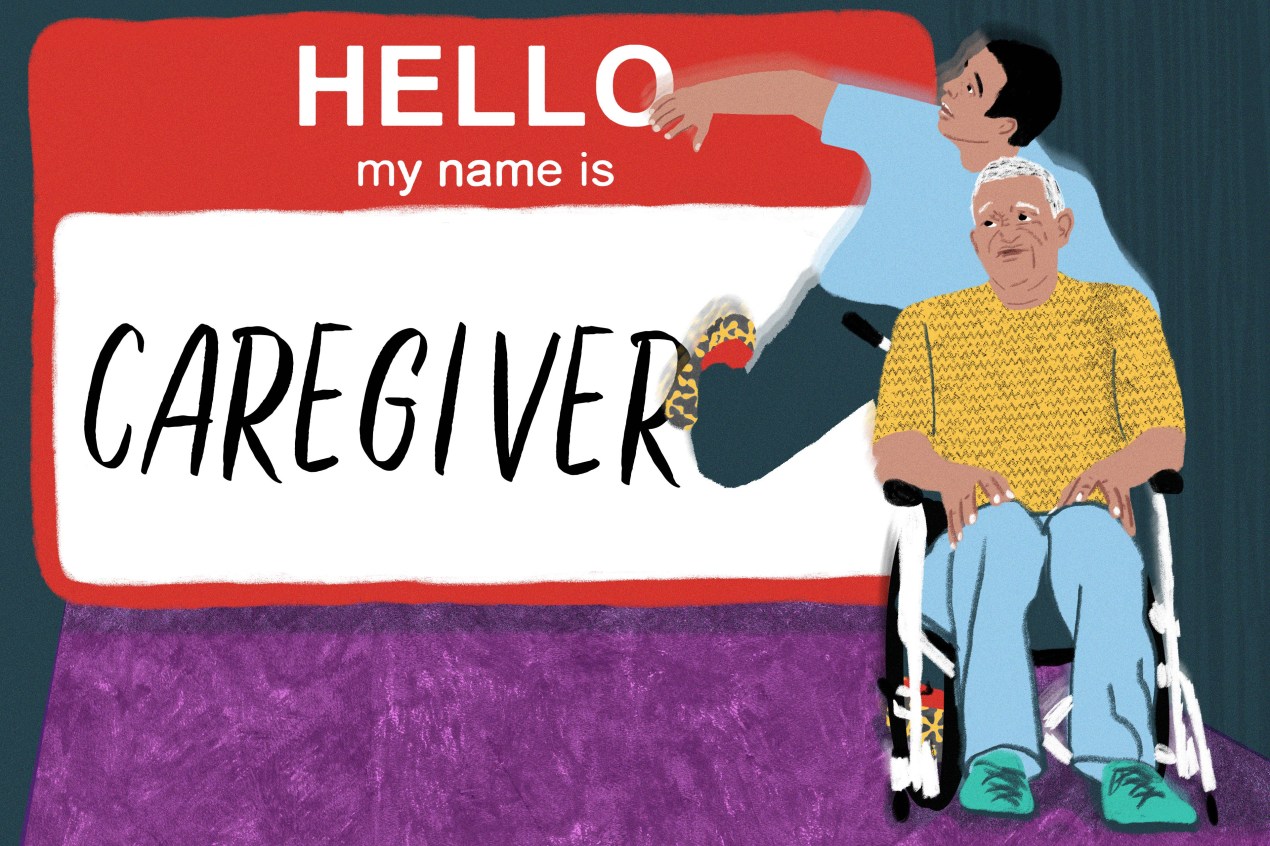
When his father was diagnosed with gallbladder cancer in 2025, William Morrison immediately went into caregiving mode.
“We were in the hospital every day,” he said. “I was really playing the intermediary between the medical staff and our family and kind of helping have those conversations and push for those answers.”
One in 10 Americans say they are a caregiver for a parent 65 or older, according to 2025 Pew research. And many people in the sandwich generation — those who have both children and aging parents — start their caregiving journeys like Morrison: stepping up during a medical crisis and becoming a family caregiver essentially overnight.
For other people, taking on the role and identity of a caregiver happens more slowly.
Researchers and experts say the spectrum of caregiving is broader than many people realize and that embracing the caregiver title before there’s a crisis can make a significant difference in this phase of life.
Worry Comes First
Being a caregiver can start long before you go to a doctor appointment with a loved one or move your parents into your house. “Oftentimes what we see out in the world is a very limited definition of who a family caregiver is,” said Denise Brown, a caregiving coach and the founder of Caregiving Years Training Academy in Illinois. Being a caregiver is “not necessarily around defining caregiving by tasks and chores, but about that emotional impact.”
Brown created a framework that defines caregiving as a journey with six stages. She said the first stage — the “expectant caregiver” — begins the moment you start to feel concerned about a loved one.
“ You look into the future and you think, ‘Oh, I think someone’s going to need help in the family,’” Brown said.
When you start to get actively involved in a loved one’s care, that triggers the second stage, what Brown calls the “freshman caregiver”: “You’re learning the lay of the land. You’re learning the language of all the systems that you now manage. The best thing to do in this stage is to get comfortable experimenting.”

Caring for Parents Brings Different Stressors
The kind of care that Morrison provided — responding to an immediate medical crisis — catapulted him into the third stage of caregiving, the “entrenched caregiver.” By the time you hit this point, Brown said, “you can feel completely overwhelmed and swallowed up by the experience.”
Research suggests that the stress is especially acute for people taking care of parents. The role reversal stresses the relationship: Caregivers who focus solely on children don’t deal with the tension linked to shifting power dynamics and other changes that happen when an adult child starts to care for a parent.
Burnout, defined by physical and psychological fatigue, was higher among caregivers of aging parents than among caregivers caring only for children. And for caregivers in the “sandwich generation,” who were taking care of both children and aging parents, personal burnout scores were even higher.
The Title Makes a Difference
Many people who perform care tasks don’t consider themselves caregivers, researchers have found, but those who do are more likely to access support services and feel a sense of community with other caregivers.
“Anyone in a caregiving situation deserves support and help,” Brown said.
Embracing the role of caregiver early also allows you to have “really good conversations with people in your life” about their desires — and yours — as you enter this phase, Brown said.
Morrison, whose father died earlier this year, is about to enter his own sandwich generation era: He and his wife are expecting a baby boy in August, and he’s been stepping in to help his mom with housework and administrative tasks.
Morrison and his wife have already had conversations about making time for themselves and each other after their son is born. Morrison also wants to be more intentional with his own health, even if that means just going for walks.
People and Policy
Beyond the emotional strain, caregiving comes with substantial costs. On average, caregivers spend more than $7,000 a year on medical and other expenses to support a loved one, according to AARP research in 2021.
Some efforts aim to mitigate the financial burden. In most states, family members can get paid to take care of relatives who qualify for Medicaid. But state Medicaid programs face new pressure from federal cuts, and some states have pulled back funding for home-care programs designed to help residents with disabilities.
Meanwhile, a handful of states offer tax credits for unpaid caregivers. For example, starting in 2027, Connecticut will allow family caregivers who make less than $50,000, or couples who make under $100,000, to apply for a tax credit up to $2,000.
This installment is part of HealthQ’s reporting on caregiving among the sandwich generation. For more, check out the series archive.
Katherine Ruppelt at Nashville Public Radio contributed to this report.
HealthQ is a health series from reporters Cara Anthony and Blake Farmer, approachable guides to an unapproachable healthcare system. It’s a collaboration between Nashville Public Radio and KFF Health News.
